Category Archives: Uncategorized

OUR FAMILY AND NEIGHBORS (Pt. 4)

Before moving on to the next generation (family of Joseph Thomas [II] who died ca. 1755-1757 in Bertie County), I’d like to revisit my last two posts built upon family records pretty much in an order of events and their discovery. There are still loose ends and though the information provided was important, it’s failed to convey the dynamic of our family as a whole. At this point I’ll begin at the same starting point before quickly  breaking it down in the format more generally used in family trees. Each child will be given a subtitle and bio.

With that in mind, and dated 10 Dec 1732 (probated Feb 1735), Joseph Thomas [I] penned his last will and testament mentioning wife Eales (Alice); sons Joseph, Michael, Luke, James, Jacob; and daughter Charity. There was yet another child named Mary as in Feb 1742, Bertie County County court minutes records the widow Alice’s household as follows: “Alice Thomas proved her rights vizt: Alice Thomas, James Thomas, Jacob Thomas, Mary Thomas whites & York, Rose, Ned, Simon, Philis & Penny Blacks.”

Michael Thomas

In his father’s 1732 last will and testament, Michael Thomas was bequeathed 640 acres “now in the occupation of Griffith Summerel (Summerlin). Michael was also appointed Executor indicating that he was of legal age and therefore would have been born in the early 1710’s.

In Aug 1742, Michael Thomas was listed in the household of his brother “Joseph Thomas on oath proved his rights to wit: Joseph Thomas, Anne Thomas & Michael Thomas & Mary Thomas white persons.” Maybe Griffith Summerell was still living on the land of Michael Thomas?

Dated 9 Oct 1762, Michael (x) Thomas sold to John Hill (planter) 547 acres on the “north side of Pellmell & known by the name of Moburn Hills.” Note that this is not the same John Hill who was high judge for many years in Bertie County. However, and not knowing much about him, this particular person named John Hill must have been a close collateral relation (much more later). The deed [K-188, Bertie] was witnessed by Michael’s brother-in-law Solomon (x) Asbell and their neighbor Thomas (x) Bass.

Two years later, in May 1764, the last will and testament of Thomas Bass was produced in open court & proved in due form of law by the oath of  Henry Bunch (free Afican American) & Michael Thomas two subscribing witnesses & ordered to be recorded by the oath of David Gaskins one of the subscribing witnesses & ordered to be registered.

Dated 24 Jun 1766, Michael Thomas planter sold 70 acres to “John Capehart County & Province afsd Smith of the other part.” The land was situated on the south side of Cashy Swamp adjoining Spring Branch and Robert Hardy’s land. The transaction was witnessed by William Starke and Hezekiah Ponder.

Indicating the passing of Michael Thomas, in Mar 1767, it was “ordered that Annie Thomas Exx of Michael Thomas sell the perishable part of the estate of the said Michael.”

michael

JOSEPH THOMAS [II]

In his father’s last will and testament, Joseph [II]’s mother Alice was deeded the family’s homeplace and after her death the land was to revert to Joseph [II].
Dated 12 May 1735, a tract of 220 acres that had passed from Richard Melton to Francis Parker and then from Francis Parker to Henry Averett had now passed to Joseph Thomas. Occurring after the death of Joseph [I], this was either a deed to Joseph [I]  recorded post-mortem or it was a deed to Joseph [II]. If to Joseph [II] the transaction indicates that Joseph [II] was of legal age at the time of purchase. He would have been born no later than 1718.

Three years later, in Feb 1738, Jos. Thomas [II] was appointed “Constable in the ye room of Rt. Howell.“ This record further establishes Joseph Thomas’ birth as occurring in the mid 1710’s. Joseph was likely born along the Oropeak Swamp or further north into Nansemond County VA.
Out of her house and separated from his mother, in Aug 1742, the household of Joseph Thomas [II] is recorded as “Joseph Thomas on oath proved his rights to wit: Joseph Thomas, Anne Thomas, & Michael Thomas & Mary Thomas white persons.” You’ll see living in his household are Joseph (himself) and wife Anne, his younger brother Michael and their sister Mary. Why was Mary now listed in the home of Joseph Thomas [III]? Had their mother died?
In October of 1842, Joseph Thomas and his wife Ann witnessed a gift deed from Mary Owl to her children James, Anelina and Sarah. I can’t help but  imagine the young Thomas couple and their neighbor, church friend or possibly somehow being family. And having wondered about the ethnicity of the name Owl, is it possible Mary Owl is actually part of the Howell Family? Does Joseph’s earlier work in the stead of Robert Howell have anything to do with this?

Also in Oct 1742, a breach was “committed in the verge of court by Joseph Wimberly upon Joseph Thomas a constable in this court.” In Feb 1743 Joseph Thomas was appointed constable for the ensuing year. A few months later in May, and pursuant to an Act of Assembly for gathering an exact list of tithables, Joseph Thomas was appointed constable for the “district from the mouth of Rocqques up Cashay to Thos. Jones thence across the woods to Nathan Mirs & down Rocques to the first station.”

In 1746, John Bell sold to Joseph Thomas 178 acres on the north side of Cashy Swamp adjoining Maj. West. Witnesses were Thomas Castallew, Thomas Simons and Peter Day.

On 26 Apr 1752, Joseph Thomas wrote his last will and testament. I believe he recovered from whatever was ailing him at the time. This, because on 29 Sep 1753, Joseph Thomas as administrator provided an account of sale for the estate of Hardy Keel. Buyers were Joseph Thomas, Hardy Keel, Elizabeth Keel, John Percy and Jonathan Kitrell.

Joseph must have died quickly of sickness or accident as there were no further preparatory deeds or actions taken by Joseph Thomas on behalf of his children or wife’s future needs. Joseph died at some point prior to the Apr 1758 probation of his will. I’ll write much more in detail in an upcoming post detailing Joseph’s death and what happened to his family afterward.

And, at a time between the writing and probation of the will, on 9 May 1756, a person named Joseph Thomas purchased from James Davis 200 acres on SWS Flat Swamp being a plantation purchased of Richard Roberts adj. Edward Outlaw. Witnesses were Michael Collins and Absolum Collins. I’ve included this because it’s a possible match though I’m a little reluctant at this time to proclaim the transaction as belonging to our Joseph Thomas [II]. It’s possible, but Flat Swamp is situated up against the Northampton County line nearer to the lands of a cousin named Lazarus Thomas.

Mary Thomas

In Feb 1742, a tax record lists Mary as living in the household of her mother Alice Thomas vizt: Alice Thomas, James Thomas, Jacob Thomas, Mary Thomas whites & York, Rose, Ned, Simon, Philis & Penny Blacks. Ind. And, six months later, Mary was listed as living in the household of her brother Joseph.

In 1752 Edgecombe County, Mary and her brother Jacob are mentioned in their Brother Luke’s last will and testament. Mary is bequeathed livestock while Jacob receives land. More on this in the section for Luke Thomas.

There are no records for Mary until on 29 Mar 1760 Solomon (x) Asbell (Aswell) and his wife Mary (x) sold to William Holmes 640 acres [I-423 Bertie]. The description reads: “being part of which was devised to sd. Mary by the will of her father Joseph Thomas dec’d joining Roanoke River, John Blount, Thomas Busby, Richard Melton.” Witnesses were John Francis Spivey, Samuel Hail, and Mordecia (x) White [a female]. And tracing the deed out a bit further, on 12 Oct 1760, William (x) Holms sold the land to Adam Raby of Hertford. It “being 420 acres which sd Holmes received from Mary Aswell & her husband Solomon joining Roanoke River, John Blunt, Thomas Benby, Jacob Thomas, Richard Milton.” Witnesses were William Jenkison and Matt (x) Turner. Note in this transaction the land now adjoins Jacob Thomas who we know to be Mary’s brother.

From unsubstantiated research, it appears that Solomon and Mary Thomas Asbell may have removed to South Carolina where they were massacred by Indians. According to descendants, their twin sons are Joseph and Solomon Asbell. They were age 6 and 5 in 1769, having been brought back to Bertie County (possibly by their uncle John) to be apprenticed out to Malachiah Frazer …both to learn trade of cooper.

Luke Thomas

From his father’s 1732 last will and testament, Luke and brothers Michael and James were to divide 640 acres of land. Then, on 13 Nov 1738, Littleton Spivey sold to Luke’s mom Alice Thomas 220 acres on NS Morrattock River adj. James Bents (Blount), Thomas Busbys and a dividing line between Spivey and Page [E-395]. Witnesses were: George House, James Carter, Luke Thomas, jurat.” Then, just two years later, Widow Alice Thomas gifted the same land to her son Luke Thomas [F-450].

At this point there are no further records of Luke in Bertie County. Just two years after recording the gift of land from his mother, on 20 Aug 1744 Luke purchased 320 acres in Edgecombe County from Hardy and Batrick Council [3-293 Edgecombe]. Situated on the southwest side of the Cypress Swamp and joining Thomas Doules and Robert Hilliard, the land was first patented by James Denton on 6 Apr 1722. Witnesses were Tere Taylor, John Tanner, Thomas Cockrell, and William Bird. This is the only record for Luke Thomas in Edgecombe other than the publication of his last will and testament which was written 28 Jun 1751:

luke

In the name of God amen the 28 day of June one thousand seven hundred and fifty one ) I Luke Thomas of North Carolina in the County of Edgecombe being sick and weak in body but in sound mind and memory at this time thanks be to God calling to mind the mortality of my body and knowing that it is appointed for all men once to die do make and appoint this my last will and testament and I do personally and revoke all other wills by me in my hand and made before and I do declare this and no other to be my last will and testament, viz—

— principally and first of all I commit my soul to God &c and my body to be buried in descent and Christian like manner at the discretion of my executors nothing doubting but I shall receive the same again by the great power of God ——and as touching my worldly estate where with it hath like please God to bless me in this life I give and dispose in form following ——

Item I give to my brother Jacob Thomas my plantation whereon I now live with all the land thereunto belonging and one negro girl called Penny and one stallion called spiser which is my riding horse.

Item I give to my sister Mary Thomas one negro girl called Fillis and one stallion called Blais Likewise one roan mare called Fillis and two cows and calves and two yearlings and likewise two puter dishes and two basons and all the __________ _______________ within door and without I leave to be divided betwixt my brother Jacob Thomas and my sister Mary Thomas except ten pounds in money Virginia currency which I give and bequeath to Ezekiel Keel and I do appoint my brother Jacob my whole and sole executor of this my last will and testament and do sign seal publish and pronounce this to be my last will and testament as witness my hand the day & year above written.

Edw’d Brown                                                                            Luke Thomas (seal)
John (I) Tanner
Elizabeth (x) Keel

From Luke Thomas’ last will and testament we learn of bequeaths of his plantation to brother Jacob for whom there’s no further records in Edgecombe. We also see Luke’s sister “Mary Thomas” who appears not to be married at the time of writing in 1751. Mary would soon marry Solomon Asbell before they met their destiny in South Carolina.
The will also takes into consideration the person Ezekiel Keel with one of the witnesses being Elizabeth Keel. Back in Bertie County, Luke’s brother Joseph Thomas administered the 1753 estate of Hardy Keel with buyers being Joseph Thomas, Hardy Keel, Elizabeth Keel, John Percy, and Jonathan Kitrell. How does Ezekiel and Elizabeth connect to this family and situation?

Also of interest in the last will and testament are the other witnesses Edw’d Brown and John Tanner. About Fishing Creek Baptist Church, Edward Morgan wrote in his 1770’s Notebook on North Carolina Baptists:

“This is a church by a kind of transformation from general to particular Baptists, this transformation happened at Quehuky by means of Robert Williams who sowed the seeds of Calvinism, after him a private man, (whose name was William Wallis) conversed with them and made some impression; then Edward Brown preached it, then Thomas Pope; then William Walker; afterwards Gano clenched it in 1753.”

Edward Morgan also mentions John Tanner who was an assistant to Rev. John Moore. Within the footnotes you’ll find:

The Swift Creek church here mentioned was near the mouth of that stream and in Kehukee Association is called “Edgecombe County” with Elder John Tanner as pastor. It had become a Separate Baptist church in 1777. It is not to be confused with the Swift Creek which is mentioned above as a branch of Lower Fishing Creek, and which was located somewhere near the site of the town of Battleboro.


James Thomas

For many years this line of the Thomas family has been the largest and most written about. It was believed that James Thomas married Sarah Barnes before passing sometime in the late 1770’s per his last will and testament. But, the records simply do not support that scenario. James Thomas who died ca. 1780 is another person whose parents are now unknown.

With that said, James Thomas, son of Joseph and Alice appears very few times in legal records.

On 29 Dec 1740, Alice Thomas (widow) gifted 220 acres to her well-beloved son Luke Thomas [f-450 Bertie]. The land adjoined that of James Blunt Thomas Busby, ______Spivie, and ____Page, which land Alice Thomas bought of Littleton Spivie. Witnesses were William Carter and her son James Thomas.

In Feb 1742 James Thomas is listed in tax records as living in the household of his mother: Alice Thomas proved her rights vizt: Alice Thomas, James Thomas, Jacob Thomas, Mary Thomas whites & York, Rose, Ned, Simon, Philis & Penny Blacks. Ind.
Dated 1749, Judith Thomas administered an inventory of the personal estate of James Thomas Deceased. From that I believe surely that Judith is the wife and widow of James Thomas.

And then in 1750, “an account of sale an account of the personal estate of James Thomas deceased was [made] by John Sallis, Deputy Sheriff afrsd County (late of Bertie County.” Buyers were Judith Thomas, Joseph Thomas, John Jameson, Jethro Butler, William Holmes, Mr. Searson, and James Boyt. It’s interesting that several years later that deputy sheriff John Sallis also administered the estate sale for James’ brother Joseph. In Joseph Thomas’ last will and testament written in 1752, item six reads:

“6thly I give and demise to my daughter Elizabeth Thomas my land and plantation whereon Judeth Thomas now lives it being the land that fell to me by the death of my brother James Thomas. I also give to my daughter Elizabeth the second child that shall hereafter be born of my negro woman (named Rose) that shall live to the age of three years old two breeding mares one young horse to hers and her heirs and assignees forever.”

As James left no will, apparently his land was split among his siblings with Joseph receiving a share. It’s there where Judith lived until the death of her brother-in-law Joseph Thomas who was the lands’ rightful owner.

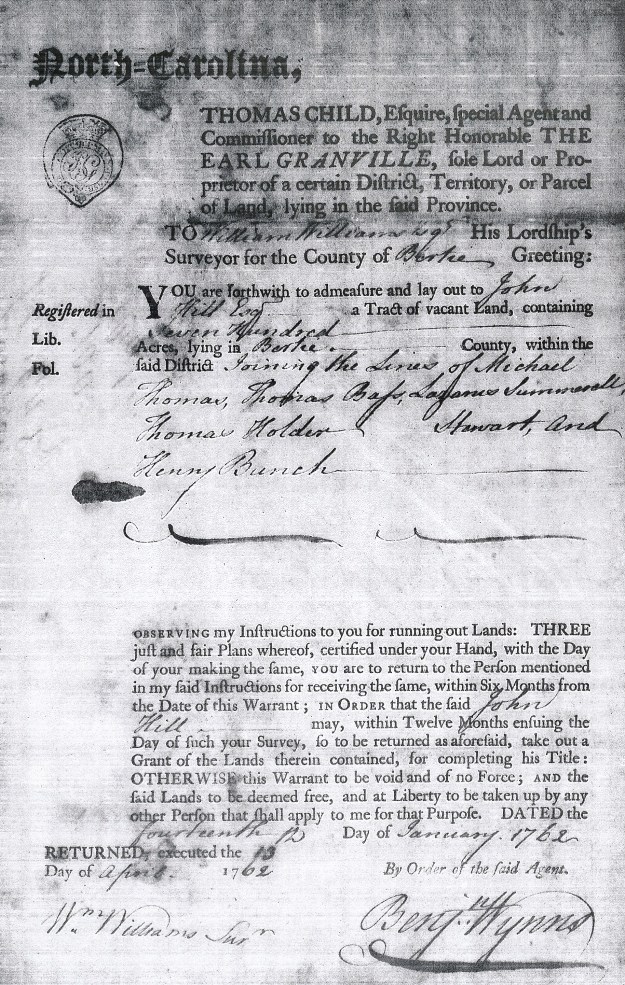
In Jan 1761, George Spivey received a Lord Granville grant in the amount of 700 acres. The grant was not listed in the card catalogue at North Carolina Archives because it was in another series that had never been included in the catalogue. The folks graciously walked through their online finding aid aptly called MARS where numerous early grants for Bertie County appeared. You’ll notice for George Spivey’s grant that the description reads: “Lying in Bertie County joining the lines of Jethro Butler, Thomas Page, Judith Thomas and others and on or near Jumping Run and commonly called Cabin Neck. So from this record, are we seeing Joseph Thomas’ land where Judith is living?

granville

Charity Thomas

No Information known beyond her mention in her father’s last will and testament.


OUR FAMILY AND NEIGHBORS (Pt. 3)

Dated 10 Dec 1732 and probated Feb 1735, Joseph Thomas penned his last will and testament mentioning wife Eales (Alice); sons Joseph, Michael, Luke, James, Jacob; and daughter Charity. The executors were Michel Thomas and John Spivey. The will was witnessed by Francis Hobson and William Simmons.

In Feb 1738, the son Jos. Thomas was appointed “Constable in the ye room of Rt. Howell.“ Evidently Robert Howell had served as constable and now Joseph Thomas was for some reason stepping in to take his place. Robert Howell’s land adjoined the lands of Francis Hobson near Chisky Swamp and the Roquest Islands.

In the same month, [E-395 Bertie, 13 Nov 1738, Feb 1738], Littleton Spivey conveyed to Ealee Thomas. 220 acres on NS Morrattock River adjoining James Blount and Thomas Busby land with mention of a dividing line between said Spivey and Page. Witnesses were George House, James Carter with Luke Thomas jurat. Next, [F-450 Bertie, 29 Dec 1740, Feb 1742] Alice Thomas, “widow” gifted the same 220 acres of land to her “well beloved son Luke.” Witnesses were William Carter and Brother James Thomas. Note that this is the 220 acres that had passed from Richard Melton to Francis Parker and then from Francis Parker to Henry Averett before being conveyed to Joseph Thomas. The deed to Joseph Thomas was dated 12 May 1735 occurring after the death of Joseph Thomas Senior. And, following that transaction, within two years the land somehow made its way back to the hands of the widow Alice Thomas who gifted it to her son Luke. Also important in this transaction is the naming of Littleton Spivey. I guess from this and other mentions of the name, it is believed by family that Joseph Thomas Senior’s widow was born a Spivey. Littleton Spivey is the son of John Spivey who owned land in the area. I wish I could write more on this connection but for now I’m simply not sure of the heritage.

At the time when the above deed to Luke Thomas was registered, and per the Feb 1742 Bertie P& Q, Alice Thomas proved her rights vizt: Alice Thomas, James Thomas, Jacob Thomas, Mary Thomas whites & York, Rose, Ned, Simon, Philis & Penny Blacks. Ind. This indicates sons Joseph, Michael and Luke were at that time free men and note there is now a daughter named Mary who was not named in Joseph Thomas Senior’s last will and testament. And, later in the same year, in Aug 1742, Joseph Thomas on oath proved his rights to wit: Joseph Thomas, Anne Thomas & Michael Thomas & Mary Thomas white persons. Joseph is married to Anne and at this day and time, the family are all listed as white. Though issues of race identity have been raised due to the mixed culture, this tax list is supported through recent DNA testing.

A person by name of Mary Owl gifted household items to her children James, Anelina and Sarah Owl [F-471 Bertie, 1 Oct 1741, Nov. 1742]. Witnesses of the transaction were Thomas Wilson, Joseph Thomas and Ann Thomas. I’m thinking that for the first time, in this record we are seeing Joseph Thomas Junior and his wife Ann. There’s nothing more on Mary Owl but I wonder of her heritage? In order to gain a sense of location, I discovered that the witness Thomas Wilson owned land near the southern end of Wattom Branch. A later Bertie County tax list identifies Thomas Wilson’s son Edmond as mulatto. Is it possible that Thomas Wilson was black or Indigenous or had he married such? Note that in this day and time race was dictated by that of the mother.

In Feb 1743, Joseph Thomas’ appointment as constable was continued for the ensuing year. In May of the same year, and “pursuant to the directions of ad act of Assembly for obtaining an exact list of tithables, this court appoints the following districts to the several constables & Vizt: (of which one is):

Jos: Thomas’s district from the mouth of Rocqques up Cashay to Thos. Jones thence across the woods to Nathan Mirs & down Rocques to the first station.

On 27 Feb 1748, Joseph Thomas purchased 178 acres on the north side of Cashy Swamp from John Bell [G-78 Bertie]. The land adjoined that of Maj. West. Witnesses were Thomas Castallew, Thomas Simons and Peter Day.

One of the most proclaimed Thomas histories is the Thomas Bridges Story 1540-1740 written by Edison H Thomas. The author indicates that Joseph and Alice Thomas’ son James married Sarah Barnes and lived until James’ last will and testament was written in Bertie County. Problem is that James’ brother Joseph died earlier after writing his last will and testament nearly 30 years earlier in 1852. In his will Joseph Thomas gives and demises:

“… to my daughter Elizabeth Thomas my land and plantation whereon Judeth Thomas now lives it being the land that fell to me by the death of my brother James Thomas.”

If James Thomas was pronounced dead in his brother’s 1752 last will and testament, it would have simply been impossible for James to write his own last will and testament in 1780 …he was already dead! Seeking some sort of record confirming James’ earlier death, in 1750 John Sallis, Deputy Sheriff late of Bertie County provided an account of the sale of James Thomas’ estate. Buyers were Judith Thomas, Joseph Thomas, John Jameson, Jethro Butler, William Holmes, Mr. Searson, and James Boyt. Armed with this information it needs to be asked if I am right on this and if so, who was James Thomas who died ca. 1780? Hopefully others will help to make that determination.

record-image_33S7-9PT3-LSH.jpg

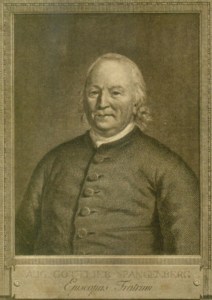
Note that James Thomas’ estate sale was administered by John Sallis, whose title is deputy sheriff of Bertie County. Governor Gabriel Johnson signed into law an act “That the Court House, Prison, and Stocks shall be built between Cashy Bridge and Will’s Quarter Bridge.” In 1748 John Sallis was contracted to construct locks, window bolts, and a table. Sallis was also contracted to lay off and fence in the courthouse yard with posts and rails and to erect a whipping post and stocks. By 1751 John Sallis had moved west to Granville County and by 1752 he had sold all his land in Bertie which included 100 acres on the Cashy.Gottlieb_August_Spangenberg

In 1752 bishop August Gottlieb Spangenberg toured North Carolina seeking a place to establish a 100,000 acre Moravian settlement. Passing through the town of Edenton he met with Thomas Whitmell in Bertie County before heading west where his team was treated for sickness at the home of John Sallis. From Spangenberg’s journal the following excerpts tell of John Sallis and of his experiences in Bertie County:

We also visited the Tuscaroras, who live on the Roanoke. They have a tract of good land, secured to them by Act of Assembly; I should judge that it contains twenty or thirty thousand acres. It is twelve miles long, but not wide.
Their Interpreter, Mr. Thomas Whitemeal, was kind to us, took us to them, showed us their land, and introduced us to them. He was at one time a Trader among them, understands their language fairly well, and speaks it with ease. Now he is one of the richest men in the neighborhood, and is respected by everybody.
The Indians have no king, but a Captain elected from among them by the whites. There are also several Chiefs among them.

The Tuscaroras are few in number, and they hold with the Six Nations against the Catawbas, but suffer much on this account. They live in great poverty, and are oppressed by the whites.

Mr. Whitemeal is their Agent and Advocate, and stands well with them.
Hitherto no one has tried to teach them of their God and Saviour; perhaps that is well, for the Lord has His own time for all. If it will be the duty of the Brethren to work among them I do not know, but I rather think so, and should like to hear what the Brethren think.

_____________________________________

North Carolina in Granville County, 153 miles from Edenton, at the home of Mr. John Sallis, Sept. 25, 1752. Here at the home of Mr. John Sallis the Saviour has stopped us for a little while, and four of our company have been in bed with a bad attack of chills and fever. All this section of North Carolina lies low, and there is much water, fresh and stagnant, which breeds fever every year, and many die from it. Br. Henry Antes, Johann Merck, Hermann Loesch, and Timothy Horsefield are now in bed sweating under the influence of a root that is here used as a remedy for the fever. I hope the Saviour will lay His blessing upon the treatment.

We believe that we caught the fever in Edenton, and brought it with us, for there is so much fever in that town that hardly anyone gets through a year without an attack. It lies low, surrounded by water, which has neither ebb nor flow on account of the sandbanks, which lie between North Carolina and the sea, and hinder the tide. For this reason the large rivers, e.g., the Chowan, Roanoke, etc., have no free outlet, and little return of water from the sea. Therefore North Carolina has less chance for trade than Virginia or South Carolina, for, accurately speaking, there is no navigable river in the part of the country belonging to Lord Granville. But to resume,—We plan to remain here until our men are again on their feet, and will then continue our journey.

We are staying with a man who spent a year and half alone in Guinea. The Captain with whom he sailed maltreated and then abandoned him. The negroes took him, bound him, and intended to kill him, but changed their minds, allowed him to live, and were good-natured and friendly. They wanted him to stay with them but he longed for home, and took the first good opportunity to return.

We are receiving much kindness in his house. He serves us like a brother, and his wife gladly does everything she can also. We wish the Unity to pray for a blessing upon them, that they may receive mercy even as he and his wife and children have shown it unto us.

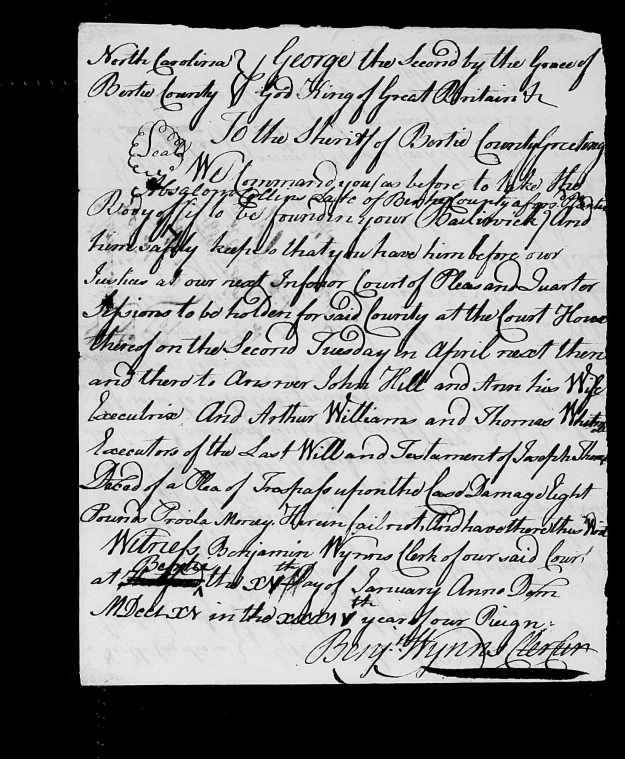
It’s really interesting to me that Gotlieb Spangenberg met with Thomas Whitmell who, in the same year, was named executor in the 1752 last will and testament of Joseph Thomas. And not many years earlier, John Salis was administered the 1750 estate sale of James Thomas. And, as it turns out, the 1758 estate sale for Joseph Thomas was administered by “Robert Harris, assignee of John Sallis.” All of this happened at a time when disease was raging. Maybe we are seeing the cause of Joseph and James’ death? And, in looking back through the 1758 estate papers for Joseph Thomas, it appears that Joseph Thomas’ widow and executrix Ann Thomas married again following Joseph’s death. From below, it is ordered that “Absolum Collins late of Bertie, if found, be brought in to answer John Hill and Ann his wife Executrix and Arthur Williams and Thomas Whitmell Executors of the last will and testament of Joseph Thomas deceased.” So, at that point Ann was both the wife of John Hill and executrix of the estate of Joseph Thomas. This is not written in any family histories and I believe it to be a new find!

record-image_33SQ-GPT3-2VS

OUR FAMILY AND NEIGHBORS (Pt 2)

park

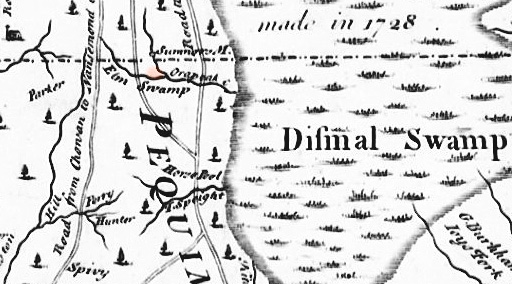
In 1729, Joseph Thomas left his lands on Oropeak Swamp along the North Carolina state line. Per a deed from Samuel Bass [C-213 Bertie, 23 Mar 1729, Mar 1729], Joseph sold two tracts along Oropeak of which one, on a branch known as Elm Swamp, had passed to the said Joseph Thomas by way of a conveyance mentioned in the 1716 last will and testament of Peter Parker. Joseph Thomas then removed to the land he purchased from the said Samuel Bass, being 640 acres on the south side of the Cashie River adjoining the lands of William Williams. And, at the time of his will in 1716, Peter Parker had not only owned land on the state line, he also bequeathed several tracts along Deep Run (now Indian Creek), Wiccacon and White Oak Creeks in present day Bertie County. Legatees in Peter Parker’s last will and testament are sons Thomas, John, Peter and daughters Mary, Ann and Elizabeth.

While trying to get a grip on timing and the sequence of events, I came across Henderson Walker who, as a staunch Anglican became governor of North Carolina (1699 till 1703) following the death of John Harvey. In 1697 Henderson Walker received a grant for 428 acres located on the east side of the Albemarle Sound in what is now Chowan County. This land was likely near Edenton where the governor lived and was buried. Henderson Walker’s grave was later moved from his home to St. Paul’s Episcopal Church cemetery in Edenton. Upon his tomb stone an epitaph is inscribed: “…during (his) administration the Province enjoyed that tranquility which it is to be wished it may never want.” Walker’s widow, the former Ann Lillington, later married the surveyor and mapmaker Edward Moseley whose 1733 New and Correct Map of the Province of North Carolina is so very important to our state history.

From the North Carolina Historical and Genealogical Register [Vol 1, Jan 1900], it is said that Walker’s 428 acre tract was conveyed by Wm. Williams of Isle of Wight Virginia to Peter Parker of Nansemond. Wow …both of these names are players in our story! William William’s father Lewis Williams had been granted 640 acres on the Chowan River May 15, 1697. That tract was conveyed to Peter Parker of Nansemond VA by William Williams of Isle of Wight VA on Oct. 26, 1706. The land had been conveyed to William Williams by John White, Sr.

___________________________________________________

Let’s take a look at Bertie County, the river Cashie and Joseph Thomas’ land situated next to that owned by William Williams. The crude legal description from Samuel Bass’ conveyance reads:

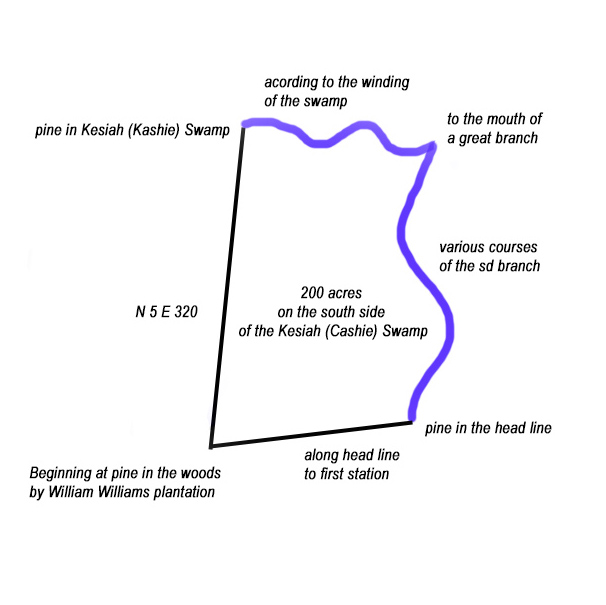
“…assigns forever 200 acres on the south side of Kesia (Cashie) Swamp beginning at a pine in the woods by William Williams plantation then N 5 E 320 poles to a pine standing on Kesiah Swamp then of the meandering of the said branch to the mouth of a great branch then down the various courses of the said branch to a pine in the head line then along the headline to the first station.”

joland1

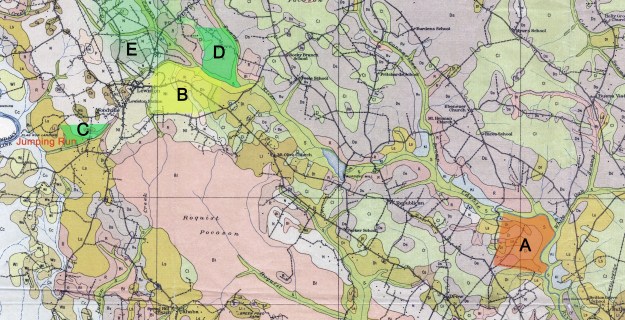
When platted (above), I can only imagine how the “head line” and two waterways actually appeared. There’s simply not enough detail in the description to locate the land. We can’t even properly join the tract to others without lots of guesswork. Seeking to place the tract on today’s topography, the land at first appears to be located near the point where Cashie Swamp forks from the main Cashie river (see orange tract A). And though I’m still not 100% sold on the idea, because it adjoins the lands of William Williams, and from other family and neighboring deeds, I feel this tract may actually be further west near the fork of Cashie and Wattom Swamps (see yellow tract B).

3

We know because of his last will and testament that the aforementioned Peter Parker died prior to 1716. There’s another person of same name who continues to show up in family records. He’s likely the son of Peter Parker who’s mentioned in the last will and testament of the earlier Peter Parker who died in 1716. In trying to imagine the life of our early family, sometimes you gain more learning about their neighbors. I hope that some of the Parker and other family histories will be helpful in trying to figure out our own.

___________________________________________________

Before getting into specifics based on the few surviving records, it’s important to understand the big picture. With that purpose in mind, know that like Joseph Thomas, Peter and John Parker appear first in Bertie on lands south and west of Cashie Swamp. A person named Francis Parker joins in soon after. Dated 18 Jun 1717, Thomas Parker of Chowan deeded part of his plantation to his loving sons William Parker and Francis Parker. It is believed Francis and John Parker are sons of Thomas Parker who is the son of Peter Parker.

Our Joseph Thomas also owned land nearby with title histories linked to the Parkers. It appears that John Parker had land nearby on the Cashie Swamp but quickly moved a bit further north where he settled along Ahoskie and Wiccacon Creeks. In that area were also the families of Lazarus, Philip, John, and William Thomas who were undoubtedly cousins of Joseph Thomas. Francis Parker seems to have also made the move north before removing to Edgecombe County. It is said by some that Francis Parker married into the Thomas family.

Let’s look at a few deeds in hopes of starting to lock in in on some of the Thomas land locations. Note that the deeds and where I’ve placed them on the map are not meant to be viewed as exact locations. Instead, I just want you to generally know where our family lived. Also note that the deeds below are located on the above map in the (green shaded areas):

[A-36 Bertie, 9 Feb 1722, Feb 1722] Thomas Rhodes and wife Mary to Jeffery Butler, being 100 acres beginning at the fork of a branch on Jumping Run Creek, then out the branch and back to Running Creek and down the said creek to begin. Note that Jumping Run is also called Flag Run and it was so named because the hard bottom was firm enough to allow horses and carts to pass over the swamp. Test: William and Thomas Jones (see green C).

[B-36 Bertie, 6 Aug 1725, Nov 1725] Henry Rhodes and wife Elizabeth to James Blount, being on the North West side of the Casey Swamp beginning at Thomas Busby’s corner on the swamp then down the swap to James Parker’s corner then up his line to Busby’s then down his line to begin. Test: John Duffiel, Thos Benten (see green E).

[B-37 Bertie, Nov 1725] Henry Rhodes to Thomas Busby, being 170 acres on the east side of the Cashie Swamp beginning at the main swamp then a line of marked trees to the side line then to the first station then then to the swamp. Wit: Owen Daniel, James Murray (see green E).

[B-38 Bertie, 9 Nov 1725, Nov 1725 Thomas Rhodes to James Murry, a tract of land in the fork of Kasia Swamp beginning at James Murry corner on the southernmost branch of the swamp where is a beaver dam then up the swamp to a branch that runs by Rhodes’ plantation then up the branch then a row of marked trees to another branch then down a row of marked trees to James Murry’s corner on another branch called Wattom branch then along Murry’s line to the beginning. Wit: Thomas Barfield, Elizabeth Barfield (see green D).

[B-40 Bertie, Nov 1725] Henry Rhodes to Peter Parker, lying on a branch of Cashie Swamp. Running along a line of marked trees between Henry Rhodes and Thomas Busby then down a row of marked trees to the swamp then down the swamp to begin. Wit: James Murry, Thomas Busby (see green E).

Knowing from other records that William Williams’ land is south of the western portion of Cashie Swamp, and if you read between the lines, the above few deeds begin to illustrate the neighbors in an old community situated near the present day town of  Woodville. Let’s now start to pick up a few records for Francis Parker:

[A-248/251 Bertie, 10 Feb 1720] Francis Parker carpenter of Bertie to John Parker mill wright of Nansemond VA being 640 acres beginning at gum James Blount and Thomas Busby’s corner then N60E320 to three oaks then S30E320 to a gum then S60W320 to center of 3 hic James Blount’s corner then along his line to begin. This was a lease and return of land from and back to John Parker from Francis Parker. Test. William Horton, Elizabeth E Parker, Francis Parker Junr (see green E).

[B-74 Bertie, 3 Jan 1725, Feb 1725] Richard Melton to Francis Parker being 640 acres is located on the north side of the Morotoc beginning at a gum John Blunt and Thomas Busby’s corner then along John Blont’s corner N60E320 to the center of 3 oaks then N15W 320 to black oak then S48W 266 to a pine Richard Melton’s then with his line and Thomas Busby’s line to begin. Wit: William Cason, Taylor Oquin (top tract below and see green E).

[B-253 Bertie, 7 Mar 1726, Mar 1727] Peter Parker and Henry Rhodes with free consent of both our wives mainly Grace Parker and Eliz’t Rhodes to Dan’l Heismith being 150 acres on a branch of Cashey Swamp called the Broad branch. Beginning at pine of sd branch being a corner tree and running along the dividing line in Henry Rhode’s line then up Rhode’s line then down a line to the afor’sd branch and then down the branch to begin. Wit: Richard Oldner, Lazarus Thomas.

[D-190 Bertie, 12 Feb 1733, May 1735] Francis Parker of now Fishing Creek in Edgecombe County NC to Henry Everand. Being the same land as in Deed D-74 above, the only difference being that the land now adjoins that of John Blount vs James Blount in the prior deed. This 640 acres is located on the north side of the Morotoc beginning at a gum John Blunt and Thomas Busby’s corner then along John Blont’s line N60E320 to the center of 3 oaks then N15W 320 to black oak then S48W 266 to a pine Richard Melton’s then with his line and Thomas Busby’s line to begin. Wit: Thomas Harrill, John Becton (top tract below and see green E).


deed3

Following the undated conveyance from Francis Parker to Henry Averett [D-190 Bertie], the next page in the deed book reveals Henry and wife Mary Averett’s conveyance of the very same land to Joseph Thomas [D-191 Bertie, 12 May 1735, Rec. May 1735, Wit: John Harrill, Jos. Harrill]. So this tract of land eventually owned by Joseph Thomas had passed from Richard Melton to Francis Parker and then from the said Parker to Henry Averett who in turn deeded it to Joseph Thomas.

Note in the above that the initial conveyance from Francis Parker to Henry Averett was not dated. It was recorded however at the same time in May 1735 when Henry Averett sold the same land to Joseph Thomas. As Joseph Thomas’ last will and testament was probated earlier in Feb 1735, we know that Joseph was dead at the time when Henry Averett deeded the 220 acres. Whew …it’s possible Joseph had never recorded the conveyance and this was simply a means of recording the conveyance post mortem as part of the estate settlement. It’s also possible that the conveyance from Henry Everett refers to Joseph Thomas’s son of same name. If so, it signals that the younger Joseph Thomas was of legal age in 1735. In his last will and testament, Joseph Thomas (the elder) writes:

Item I give and bequeath to my well beloved wife Eales Thomas my plantation that I now live upon at her own disposal during her life and likewise all my stock and ___________

Item I give and bequeath to my son Joseph Tomas the above mentioned plantation after my wife’s decease and the privileges of ____ part of it in her lifetime provided he does not __________ her upon any_____________. 

If the land was to pass as directed in the will, we know it certainly did not play out as the will suggests as from later records we know that Joseph’s wife lived beyond both the will and above deed dates.

So far I’ve only been able to connect one other piece of land to the tract Joseph Thomas purchased of Henry Avertt.  The top tract of the two drawn above represents the 640 acres leased between John and Francis Parker.  That piece of land abuts the tract deeded to Joseph Thomas by Henry Everett. The line of importance is the starting line that begins with a gum and runs N60E320 to three red oaks. In later posts we’ll look at this tract in hopes of determining what happened to it following the 1730’s death of Joseph Thomas. Also, and in looking at all the records I’ve presented in this post, please notice how the names Blount, Parker, Averett, Busby and others are mentioned quite often.  Take time to google these names so you’ll know more about your ancestor’s neighbors. I think it really was a tight community.

___________________________________________________

At this point we’ll rest with the idea that Joseph Thomas lived on land along the western extent of Cashie Swamp near present day Woodville in Bertie County. Following the conclusion of the Tuscarora War, this was a time when the Indian villages to the south  were well established. It’s also a time that we now sadly know to be the beginning of their end. I have to wonder how all that played out while my family was settling just to the north on lands adjoining James Blount/Blunt. Was this the same James Blunt who became chief of the Tuscarora following the death of King Tom Blunt?

On 1 Mar 1711 John Dickson sold to Thomas Hart 300 acres [C-241 Chowan] joining Richard Melton. The land was called “by the name of the Village.” Knowing that Joseph’s land passed  to him from Richard Melton, you can see in this deed how close Joseph must have lived to the indigenous people.

In the next post I’ll start to look at Joseph Thomas’ family and later conveyances that undeniably link Joseph to his children and wife Alice.


OF OUR FAMILY AND NEIGHBORS


bertie 1872

Pierce’s New Map of the State of North Carolina – 1872


At this point I’m what you call an out-of-towner, a person who doesn’t live in the community where his ancestors possibly lived. I am also a person who’s willing to stumble all over himself any way needed to learn who my family was. For me this is all about culture …I want to know what life was like for them. And now learning that my family lived in Bertie County, my eyes have been opened to the dynamics of yet another place and generation back in time.

 
Can you imagine what it was like living on the Virginia / Carolina state line in 1700? North Carolina was young, crudely ruled and yet its fertile lands were calling. The new province lacked the governmental support readily available even just fifty years later.
For my folks who moved from Virginia ca. 1707, the communities in Chowan County (Bertie Province and later Bertie County) were small and the social hierarchy was steep. Your home back then would have been within easy walking distance of active and well established Indian villages. Some of the Indians were friendly while others were preparing to face the cruelty they found inherent in their new neighbors. Just as was experienced by the European settlers, the indigenous people were going through an even greater change.

 
Alongside the mix of indigenous peoples were slaves, indentured servants and a diverse mix of newcomers of the likes I can only imagine. It is said the region was a spiritual wasteland without organized religion. It was a place where people struggled meagerly in a hot, swampy and mosquito infested land. Life wasn’t good but alongside those who struggled were also landowners who at least had the means to make a proper go of it. The power structure was made of farmers, tradesmen, shipping captains, merchants, Indian traders, council presidents, and even governors. All of these folks lived very close to each other.

 
As for the Thomas family, the branch I may grow from lived on the west side of Chowan River on the north side of the Moratoc River. The name Morotoc refers to the name of Indians who once lived along the coastal river. The word means nice or “good river.” In other records the very same river is identified as Roanoke meaning Wampum in the Algonquin language. The Roanoke was considered a “River of Death” because of its treacherous spring floods.

 
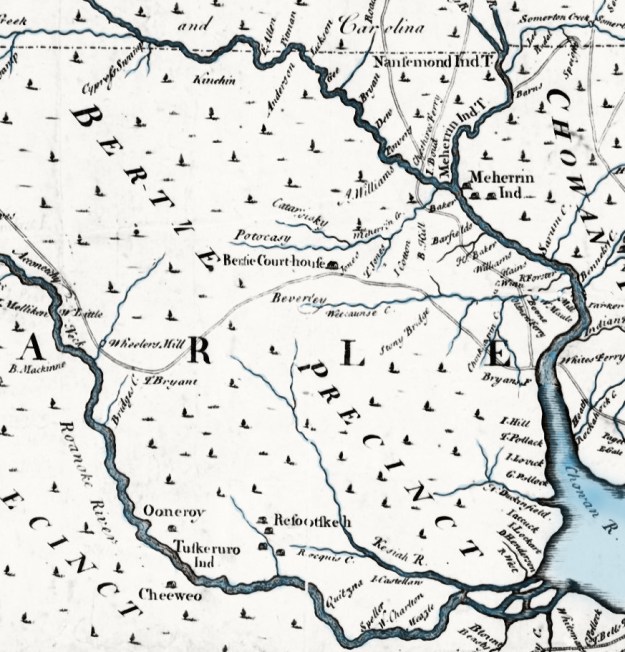
When Joseph Thomas moved to the area around 1710-1729, his land was located on a branch of the Roanoke known as Cashy River. Only a few years after settling on the Cashy, in 1733, Edward Mosely created a map locating the river along with its surrounding Indian villages. In the lower portion of the map (below) you’ll see the villages of Ooneroy and Resootskeh with the “Tuscarora Indians” living in between. Tuscarora Indians? …who and what was that about?


bertie - Copy (2)

Edward Mosely’s New and Correct Map of the Province of North Carolina – 1733


The Tuscarora War (1711-1715) was fought between the European friendly Chief Tom Blunt living north of the Moratoc and Chief Hancock who lived south along the Pamlico.

Tuscaroran Chief Tom Blunt occupied the area north of the Morotoc (now southern Bertie County) where he lived in peace and was friends with a European family of the name Blount/Bunt. It’s believed the chief’s European name was taken by him out of respect for his neighboring Blunt family. On the other hand, Chief Hancock lived to the south along the Pamlico where a greater population of Europeans had abused his people to the point of even taking them into slavery. In 1711, alone and without support from Chief Blunt, the southern Tuscarora Indians under the lead of Chief Hancock attacked the settlements up and down the Trent and Alligator rivers. As a result of the outbreak, Governor Edward Hyde offered Chief Tom Blunt leadership of the entire Tuscarora Nation if he would simply help the governor to defeat Chief Hancock. With this, the war was on. Friendly Indians and troops from South Carolina were brought in and eventually Hancock was defeated. Following the war’s end, an exodus of Hancock’s southern Tuscarora removed to New York where they joined and settled among the Iroquois Federation near present day Buffalo. At that point any remaining peaceable Tuscarora were allowed to live in the aforementioned Bertie County villages of Ooneroy and Resootskeh. It’s for this reason the villages appear on Mosely’s 1733 map.

 
In 1718, a treaty was signed in which Tom Blunt was named King Tom Blunt. On behalf of the Tuscarora Indians the nation was granted 56,000 acres in an area known today as Indian Woods. Tribal attrition, encroachment by settlers, and scandalous dealings involving later tribal chiefs diminished the reservation. As per a 1708 Act of the General Assembly, and reflecting several 100+ year leases of the land dating back to 1766, a total of 41,000 acres was formally surveyed in 1803. The survey for that plat is below. Of interest, it’s now 300 years since the closure of the Tuscarora War. In celebration, a conference titled Three Hundred Years of Indian Woods, 1717-2017 will be held at the Hope Plantation in Bertie County. I am registered to attend the conference, hoping the experience will strengthen my perspective while allowing me to build valuable family connections. If you’re interested in the story of the Tuscarora, I’d encourage you to look more closely online at sites such as the Tuscarora Nation.


tuscarora

State of North Carolina}
Bertie County}
The above is a correct plan of the land allotted to the Nation of Tuscaroran Indians. The bounds of which are expressed in an Act of the General Assembly of the State aforesaid passed in the year 1708 which are as follows viz.: Beginning on Roanoke River at the mouth of Quitsney Swamp thence up the various courses of the said swamp to an oak near the head of the great spring, thence N 10 E 904 poles to a persimmon on Roquist Swamp thence N 57 W 2888 poles to a hickory at the head of Falling Creek Run or Deep Creek thence down the various courses of the said creek to Roanoke River, thence down the river to the first station containing forty one thousand one hundred & thirteen acres. The subdivision represents the second leases which appear to have been obtained from the said Indians subsequent to the 10th day of July 1766 and prior to the 1st day of December 1777 as will as the undivided residue which was in pursuance of an Act of General Assembly of the state aforesaid.
                                                                      Certified under my hand this 17th of June 1803
The above plan and survey 17th of June 1803                                W. H. Bryce – Surveyor
J. Slade} Commissioners for
William Hawkins} the said Indians


______________________________________________

The tribal war was over and now the land was primed for the ensuing migration of European settlers. It’s during this period when Joseph Thomas moved south from his land on the Oropeak to the Cashy River. Let’s attempt to connect Joseph Thomas’ 1729 relocation to Bertie County to the new land and to the Tuscarora experience.


Looking at the 1808 survey plat, note that the top right or northeast corner of the Indian Nation is situated on Roquest Creek nearly north of Quitsney Swamp on the Roanoke. Using Edmond Mosley’s 1733 map, Resootskeh Indian Village is situated north and west of the head of Roquist Creek on which the northeast corner of the tract is located. Looking a bit further north, you’ll see what’s known as Cashie Swamp branching west from the main course of the Cashie River. I believe Joseph Thomas owned land located in the fork of the river and somewhere along the Cashy Swamp. And adjoining the lands of Joseph Thomas, a person named John Blunt along with others owned lands reaching south and west from the above Cashy swamp to Roquist Swamp. John Blunt was likely a member of the family from which King Tom Bunt’s name was derived. Let’s reel forward a generation when Joseph Thomas’ son of same name was appointed constable of the lands from the fork of Roquist north to near the Cashy swamp. What a great clue and there’s more! Part of the estate lands of elder Joseph Thomas deceased was conveyed to his son Luke by his widow Alice. That deed was witnessed by a person named James Blunt. Note that King Tom Blunt of the Tuscarora was succeeded by a person named James Blunt. I’d like to provide more detail on all of this but doing so is very tedious and should be given a post dedicated to just that purpose (coming soon). But for now, note there is good information including a letter written by James Blunt in the “1740’s -1800” section of the Tuscarora Chronology. Also, an article titled Death of a Reservation offers a well-written overview of the Tuscaroran chiefs.

 
At this point the reader needs to realize that Joseph Thomas lived on the north side of the Tuscarora Nation on land that adjoined the Blunt Family who likely played a major role in defining early life in Bertie County. The Thomas family also interacted with others who certainly helped to shape our great state. It’s my hopes that this post provided the unknowing with a contextual starting point for studying the place and times in which Joseph Thomas lived. In following posts I’ll begin to look more closely at Joseph Thomas and the legal documentation recorded by his family while living along the Cashy Swamp in Bertie County.

ROLLING OUT OF VIRGINIA

Coltons_New_topographical_map_of_the_eastern_portion_of_the_State_of_North_Carolina_with_part_of_Virginia__South_Carolina_from_the_latest - Copy

It really is a hard task proving one’s ancestry back to Virginia. As many Carolinians say of their family, ours has been here since dirt. In other words, they go back to a time prior to destructive storms and courthouse fires to the days when records have been lost or the government was not in place to effectively record the lives of its citizens. As for our Thomas family, we do have believed branches reaching back to Isle of Wight and Nansemond counties in southeast Virginia. Some even believe we go back to Jamestown though that idea is in no way supportable.

In this post I want to look at the period in time when families rolled out of Virginia to the fertile and less governmentally restrictive lands of Carolina. I’ll start to look at records here in North Carolina and not so much at those in Virginia. I can look at each and every Thomas family making the move, but for now, will offer a broad overview of a few well-researched lines believed to be connected to our narrow migratory path.

________________________________________________

The first record for the Thomas family in North Carolina is found in deed 1-57 Chowan, 22 Nov 1704, from John Thomas “of Nancymond” Co. VA to Coll. Thomas Pollock of Chowan. Being 208 1/3 acres on the west side of Chowan river “taken up by John Lawrence decd., the sd. John Thomas having a good right and title of the sd. land by right of Mary, my now wife, daughter of ye aforesaid John Lawrence.”
Of interest, Col. Thomas Pollock was a merchant, the wealthiest man in North Carolina, a Colonial Governor, and the person charged with executing the Tuscarora Indian Wars of 1713-1717. Thomas Pollock lived on Salmon Creek, opposite Eden on the Chowan River. Pollock was unscrupulous in business with it being said he would even jail people for not agreeing to sell them land.
From records in Isle of Wight VA, we know John Thomas married Susannah. She was  both the daughter of John Portis and widow of John Frizell. We know Susannah died early as on 22 Nov 1704, John Thomas, of Nansemond County, Virginia, deeded to Col. Thomas Pollock of Chowan Precinct in North Carolina, the aforementioned 208 1/3 acres on the west side of Chowan River. Being part of 625 acres patented by John Lawrence dec’d, the land was conveyed by John Thomas on September 25, 1663 “by right of Mary my now wife, daughter of ye aforesd. Jon. Lawrence.” From this deed we know that Susannah died and that John Thomas married second the daughter of John Lawrence. And marking the passing of John Thomas, on 16 Oct 1713, Mary Thomas, widow, of the Upper Parish of Nansemond County, sold to John Lawrence, Sr., 100 acres in the Lower Parish Isle of Wight County. This land from a patent of 530 acres to John Lawrence deceased on June 5, 1678, lying “upon maine Blackwater” and bequeathed to her by her said father in his will dated 2 Jan, 1696.

Virginia records clearly connect John Thomas to Pagan Creek along the James River to Black Water River. And, records in North Carolina now connect the same person to land on the west side of Chowan River. Note that the Black Water River rises in Virginia and becomes the Chowan River in North Carolina. It’s easy to imagine a move down the river and John Thomas’ owning of land in North Carolina.

John Thomas and second wife Mary Lawrence are believed to have had a son John Thomas. Representing either John Thomas the elder, or his son John, or even a grandson of same name; a John Thomas appears numerous times as living in the area of Wiccacon Creek in northern Bertie, now Northampton County NC. In the map above, (the yellow arrows) reflect this migration from Pagan Creek, to Blackwater River, and then down the river to the areas of Wiccacon west of the Chowan.

Relating to a John Thomas, son of John Thomas and second wife Mary Lawrence “of the Upper Parish of Nansemond County”, John Thomas held onto holdings in Virginia until on 20 Sep 1736. Following the directive of his grandfather John Lawrence as outlined in his last will and testament, John Thomas deeded 100 acres east of Blakwater to John Lawrence, Jr. of the Lower Parish of Isle of Wight County. Knowing John Thomas the elder had died, this must be his son. The land was “bequeathed to daughter Mary Thomas by John Lawrence, Sr.” It is believed that John Thomas (the younger) moved to now Edgecombe County where his life as founder of Toisnot Church is well documented in Baptist histories (red star on map above).

The yellow “A” below provides a closer look at the area of settlement along the Wiccacon Creek. Also in that area at about the same time, there are records for William Thomas, Phillip Thomas, Lazarus Thomas and even a Joseph Thomas who all were all somehow related as close as children or grandchildren of John Thomas and his first wife Susannah Portis. Some of their descendants also moved to Edgecombe (red star above). There’s also a John Giles Thomas in early Wake County, (green star above) who some believe is also from these families.

Joseph Thomas, son of John Thomas and Susannah Portis took a different route to North Carolina. As discussed in earlier posts, Joseph first appears at Oropeak Swamp on the state line. Marked above by (a green arrow), Joseph moved to the Cashie River which runs south and eastward of the Wiccacon. It empties into the Roanoke near it’s confluence with the Chowan. Some land and court records locate this Joseph Thomas as living more northerly along the Kashie Swamp and therefore closer to other Thomas family (green B below). Some records locate the family more southerly, being closer to the Tuscarora Indian Villages (green C below). So, exactly where did Joseph settle in Bertie? That’s an important question as understanding its answer will impact believed interactions with nearby Indians during a seriously volatile time.  Also, was John Thomas’ original 1704 land on the western side of Chowan River located closer to family in northern Bertie or was it situated further south nearer to Joseph’s land? This was all very early and to put it into context, 1704 was just a few years following John Lawson’s  1701 expedition into the Carolina backwoods. It also predated the Tuscarora Wars by almost ten years! What would life have been like back then!!!???


Joseph Thomas, son of John Thomas and Susannah Portis, died and left a last will and testament in the 1730’s. His son Joseph lived in southern Bertie and died ca. 1758 per the probation of his last will and testament. In the instrument, Joseph Thomas (the younger) names yet another in the family called Joseph Thomas who is believed to have sold land in the late 1760’s before moving to now Wake County NC (green star above). I’ve found absolutely no record sealing the deal, but timing and some of the surrounding names in Wake County loosely link Joseph back to Bertie.

thosbert

Over the months to come I’ll look more closely at land, court records and individual families in hopes of putting meat to the bones in this puzzling mystery of who we once were. At this point we have a large group of THOMAS with matching DNA from family descendants in Anson, Union, Stanly, Moore, Lee, Chatham Counties. We yet have any solid matches or even participants from other lines in Edgecombe, Bertie, or Northampton counties. If you are a THOMAS from the other lines, please get Y-tested and join us at the THOMAS familytreedna.com Group.  The Y-test tells you nothing about your percentages of makeup such as Irish vs Spanish etc. It is the tool we use in building paternal lines connecting us back through many generations. There’s also a Thomas FB Group set up as a place to advance discussion.
Please! …get in touch if you have any thoughts pertaining to our storyline. I can be reached at geothos @bellsouth.net

TERSEY AND FRAN


Wm and Minnie

My mom was just seven years of age when her older sister Wilene, not of age to drive, took command and drove the family car out to the fields so as to alert their mother that Aunt Jack had passed. It was indeed a sad day and she knew her mom needed to know that everyone was preparing to gather in Albemarle. Given her nickname by way of her husband Thomas Jackson Furr, Aunt Jack was born Tirzah (or Tersy) Adeline Hinson. Tirzah is my great grandmother Frances Isabelle Hinson Love’s sister and is named for their mother’s sister Tirzah Biggers. Tirzah and Frances Isabella are the daughters of William Bartlet “Bartley”and Marcena Biggers Hinson.

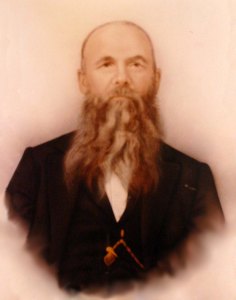
IMG_0132I’d like to be able to paint a picture of my gggrandfather William“Bill” Bartlet Hinson with kind and loving language. But, he simply was not that kind of man. Known by many as “Fighting Bill”, William Bartlet Hinson was nothing less than hardcore. He served as constable in Union County where a case he was working on reached the Supreme Court. W. B Hinson, along with the Clontz brothers were charged with entering a dwelling at night in order to apprehend a person believed to be hiding out. Depositions tell of heavy handedness and of an equally harrowing experience. William Bartlet Hinson owned a sizeable farm situated on the east side of Highway 200 and north of Highway 218 in present day Union county. It is said he would stand at the nearby crossroads challenging to fight most anyone passing by. Back in the 1970’s, my cousin Linda Gail photographed Bill’s home which no longer stands (below).


One of Bill and Marcena’s daughters, Frances Isabella, married my great grandfather John Ephraim Love. John E. and Frances lived on Rene Ford Road about half way between Grove and Locust. It is said that when Bill Hinson died, Frances received pouches of gold instead of land which had gone to her brothers. My mother remembers stories of her grandmother Frances and of her long touring car, the shed she kept it in and of a man who was hired to drive. Frances eventually had to exchange her inheritance for paper money when in 1929, the Great Depression led to a change away from the gold standard. In the photographs below, the first is of Frances Isabelle and the second is of her husband John Ephraim Love with my mother sitting on his knee.


John Ephraim and Frances Isabelle are the parents of Minnie Ann Love, my grandmother. Minnie Ann died before I was born. From the following photograph taken at Dry School, I can imagine my grandmother as being an outgoing person in the days of her youth.


dryschool

My grandmother Minnie Ann Love is in the back row center wearing a hat.


Minnie Ann Love married William Columbus Love, my grandfather. I always knew my grandfather to be a kind and soft spoken soul. At the top of this post is a photograph of William and Minnie following their wedding. The photograph was taken near C. C. Love’s mill overlooking Rocky River. And yes, the two were cousins. Below are photographs of my grandfather and grandmother. Below that is a chart showing their shared family relations.

Jonah Love
James Wade Love                           Jonah Askew Love
John Ephraim Love                         James Daniel Love
Minnie Ann Love         +           William Columbus Love

______________________________________________________

Frances Isabelle Hinson Love died in 1929 when my mom was but one year old. And then my mother lost her (great) aunt Tirzah when she was but seven years old. The photograph below was given to my mom who’s sure that the lady on the left is her Aunt Tirzah. We’re not sure of the person on the right though having similar facial features, could this be Frances Isabelle Hinson Love? Please let me know if you have any information adding to this story and to the family connections made herein.


tirzah

(left-right) Tirzah Hinson Furr, possibly Frances Isabelle Hinson Love


A PAGAN START?

pagan


Basse's Choice MarkerIn 1729, Joseph Thomas deeded land on Oropeak Swamp in now Gates County to Samuel Bass. In return, Samuel Bass sold to the same Joseph Thomas land on Cashie River in neighboring Bertie County. Curious of any deeper family interactions, I came across the record of Nathaniel Bass. Likely a relative and possibly being Samuel’s great-grandfather, Nathaniel Bass along with others sought to establish a plantation known as “Basse’s Choice” situated on James River at Pagan Creek. The site was attacked by Indians in the 1622 English-Powhatan War. Pagan Creek can be seen in the top right corner of the 1864 Colleton Map (above).
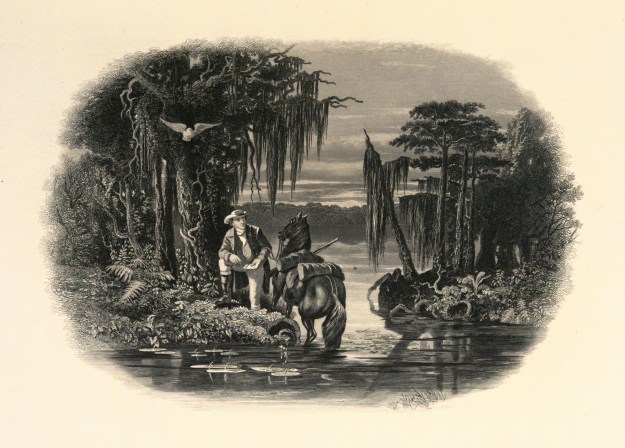
Let’s look at an interesting deed which connects who we believe to be our ancestral Thomas family to the above map. Dated 6 Apr 1693, John Portis of Isle of Wight Virginia deeded to his daughter Susannah Thomas land “beginning at the house (where) John Frizell did formerly live in and adjoining Thomas Moore, said Portis, and Thomas Tooke, the Blackwater Road, Oyster Shell Neck and the main Swamp.” John Portis identifies his daughter as “being formerly the wife of John Frizell.” He further stipulates the land will pass to Susannah “for life and then to her son Will Frizell or to my son John Portis.” Witnesses to the conveyance were John (X) Prell, John (X) Prime, and Edmond (x) Prime.

So, John Thomas married Susannah, the widow of John Frizell and daughter of John Portis Senior. We can say with certainty that John Thomas married into the Portis family who once lived on the Blackwater Road near Oyster Shell Neck and the Main Swamp. Note that Black Water River runs along the left side of the above map. There is also a paralleling road leading to the Courthouse and beyond to Pagan Creek. Was that the road on which John Portis lived? Also note there is a road heading due west from Pagan Creek towards Blackwater River. Could that be the road? Occurring over 100 years later, the following Act of Virginia sheds a little light confirming that the stated Oyster Shell Neck is located within a sailor’s reach …likely near the wide and navigable mouth of Pagan Creek. It’s not located further inland towards the town of Smithfield:

An Act to empower RM Booker to erect a wharf on Pagan creek
in the county of Isle of Wight
Approved December 20, 1803.

Be it enacted by the general assembly of Virginia That RM Booker be and he is hereby empowered to erect a wharf on Pagan creek in front of its lands on said creek in the county of Isle of Wight known as Oyster shell neck provided said wharf shall not obstruct navigation and shall be subject to the laws of this State governing wharves erected in the waters thereof 2 This act shall be in force from its passage. Approved Dec 1803.

_____________________________________________________

It is believed that Samuel Bass is the brother of John Bass who settled from Virginia into the northern portion of Bertie that later became Northampton County. Acquiring land on the Uraha Swamp (a branch of Potecasi Creek), it’s worthy to note that John Bass purchased land in the same area as Phillip Thomas who is believed to be the son of John and Susannah Portis Thomas. And, our Joseph Thomas (brother of Phillip) who acquired land from Samuel Bass lived further south but was in the same general area. Joseph is believed to be Phillip’s brother? Is he?

Today while in the genealogy room at the North Carolina State Library I decided to end my visit with a peek at a few general history books on counties in Virginia where we believe our Thomas family once lived. I cut short the effort and only had the chance to visually browse through a book on Isle of Wight County as a line of storms was nearby and I really needed to get home. But my quick search yielded one thing that I needed to see. According to the writer, he believed there were likely two or even three Thomas families who moved through the county. Ugh… This validates my concern that a much broader representation of possible descendants needs to be DNA tested. BAsically, we need wide sampling from all THOMAS family coming out of Virginia. I ask this of any male out there who believes they are related …please take time to join us in our familytreedna Thomas Family Y-testing project. By the way, we are pedigree 115 (written in blue on the results page).

Please feel free to email me if you have questions and wish to get involved! My address is geothos@bellsouth.net

OROPEAK (Pt 2)

drummond

George Washington at Lake Drummond


Lawson1709It was just three years before Joseph Thomas was awarded his headright on Orapeake Swamp when John Lawson was captured and killed by Tuscarora Indians while on an expedition with Christoph von Graffenried. The two were seeking the source of the Neuse River. John Lawson had journeyed across the back country where by 1709 he wrote his fabulous book titled A New Voyage to Carolina which detailed all that he saw and encountered. And then, in 1710, John Lawson and Edward Mosley were named to a commission tasked with surveying the state line between North Carolina and Virginia. Unable to reach consensus, that effort failed.

Joseph Thomas received his headright in 1714 Virginia though the land was situated near the line in what’s now North Carolina. The state line was simply unknown.

_____________________________________________

William_ByrdAnother timely event. Can you imagine life on the farm when all of a sudden a group of men stepped out of the swamp with axes, chains and lots of talk of cutting the state line through or near your land? That actually happened in 1728 when William Byrd II led another attempt to survey the state line. From William Byrd’s diary we get a glimpse of early life on the Oropeake Swamp:
In these sad circumstances, the kindest thing we could do for our suffering friends was to give them a place in the Litany. Our chaplain, for his part, did his office, and rubbed us up with a seasonable sermon. This was quite a new thing to our brethren of North Carolina, who live in a climate where no clergyman can breathe, any more than spiders in Ireland.
One thing may be said for the inhabitants of that province, that they are not troubled with any religious fumes, and have the least superstition of any people living. They do not know Sunday from any other day, any more than Robinson Crusoe did, which would give them a great advantage were they given to be industrious. But they keep so many sabbaths every week, that their disregard of the seventh day has no manner of cruelty in it, either to servants or cattle. It was with some difficulty we could make our people quit the good cheer they met with at this house, so it was late before we took our departure; but to make us amends, our landlord was so good as to conduct us ten miles on our way, as far as the Cypress swamp, which drains itself into the Dismal. Eight miles beyond that we forded the waters of the Coropeak, which tend the same way as do many others on that side. In six miles more we reached the plantation of Mr. Thomas Spight, a grandee of North Carolina. We found the good man upon his crutches, being crippled with the gout in both his knees. Here we flattered ourselves we should by this time meet with good tidings of the surveyors, but had reckoned, alas! without our host: on the contrary, we were told the Dismal was at least thirty miles wide in that place. However, as nobody could say this on his own knowledge, we ordered guns to be fired and a drum to be beaten, but received no answer, unless it was from that prating nymph Echo, who, like a loquacious wife, will always have the last word, and sometimes return three for one. It was indeed no wonder our signal was not heard at that time, by the people in the Dismal, because, in truth, they had not then penetrated one third of their way. They had that morning fallen to work with great vigour; and, finding the ground better than ordinary, drove on the line two miles and thirty-eight poles. This was reckoned an Herculean day’s work, and yet they would not have stopped there, had not an impenetrable cedar thicket checked their industry. Our landlord had seated himself on the borders of this Dismal, for the advantage of the green food his cattle find there all winter, and for the rooting that supports his hogs. This, I own, is some convenience to his purse, for which his whole family pay dear in their persons, for they are devoured by mosquitoes all the summer, and have agues every spring and fall, which corrupt all the juices of their bodies, give them a cadaverous complexion, and besides a lazy, creeping habit, which they never get rid of.
…Care was taken to erect a post in every road that our line ran through, with Virginia carved on the north side of it, and Carolina on the south, that the bounds might everywhere appear. In the evening the surveyors took up their quarters at the house of one Mr. Parker, who, by the advantage of a better spot of land than ordinary, and a more industrious wife, lives comfortably, and has a very neat plantation.
…The line cut William Spight’s plantation in two, leaving little more than his dwelling house and orchard in Virginia. Sundry other plantations were split in the same unlucky manner, which made the owners accountable to both governments. Wherever we passed we constantly found the borderers laid it to heart if their land was taken into Virginia: they chose much rather to belong to Carolina, where they pay no tribute, either to God or to Cæsar.

Worries were much more sinister than the mere concerns over running the state line. A fox was surely loose in the hen house …you’d better keep an eye on that fellow lest your wife or children be “rogered.” (Note to self: look for DNA matches to William Byrd II).

_____________________________________________

Joseph Thomas sold his land near the Dismal Swamp less than a year after the survey. William Byrd had referred to the area as “a miserable morass where nothing can inhabit.” Removing to Bertie County, I can only imagine what drove Joseph Thomas away from the neighborhood. Looking creatively at a bad situation, Byrd had even proposed using slave labor to drain the swamp with a network of ditches and canals. But, there were problems with this idea as the Great Dismal Swamp sits on high ground. Instead of being a low place like most swamps, it is a source of water flowing outward away from the swamp …not a place where water naturally wants to pond.
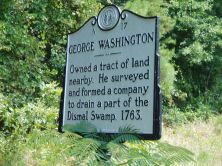
Nearly 30 years after Joseph Thomas left the area, big money, politics and a bold scheme built upon the vision of William Byrd. In 1763, George Washington visited the Dismal Swamp and surrounding areas including Oropeak Swamp. From his diary, George Washington wrote:

Between Cyprus Swamp, and the last mentioned one, we went on horseback not less than ½ mile into the great swamp (Dismal) without any sort of difficulty, the horse not sinking over the fetlocks. The first quarter, however, avounding in pine and gallberry bushes, the soil being much intermixed with sand, but afterwards it grew blacker and richer with many young reeds and few pines, -and this, it may be observed here, is the nature of the swamp in general.
From Mossey Swamp to a branch, and a large one it is, of OROPEAK (Not less than 80 yards over) is reckoned 4 miles; two miles short of which is a large plantation belonging to one Brindle, near to which )on the south side) passes the Carolina line.
The Main Swamp of OROPEAK is about 1.2 mile onwards from this, where stands the Widow Norflets, Mi & Luke Sumner’s plantations. This swamp cannot be less than 200 yards across, but does not nevertheless discharge as much water as Cyprus Swamp.
At the mouth of this swamp is a very large meadow of 2 or 3000 acres, held by Sumner, Widow Norflet, Marmaduke Norflet, Powel and others, and valuable ground it is.
From OROPEAK Swamp to Loosing Swamp is about 2 miles, and this 70 yards across.
From hence again to Bassey Swamp the lower road may be allowed 2 miles more, but this swamp seems trifling.
And from Bassey Swamp to Horse Pool (which is he last, and including swamp running into the Dismal) is about 2 miles more and 35 yards across only.
The whole land from Pocosom Swamp to this place and indeed all the way to Pequemin Bridge, is a manner a dead level, wet and cold in some place sandy in others, and generally poor.

Looking back at Joseph Thomas’ land, what happened to it after he left for Bertie. And, is there any connection at all to Washington’s visit? Let’s take a quick look at two deeds:

• Deed Book W1, 375-376 Chowan, 10 Feb 1737. Lemuel (LB) Bass to Edwd. Skeeter being two tracts, one of 175 acres and one of 14 acres. Witness John Sumner, Henry Hunter, Wm Speight.
• Deed Book G1-5-8, Chowan, 16 Jan 1753. Edward (ES) Skeetor to Edward Arnell for 175 acres on the southwest side of the Oropeak swamp joining Edward Arnell, Thomas Hinton, Patrick Woods, and Batttles being the land purchased of Joseph Thomas to whom the sd lands was granted by Alexander Spotwood late Gov of VA. Also another tract of 14 acres. Wit: Demsey Sumner, Elisha Parker.
• Headright, 25 April 1701, Nansemond VA. Edward Arnold, being 89 acres on the South westward side of Oropeak swamp beg. on the S.W side ye aforesd. Oropeake swamp near Battles corner tree.
• Headright, 28 Oct 1702, Nansemond VA. Richard Sumner, being 330 acs. in Upper Par., Nansemond Co., on the northwest side of the Mossy Sw., beg in the 2nd branch of Oropeak in the Round Trees Line; along the Desert; on the Brinkley’s Land.

From my last post, Joseph Thomas acquired a small 14 acre tract in the fork of Oropeak and Elm Swamps. John Battles owned land to the west of the tract followed by Joseph Thomas’s 175 acres to the west of said John Battles. Samuel Bass [Basse] purchased Joseph Thomas’ land and then sold it to Edward Skeetor in 1737. Witness to that deed was Wm. Speight whose land was cut into per the diary of Wm Byrd II. In 1763, George Washington mentions Bassey Swamp …could this be named for the Bass family?

OLYMPUS DIGITAL CAMERAOther names also appearing in the above records include members of the Sumner family. In 1763, Fielding Lewis, George Washington’s brother in law, purchased nearly 40,000 acres total with over 1,000 being from the Sumner family. Forming the Dismal Swamp Company, Washington, Byrd. and others worked to reroute the swamp’s source of water. Efforts expanded to included canals connecting Virginia and North Carolina wateways. But by the late 1700’s, George Washington became frustrated with the project and sought to sell out his share. Henry (Light Horse) Lee, the father of General Robert E. Lee, was approached but did not have the funding necessary to secure the transaction.
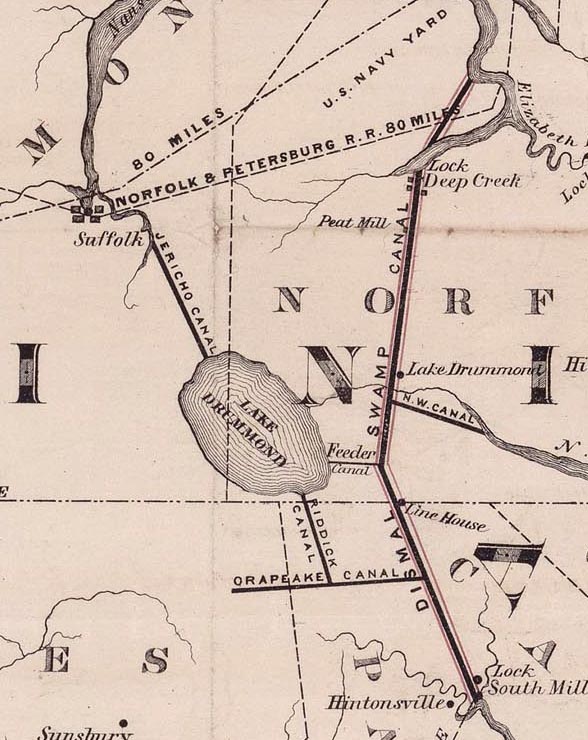
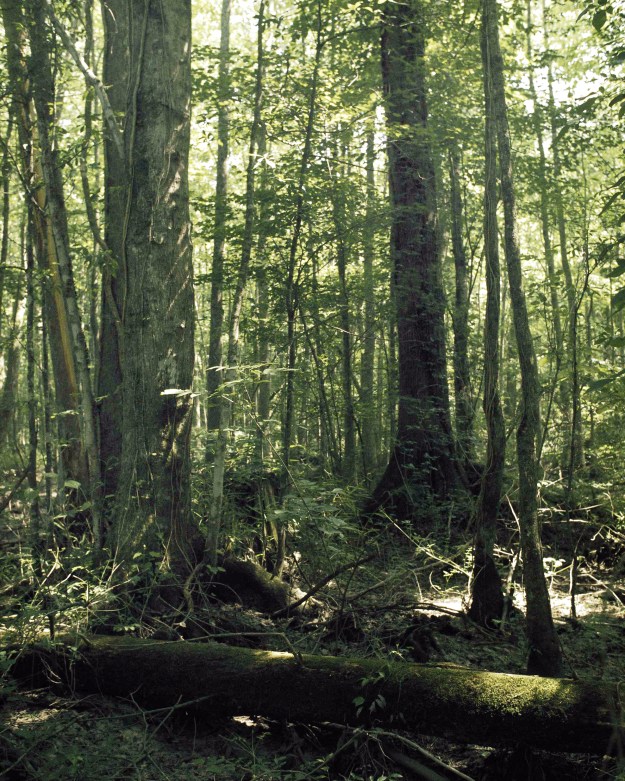
There are old maps of the project and today the area is known as Corapeake. There is a State of North Carolina Historical Marker south of the town of Corapeake marking Washington’s visit and purchase. Today Coropeak and the Great Dismal Swamp are crisscrossed with ditches and canals began during the times of our early 1700’s ancestors. The greatest of the canals , the Dismal Swamp Canal, is a great recreational spot and is worth visiting.


drummond2

Map of Dismal Swamp Canal drawn by D. S. Walton – 1867


OROPEAK (Pt 1)

Great_dismal_swamp

Dated 16 Jun 1714, Joseph Thomas received a headright for N.L. (new land) located in the Upper Parish of Nansemond County Virginia. Situated on the south side of the Orapeake Swamp, the land adjoined that owned by Edward Arnold, Thomas Milner, Patrick Wood and a Mr. Battle. Joseph Thomas received the 175 acres as reward for importing from England the following 4 persons: Joseph Thompson, Elizabeth Thompson, Michael Thomas & his wife (Cavaliers and Pioneers Vol 3 –page 140, by Nugent).

The headright for Joseph Thomas raises several questions that I’ve never clearly seen answered. First, was the name “Thompson” used in the grant a mistake and did it instead refer to the family of “Joseph Thomas” who actually received the land grant? And second, it is believed that Joseph Thomas was born in Virginia from a long line of Thomas family going back to the early 1600’s. In lieu of this record, can that be so and does this record imply that Joseph Thomas also made a trip from England? And, exactly how does the named Michael Thomas and wife play into our family story?

Though granted by the State of Virginia, this land belonging to Joseph Thomas may actually be located on the Oropeak Swamp near the state line in present day Gates County, North Carolina …not Virginia. Later conveyances of the granted tract indicate the land must also be close to the Elm Swamp. From Edward Mosley’s 1733 New and Correct Map of the Province of North Carolina, both the Orapeak and its southern branch, Elm Swamp, are seen as sources to the Great Dismal Swamp lying to the east:

oropeak

To the west of the above, early Chowan Precinct became Chowan County when in 1720 Edenton was designated as the county seat. And from early Perquimans Precinct (taking up most of this map), the county of Perquimans was officially formed in 1739. It wasn’t until 1779 until Gates County was created in honor of Horatio Gates who would later lead the Maryland Continental line at the failed battle of Camden. The earliest known lands of Joseph Thomas are located near the Virginia state line in present day Gates County. Any ownership in Virginia is yet proven.

Within two years of acquiring his land on Oropeak Swamp, Joseph Thomas is mentioned in the 5 Sep 1716 last will and testament of Peter Parker. Among bequeaths including land on Deep Run and Wishacone Creek, Peter also orders “Joseph Thomas to pay 1200 pds of tobacco for my land at Elm Swamp”. Looking at the above map, you’ll see the name “Parker” located in the upper left corner not far from Orapeak Swamp.

________________________________________

Dated 23 Mar 1729, Joseph Thomas sold his land to Samuel Bass. Recorded in Bertie County, the deed identifies both the buyer and seller as farmers “both of the Govern of North Carolina” …no mention of county. The first tract below is certainly Joseph Thomas’ original headright. The metes and bounds along with Peter Parker’s last will and testament can be used to identify the second smaller tract as lying in the fork of Oropeak and Elm Swamps (located on the map above):

First Tract being 175 acres on the southwest side of Oropeak Swamp – beginning at a maple a corner tree of Edward Arnold’s land standing by the swamp and runs thence along the said Arnold’s line south westerly 14d 119p to a white oak thence south westerly 52d 139p to a pine, thence south westerly 12d 75 ½ p to a pine in Thomas Milner’s line, thence on sd Milner’s line south westerly 35d 38 p tp a pine thence north westerly 60__163 p to a pine, then north easterly 27d 68 ½ o to a gum in Patrick Wood’s line thence on Wood’s north easterly 71 ½ p to red oak thence northeasterly 7d –54p to a pine in Battle’s line, thence north easterly 58d on sd line 201 p to the first station.

• Second Tract being 14 acres which sd Thomas purchased of Elizabeth Parker & John Parker her son – known as “Little Neck” beginning at a marked gum on the side of Orapeak swamp in the mouth of a small branch thence running up the sd branch along a line of marked trees to a poplar, it being a line tree of John Battle’s, thence running down the said line to a marked white oak standing on the west side of the Orapeak Swamp, it being a corner tree of the said John Battles, thence running up the swamp to the first station.

The deed from Joseph Thomas to Samuel Bass was witnessed by John Perry and Anderson Sugg and was registered much later on 2 May 1755. What happened in 1755 to warrant a need to record the deed at that time? Joseph Thomas Senior [I] died around 1732 and we know his son Joseph Thomas [II] dies sometime between 1752 and 1755. Maybe there was a need to record and clear the title prior to the settlement of estate for Joseph Thomas [II]. Of importance, Joseph Thomas [I] signed the above deed with a mark that appears in form to be a capitol I with mark through the middle. The original does not exist and this deed book copy was surely from a later transcription as it’s written on lined paper. Even so, Joseph Thomas who left his last will and testament in 1732 Bertie County signed with a similar mark.

1732 - CopyBeyond the comparison of signature marks, there’s one other bit of evidence that links Joseph Thomas of Oropeak with Joseph Thomas who died ca. 1732-5 in Bertie. On the very same date as the sale from Joseph Thomas to Samuel Bass, Samuel Bass returned the favor by selling a tract of 200 acres to Joseph Thomas. Lying on the south side of the Kashie Swamp, metes and bounds for that transaction reads:
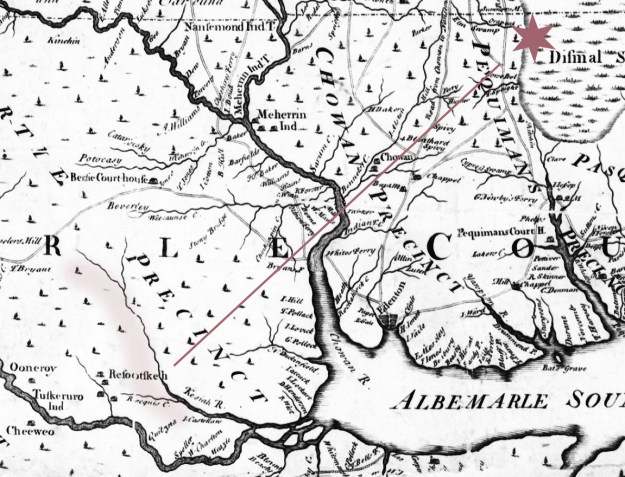
..beginning at a pine in the woods by William Williams plantation then n5de 320p standing in the Kesia Swamp, then according to the meandering of the swamp to the mouth of a great branch, then the various courses of the said branch to a pine in the head line, then along the head line to the first station.
Witnesses were again Anderson Sugg and Jno Perry.

kashie

In summary, Joseph Thomas received a Virginia headright in 1714 on land in present day North Carolina. Joseph sold the land in 1729 to Samuel Bass who in turn sold Joseph a tract in Bertie where Joseph wrote a last will and testament in 1732. The land on Oropeak Swamp was situated in an area rich in American history. In the next post I’ll look at later conveyances and of business ventures among the rich and famous.

One Violin, One Tomahawk, and a Side Saddle


1732After working the records in Wake, Chatham and Moore counties to near exhaustion, it’s time to move in earnest towards the task of proving the Thomas family lineage another generation back to Bertie County. We know of Joseph Thomas who came to Wake in 1772. It’s he who died ca. 1819 in Chatham County. But, where did Joseph come from prior to living in Wake? Research coalesces around the idea that Joseph Thomas who died in Chatham is the son of a Joseph Thomas who died per last will and testament drawn up in Bertie County on 12 Dec 1752 (probated on 5 Jan 1758). And looking back a generation further, all online histories indicate that the Joseph who died ca. 1752-58 is the son of yet another Joseph who drew up a last will and testament in 1732 Bertie Precinct.

In revisiting all the deeds, estates, court and any other legal records pertinent to the study of our Thomas ancestry, it quickly hit me that what I was seeing cannot support the storyline so often seen online and found in the writings of prominent researchers of the past. Is it me or is there a real problem? In this post I’ll express my concern through scrutiny of the 1732 last will and testament of Joseph Thomas as it relates to those of his believed sons Joseph and James. By way of comments (so we can all learn), I ask for your thoughts and rationale whether or not you believe I’m right or wrong on this matter.

___________________________________________

At the top of this page is the 1732 last will and testament of Joseph Thomas . For closer scrutiny, Joseph’s will and those of others are transcribed at the bottom of this post. Much can be gleaned from the wills, but keep in mind, I’ll go no further into findings than what is necessary to raise my concern. Much more will be rolled out later.

From the above last will and testament, we see that in 1732 Joseph Thomas names his wife Eales (Alice) and children Michel, Joseph, Luke, James, Jacob, Jonas and Charity.
From the Thomas and Bridges Story 1540-1840 written in 1972, author Edison H. Thomas indicates that Joseph’s and Alice’s son James died ca. 1780 after writing his will in Bertie County. What’s important for my concern is the 1780 date of this James Thomas’s will. See James’ will at bottom for details and please keep this point in the back of your mind as we go forward.

Now, let’s look at James’ brother Joseph as identified in the 1732 last will and testament at the top of this post. This younger Joseph II is believed the same person who wrote a last will and testament on 26 April 1752 in which is named wife Ann along with children Michael, Josiah, Joseph, Mary and Elizabeth. In item “sixthly” of the will, Joseph bequeaths to daughter Elizabeth:

joseph 1757 2 - Copy

The important part of the item reads: “Whereon Judith Thomas now lives it being the land that passed to me by the death of my brother James Thomas.” So, if Joseph II and James are brothers [sons of Joseph and Eales (Alice) Thomas], and James died prior to the writing of Joseph’s will, then it’s simply impossible for James to have penned a will in the 1770’s. In case you’re having difficulty following the logic of my concern, take a look at the following:

familytree

Seeking further information on a James Thomas who died prior to Joseph II’s 1752 last will and testament, I found the following:

Estates (653) Bertie – James Thomas. Account of sale 1750 by John Sallis, Deputy Sheriff. Buyers were Judith Thomas, Joseph Thomas, John Jameson, Jethro Butler, William Holmes, Mr. Searson, and James Boyt. Also, among the loose estate papers of Bertie County is the following account of sale for James Thomas’ estate. The name of Judith Thomas appears on the backside indicating it was her who either made the sale or at least had it recorded.”

james thomas estate1

Implications: It appears that Joseph Thomas I who died in 1735 had a son named James who died ca. 1750. James may have married a person named Judith. James likely died intestate and left no last will and testament. James and Judith likely had no children as any land passed to James’ oldest living brother Joseph. Judith would have been given a widow’s allowance to live on the land for her lifetime or until her remarriage.

How much longer did Judith live and is there anything else we can glean from her life record? Dated 20 April 1762, Thomas Pennington drew his last will and testament naming Judith Thomas though not specifying that she is his daughter. I’m not sure at this time whether or not Thomas Pennigton’s last will and testament refers to James Thomas’ wife Judith. Requiring a little research, more information on this will be forthcoming.
It simply is not true that James Thomas (who married Sarah Barnes) is the son of Joseph Thomas I who left a will in 1735. James Thomas whose will appears in 1780 Bertie must be the son of another person other than Joseph I. So, who is James’ father and who are James’s siblings if any? How does he relate to Joseph Thomas who died ca. 1735? How will this change the story?

Though to me this is all a cool find, I can’t help but think more about the timeframe and where this all happened. James Thomas’ estate sale included icons of two worlds …both a violin and tomahawk. I can envision James sitting peacefully by the fire admiring the sounds of melodies wafting through the forests pine. And this was a time when the Tuscarora Wars were only thirty years in the past (actually fifteen at the time of Joseph Thomas I’s last will and testament). Was the tomahawk a useful tool used by James or was it a trophy or keepsake from the Tuscarora Wars? James was born just prior to the wars and the Thomas family lived near present day Windsor NC. He lived amongst “friendly Indians” who remained and had been allowed to live on a reservation known as Indian Woods. I know you can tell a story through music but I bet the tomahawk also spoke proudly in its own way. And, then I wonder of Judith’s side saddle and where it carried her and who she traveled to see. I have to wonder about my Thomas family, and of any blood connections to the Indian culture they lived amongst.

james thomas 2

Last Will and Testament of Joseph Tomas
10 Dec 1733, pro. Feb 1735 in Bertie County NC

I the name of god Amen I Joseph Tomas of North Carolina of Bertie Precinct being very sick and weak in body but of perfect mind & memory thanks be to god for it knowing it is appointed for all men once to die do make this my last will and testament first I command my body to the earth to be buried in a Christian like manner and my sole in the hands of almighty God that gave it I give and bequeath as ______________

Item I give and bequeath to my well beloved wife Eales Thomas my plantation that I now live upon at her own disposal during her life and likewise all my stock and ___________
Item I give and bequeath to my son Joseph Tomas the above mentioned plantation after my wife’s decease and the privileges of ____ part of it in her lifetime provided he does not __________ her upon any_____________

Item I give and bequeath to my son Michel Tomas and my son Luke Tomas and my son James Tomas one tract of land six hundred and forty acres lying upon to be equally divided among the three and my son Michel to have the first choice and likewise if my wife doth buy a negro woman with the estate and she breeds for them to be and to Jacob Thomas and Jonas Tomas and if the sd negro woman has any more children their two to the next children ________ and likewise after my wifes decease of the two negros I giving son Michel his choice of the follow that I have at this time and the negro wench _______ one of the two him and his heirs and if Joseph Tomas, Luke Tomas or James Tomas should die either one of them or without.

Item I do that the land that I left them shall be to Jacob & Jonas and Luke and likewise after my wife’s decease al the estate to be equally divided amongst my children one shilling I leave to my daughter Charity Tomas and likewise appoint my son Michel Tomas and John Spivey to be my whole executors of this my last will and testament as written hand.
December the 10th 1733
Francis Hobson
William (x) Simmons                                                                  Joseph (I) Tomas

Bertie Precinct
Febry Court 1735 The written will of Joseph Thomas was proved by the oaths of Francis Hobson & William Simmons the two subscribing witnesses thereto and the Michael Thomas one of the exe’r therein named took the oath of an Ex’tr by law required.
Test: Jno Wynn


Last Will and Testament of Joseph Thomas
26 April 1752, pro. April 1758 in Bertie County NC

North Carolina
In the name of God amen. I Joseph Thomas of Bertie County Planter being sick of body but of perfect manner & judgement first recommending my soul to God that gave it and my body to be buried at the discretion of my Executors hereafter mentioned do make this my Last Will and Testament this 26 day of April anno Dem 1752;

Imprimus I bequeath to my loving wife Ann Thomas the use or the plantation whereon I now live during her natural life and all the land thereunto belonging except what land lies on the south & southeast side of the plantation called the Spring Branch & also give to my sd. wife six cows and calves six sows & their pigs two breeding mares and as to my household furniture I lend the use of all to my sd. Wife during her natural life and after her decease my will is that all of my sd. household goods be equally divided among my children share & share alike. I also lend to my sd. wife the use & labor of my negroes she using them as they might to be used Viz; Rose, Jack, Boson until my children who I shall in this will give them to arrive to the age of twenty one years or the day of marriage or are capable to choose their guardians towards the raising my sd. children to her heirs or assignees.

2nd I give and demise unto my son Michael Thomas six hundred & forty acres of land now the occupation of Griffin Summerell it being the land I purchased of Thomas Kearney I also give to my son all my stocks cattle hoggs that is in possession of the sd. Summerell on his land one negro woman named Rose and all her increase thereafter except the first two children the sd negro woman shall bare thereafter that shall live to the age of three years old which children I reserve for my daughters hereafter mentioned. I also give to my sd. son two breeding mares and one young horse by the name of Blaze and my servant melato boy named Jacob till he shall be lawfully free to him his heirs & assignees forever.

3dly I give and devise unto my son Josiah Thomas my land and plantation whereon Nathaniel Keel now lives, it being bounded and joining the land I gave to my son Michael and Thomas Blounts land and all my stock of cattle on the sd land that is in possession of Nathaniel Keel six sows & piggs two breeding mares one young horse by the name of Ball & one negro boy named Jack to him his heirs & assignees forever

4th I give to my son Joseph Thomas my land & plantation whereon I now live and all my stock of mare cattle that belongs to the sd. plantation except what cattle I have given to my wife and two three year old horses two breeding mares one young horse six sows and piggs one negro boy named Bason and Liberty if he sees proper to make a plantation on the south east side of the spring branch in case his mother is living when he is at age to him and assignees forever.

5th I give and demise unto my daughter Mary Thomas my land that now belongs John Spivey a minor my said land I now give to my said daughter Mary is now in the occupation of Hardy Keel I give also to my said daughter the first child that shall be born of my negro woman named Rose that shall also live to the age of three years old viz; the first child that is born after this date and two breeding mares & one young horse to her and her assignees forever
6thly I give and demise to my daughter Elizabeth Thomas my land and plantation whereon Judeth Thomas now lives it being the land that fell to me by the death of my brother James Thomas. I also give to my daughter Elizabeth the second child that shall hereafter be born of my negro woman (named Rose) that shall live to the age of three years old two breeding mares one young horse to hers and her heirs and assignees forever

7thly My will and desire is that all the remaining part of my estate after my just debts funeral charges & legacies are paid/ be equally divided amongst my five children before mentioned share & share alike to them their heirs & assignees forever

Lastly I constitute ordain & appoint my loving wife Ann Thomas my Executrix and my loving friends Thomas Whitmell & Arthur Williams my executors of this my last will and testament hereby declaring this to be my only will in being. In witness whereof I have unto set my hand & seal the date above written.
Signed sealed declared & published
in the presence of }
Jos. Collins jurat
Nathaniel (x) Keel                                                                                   Jos. Thomas
Joseph (III) Keel
Richard (R) Sparkman


Last Will and Testament of James Thomas
22 Oct 1780, pro. November 1780 in Bertie County NC

In the name of God amen I James Thomas of Bertie County of the state of North Carolina, being very sick and weak in body but of perfect mind & memory Thanks be given unto God, calling unto mind the mortality of my body and knowing that is appointed for all men once to die do make and ordain this my last will and testament that is to say principally and first of all I give and recommend my soul into the hand of almighty God that gave it and my body I recommend to the earth to be buried in descent Christian like manner at the discretion of my Executors nothing doubting but at the General Resurrection I shall receive the same again, by the almighty power of God and as touching the worldly estate wherewith it has pleased God to bless me in this life, I give, demise and dispose of the same in the following manner and form (to wit)

Item first of all I leand unto my beloved wife Sarah Thomas during her life or widowhood once third part of my land and plantation whereon I live one feather bed and furniture that belong to it one mare bridle and saddle one lining wheale, one iron pot & hooks & two puter plats, one puter dish one puter bason one cow & one calf.
Item I give and bequeath unto my beloving son Ezekiel Thomas one feather bed and what belongs to it one puter dish & two puter plats one Noohothed Heffer to him and his heirs forever.

Item I give and bequeath unto my loving son Luke Thomas five shillings sterling to him and his heirs forever.

Item I give and bequeath unto my loving son James Thomas all my land and plantation after his mothers death ad two parts of my land from the time that the will is proved one feather bed & what belongs to it one horse bridle & saddle to him and his heirs forever except my son James Thomas should die without heirs the land to be equally divided between my two eldest sons Ezekiel Thomas & Luke Thomas.

Item I give and bequeath unto my beloved daughter Selah Dement wife of Charles Dement one small chist one eow and lamb to her and her heirs forever.

Item I give and bequeath unto my loving daughter Luridill Thomas one feather bed and what belongings to it one linning wheel one puter dish and two puter plates one cow & calf one eows & lamb one chis to her & her heirs forever.

Item I give and bequeath unto my loving daughter Sarah Thomas one heffer yearling about three years old to her and her heirs forever.

Item I give and bequeath unto my loving daughter Lidda Thomas the feather bed lent to my loving wife to her and her heirs forever.

All the remainder part of estate of what nature or kinds soever I leave to be equally divided between my son James & Liddy Thomas at my son James coming two age of twenty one years and the said Liddy part to be continued in the hands of sd James Thomas during the discretion of the Executors hereafter nominated or arrives at the age of eighteen years of marriage but in case that either of the sd James Thomas or Liddy Thomas should die without lawful heir then my will & desire is that his or her part of the dividend be and remain to the said James or Liddy Thomas to them and their heirs forever.

Lastly I nominate constitute and ordain David Outlaw & my son Ezekiel Thomas my whole and sole Executors of this my Last Will & Testament to see the same compiled with and I do hereby utterly dislow and revoke all other wills and testaments by me heretofore made ratifying and confirming this and no other to be my Last Will Testament in witness whereof I the sd James Thomas I have hereunto set my hand and seal this 22nd day of October in the year of our lord Christ one thousand seven hundred and eighty.
Signed Sealed Published Pronounced & declared by the sd James Thomas as his last will and testament in the presence of us:
Abner Eason Snr
Joseph Eason Jur                                                                               James (J) Thomas
Mary Pritchard

Bertie County November Court 1780: proved by Abner Eason Esqr & Joseph Eason
Test : Stevens Gray CC.