A LOVE IN COMMON: Pt. 3


pump


For much of my formative years, the centerpiece in my family’s home was a wonderfully ornate pump organ that had belonged to my mother’s grandmother. Having been professionally refinished, it was a fabulous piece of furniture though at times it worked while other times not so well. It served as the safekeep for everything from photographs to all our birth certificates. It held two oil lamps and always, a pair of binoculars hung over the top corner finial.

As time passed, the quality of sound lessoned until one day my brother and I dug into the working end of the instrument. We repaired a hole in the bellows made by mice and even sacrificed our scout belts to replace the linkage connecting the peddles and bellows. It worked, but not perfectly so.

Even as a young kid, I was always amazed by the craftsmanship; the gingerbread and acanthus leaf scroll work. Though my mom always spoke in the most loving way about her grandmother, all I knew of her was this piece of furniture and hence I envisioned some stuffy old house immaculately furnished. But, I was wrong.

_____________________________________________

Enjoying the many trips “to the country” and even more so, the times I get to spend with my mom; it’s always good to see her fellowship with those of her own generation, those who she knew in childhood and those whose experience is the same as hers.

On a most recent trip, we visited the granddaughter of my mother’s uncle Rush Love. From the newspaper article, you’ll remember that Rush is the son of James Daniel and Florence Geretta Sossamon Love. To give you a little background, a trip to Stanfield has never been made without my mom pointing out uncle Rush’s barn and telling of his granary. Anyhow, on this trip I not only learned what Uncle Rush looked like, I was also given a photo of grandpa Dan and granny Florence with their organ. It’s a fabulous photo and one I’ll always cherish. These were good and simple folks and like in our house, the organ was obviously a centerpiece.

On other trips to the country we visited my mom’s uncle Coyle Love, another son of grandpa Dan and Granny Florence. I remember the house on the lower side of the road and of my mom showing me her grandpa Dan’s home place just up the road. On one trip I was introduced to Coyle’s granddaughter JoAnne who graciously shared the following testimony of times spent with her Granny Florence.
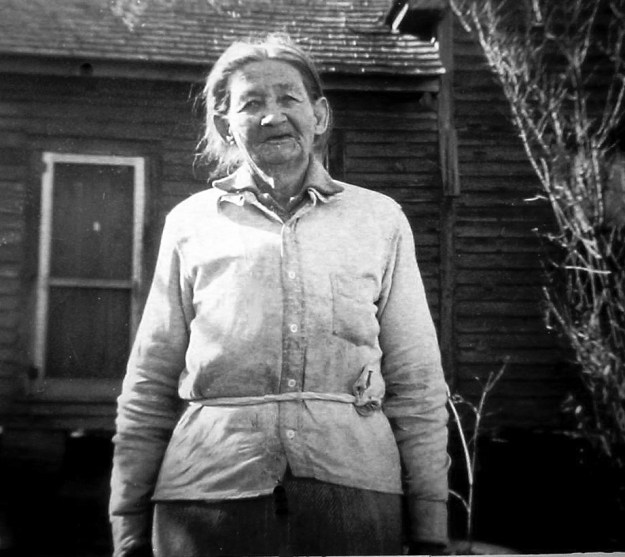
geretaGRANDMA FLORENCE – MEMORIES

My Grandma Florence lived on Coyle Road in Stanfield, about 2 blocks from our home place on the same road.  I can recall only a few, but precious memories about Grandma Florence.  When I was very young, before school age, I would get to stay with Grandma Florence for short periods of time, never overnight.

During those short visits when it was warm outside, Grandma Florence would get the metal trays out of the ice box.  She would mix up some special ingredients to make vanilla ice cream.  She would pour the mixture in the metal ice trays, and put them in the old ice box.  We then would go to the front part of the little house, and play the organ, while waiting patiently, for the ice cream to freeze. When I say play the organ, Grandma would allow me to pull a knob or two out, and peck at the keys to make music, while she pressed the pedals below.  You see I was much too short do both. I would sit on her lap while we did this, and sing Jesus Loves Me.  Then after we’d finish playing the organ, we would go back to the ice box.   She would take those metal trays and get one ice cream block for each of us.  She put each piece in a little saucer, along with a spoon. 

We would go to the back steps on the back of the house, and have a seat.  While we picked away at that ice cream cube, we would talk, and laugh. It seemed like a long time, because my little cube would usually melt, and I would end up turning the saucer up to drink mine.  I do not remember what we talked about, but I remember her laughing a lot at what I would say.  When she laughed, her little belly would shake like a small bowl of jelly.

I ask her one time, why her belly shook so when she laughed?  She only laughed harder than ever, and said I would know one day.  Well the day has arrived, and I do know and understand the answer to that question!

Some days while we were sitting on the back steps, she would tell me to close my little eyes, and then she would tell me to open them.  She would step away from me, and then I would hear a jingle, and she would walk back to me, and tell me I could open my eyes. She would have enough change in her hand to buy a can of snuff, which she enjoyed dipping. When my Mom came to pick me up, Grandma would ask her to pick her up a can of snuff at the grocery store. When Grandma Florence passed away, I was still too young to understand.  My Dad held me up so I could touch her as she lay in the casket. She was so cold.  I did not like the way she felt.  I kept speaking to her, not understanding why she would not speak back to me.  I remember crying, but Grandma Florence still would not offer to let me play her organ, or make me some block ice cream, so we could talk, laugh, and I could watch her little belly shake.   

It is strange how we may be very young, yet keep such vivid memories of the special people in our lives that meant a lot to us. I still love to eat ice cream, talk, laugh, and when I feel my belly shake a little, I just smile and think of Grandma Florence.  Both of us, sitting on the back steps of her little house in Stanfield.  She was a very sweet, kind, and good lady to a very young little girl.  She made a big impression on me, as to how to treat others, and to create memories to live by.                                                                                                                   Joanne Love Yow

_____________________________________________
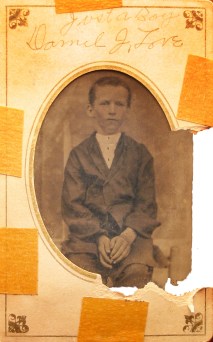
jdan2Just a boy, James Daniel Love was raised in his father William James Love’s house located north of Love’s Chapel on the west side of Love’s Chapel Rd. I’ve been told a certain old tree in a field behind the present-day houses lining the road was the spot where the old home place once stood. And further back in time, I’ve heard this was also been the home of William James Love’s father, Jonah Askew Love. I’ve always wondered about that.

Dan, as folks would call him, married and left a legacy I’m proud to be a part. He and Florence Sossamon were blessed with a good start in life. However, the years following the stock market crash paid a toll on everyone, and this couple was not immune.

During the past 20 years, our country has passed through a similar time though by no means of the same degree of severity. Called the “New Norm,” growth has been slow or nonexistent. We’ve become creative with money making schemes and life’s just a bit different. But, if times really got bad, I’d reflect on, and find strength in, the lives of people like my great grandparents.   I’m sure they worked hard to make ends meet. And, I can imagine the couple with their pioneer spirit. I’m sure a garden was kept and it was a way of life where daily sustenance grew from much more than a paycheck. You didn’t need to bring home the bacon because it was safe in its pen outback.

In closing, I’d like to share a few remaining photos that I hope you’ll enjoy. Also, please note that I’m looking for and would love to talk to anyone who’d like to share the stories of their members of this greater LOVE family.


A LOVE IN COMMON: Part 2

conrad_tonemappedIt was in 1799 when the young Conrad Reed’s discovery on Little Meadow Creek changed America. The son of a German Hessian, he was the first to discover gold in the new country. A few short years later, ca. 1805, Conrad married Martha, the daughter of James Love, a neighbor and founder of a nearby Methodist church known as Love’s or Mount Moriah. Conrad and Martha raised a family on a large tract of land on the banks of Rocky River just south of the present-day intersection of Pine Bluff and Nance roads. And remember, keep in mind this post will all lead back to my great grandfather James Daniel Love and his wife Florence Geretta Sossamon. Note that Conrad’s Martha is the sister of James Daniel Love’s great grandfather Jonah Love.
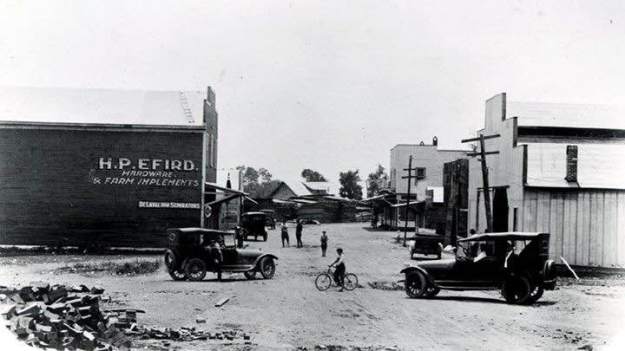
Conrad and Martha’s first born was James L. Reed who was likely named for Martha’s father, James Love. Court records indicate Conrad Reed died in 1834 at a time when the Reed family was racked by greed over control of their prosperous mine. It was James L Reed who penned an agreement hoping to bring order to the family venture.

On 10 Jun 1836, James L Reed married Susan Love, the daughter of Thomas and Susannah Polk Love. Thomas was a brother to Jonah and therefore offers another Love connection to my story. Thomas Love owned land near Reason’s Branch along the river in now Union County. He also supported the church and is listed among the early trustees of Bethel United Methodist in Midland. James L Reed died young and on 4 Sep 1845, a committee met at his house to lay off a widow’s allotment. James Reed’s grave survives and it is located in a small cemetery on a hill crest amongst a small trailer park near the intersection of Pine Bluff and Nance Roads. His resting place is likely near that of his father, Conrad’s.

lucy-hartsal

Lucy Hartsell, wife of Columbus P Sossamon

On 2 Dec 1847, David Green Sossamon married Susan Love, the widow of James L. Reed. Hmmm…..Sossamon! Note that David is the son of Christian and Susan Kiser Sossamon who are buried at Flat Rock Lutheran Church cemetery. And on 6 May 1849, Columbus P Sossamon was born to Susan Love Reed and David G. Sossamon. Dated 21 Sep 1867, the young Columbus P Sossamon married Lucy Hartsell, the daughter of Joshua and Hester Love Hartsell. And yes, you’ve got that right! Hester Love is the daughter of Jonah Love and is therefore the sister of James Daniel Love’s grandfather. And, though not a direct blood line in this case, Joshua Hartsell’s father was Andrew Hartsell who married Conrad Reed’s sister, Catherine. Following the death of Catherine, on 9 Nov 1833, Andrew married Sally Love, again, a daughter of Jonah Love. She was 26 years younger than Andrew. And following the break-up or Reed’s mine, Andrew purchased the mine and hundreds of surrounding acres.

So here we are, and I hope your patience has held out. Conrad Reed married Martha Love, and their son James L Reed married Susan Love who after the death of her husband James married second to David G Sossamon and had son Columbus P Sossamon who married Lucy Hartsell whose mother was a Love and who’s the mother of Florence Geretta Sossamon born 20 Sep 1871. And, Florence Sossamon, my mother’s grandmother, married 2 Nov 1890 to James Daniel Love.

Packed full of Love, Granny Florence came by it naturally as is clearly reflected in both her heritage and as you’ll see, the words of her legacy.

A LOVE IN COMMON: Part 1

15823425_1103321683099440_9084306289146442856_n-copy

(On right) James Daniel Love and Sons Livery Stable

I’ve heard the stories of my great grandfather James Daniel Love. On one trip, he and my grandfather William Columbus Love drove to Nebraska in a “touring car” where they bought a box car load of work mules. The purchase was made and the train nearly underway just as all business in this country halted. You see, it was the late 1920’s and the stock market had just crashed. The sale would have been made null and void if not for the wrangling of a lawyer in North Carolina.

Sadly, my great grandfather’s money was of no worth to those in Nebraska. A time of losers and winners,  Dan Love returned to North Carolina with a fresh stock for the livery stable he owned and operated in Oakboro. Everybody needed work mules. There were chattel mortgages and payment with chickens and promises in word. It was indeed hard times and Dan’s mules sustained both community and family. As an old poet by the name of Mr. Smith told me of his memories of the livery stable, the train would line up perfectly with a shoot where mules were offloaded. People gathered and a large human circle formed in which the mules would be corralled. An event to behold, the people would separate and a man on a great white horse would enter the circle, leading the mules up Main Street and directly into the stables of James Daniel Love and Son’s Livery Stable.

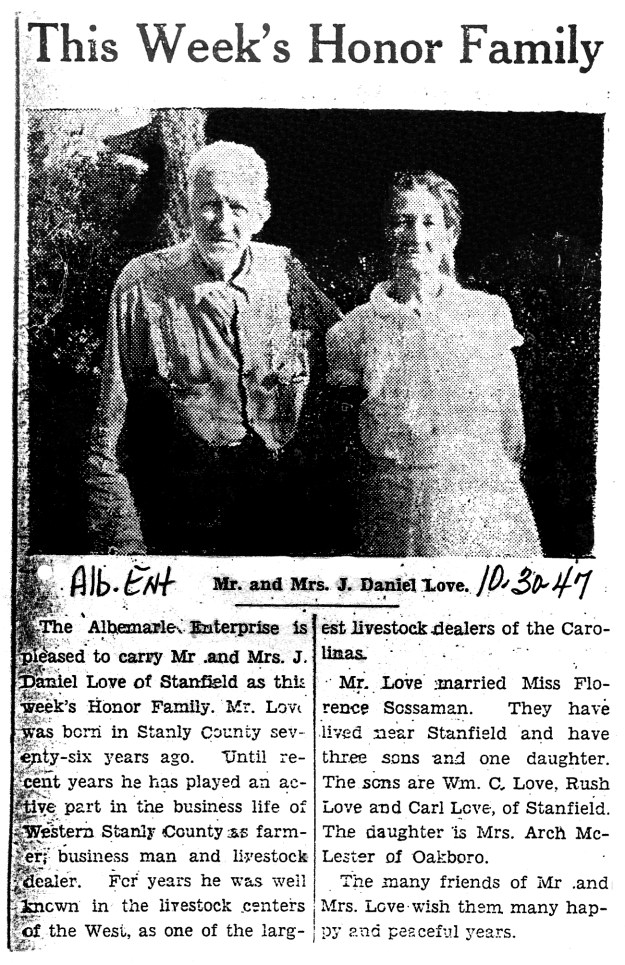
I never knew first hand of James Daniel Love as he died the year of Hazel. And, his wife Florence Geretta Sossamon died in 1957, the year prior to my birth. Stories in witness of this couple’s character along with the following newspaper article speak well of James Daniel and his wife Florence. And from surviving photos, we know the couple were down to earth, living a life of simple means. In this series of posts, I’d like to share all that I have on “Grandpa Dan and Granny Florence.” Theirs was a common love and one worth sharing.snap.jpg

Born 10 Sep 1870, James Daniel Love is the son of William James and Eliza Ann Teeter Love. He married 2 Nov 1890 Florence Geretta Sossamon, the daughter of Columbus P and Lucy Hartsell Sossamon who are laid to rest at the Midland Baptist Church cemetery. We are blessed to have the following portrait showing four generations of this Love family. Note that James Daniel Love is on the far right holding my grandfather William Columbus Love. Seated below is Frances Geretta with her arm around daughter Wrissie Love McLester. And, to the far left is patriarch Jonah Askew Love who lost an arm in the civil war. His son William James, father of James Daniel Love, is seated in the middle.

lovefamily

The William James Love Family

Front Row (R to L): Jonah Askew Love, Dock Fletcher Love, William James Love and wife Liza Teeter Love, Ada Josephine Love(hand on her mother’s shoulder), Florence Sossamon Love and her daughter Wrissie Love.

Back Row (R to L): Mack Halton Love, Elam Croson Love, Crone Simpson Love, Charlie Monroe Love holding son Audie Love and wife Ella Honeycutt Love, James Daniel Love holding son William Columbus Love

James Daniel Love’s family history is one often shared. It’s a rich history full of church, war and country. But how about for Florence Sossamon? I mean, she too has a Love heritage and it’s one that is truthfully more interesting than that of her husband’s. Let’s jump back …way back!

I bet my life would be much different had gold not been found on Little Meadow Creek.

THAT OTHER THOMAS FAMILY: Part 5


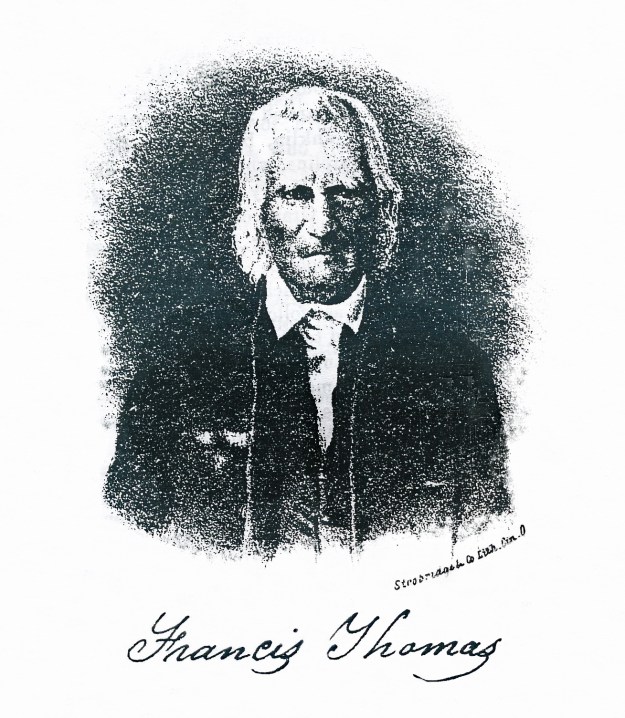
img_20170106_0006_new  History of Wayne County Indiana -1872       …a son of John Thomas, from South Carolina to New Garden in 1811. He not only encountered the unavoidable hardships of pioneer life in general, and among others, that of going on horseback thirty miles to get bread-stuff, but was obliged, with others, to flee for safety during the Indian troubles. Notwithstanding his fear of attacks from Indians, he held his peace principles too dear not to be preserved at any hazard, even of life. He took his lock from his gun, and hid the gun at a distance from his house, lest, in case of an attack, he might be tempted to harm the Indians.   …He was liberal and charitable; and was during his life a member of the society of Friends.       
Francis returned with his parents to Piney Grove Meeting along the NC/SC border following time spent in Guilford County during the Revolutionary War. Francis requested transfer to the Great Contentnea Monthly Meeting in Wayne County North Carolina where in 1807 he married Lydia Woodard and took up a life as farmer. Eventually being honored as the father of the Indiana Yearly Conference, the following was said many years later in memoriam: [while in Wayne County NC] “Francis was visited by an aged Quaker minister named Abel Thomas. After staying the night, the minister got up early and took a walk over the farm. When he returned, he told his host that he had an impression from the Lord, that it would be right for him to sell the farm and move to the territory of Indiana.”

By way of recent contact after seeing this post, a friend of this family has passed on to me a copy of the original land grant Francis Thomas received in 1835. I can imagine the document in his hands and of its journey ending up on this page.  Thank you to those who appreciate and share our history.

LandGrantThomas.JPG

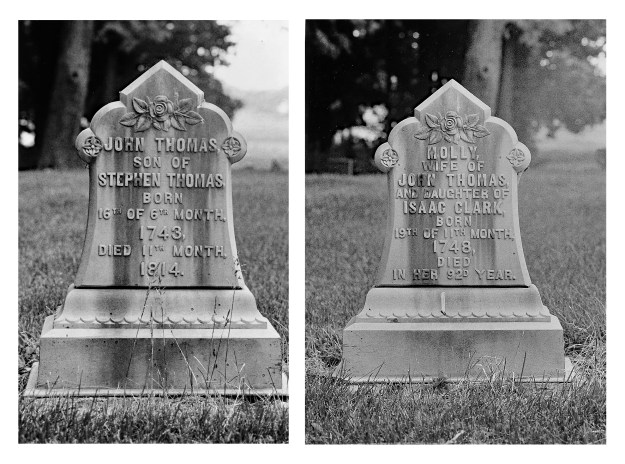
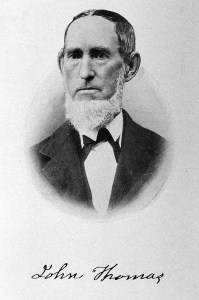
Beginning in the summer of 1811, Francis, his parents, and family moved to Richmond Indiana where they were received into membership at Whitewater Monthly Meeting. Also, removing to the same area was Thomas Willcutts and the family Francis’ late uncle James. Shortly upon getting settled, Stephen’s father John died and is buried at nearby New Garden Meeting where most of the family attended. Note that Wayne County Indiana got its name from the Quakers in Wayne County, North Carolina. And, New Garden Meeting (located in Newport, now Fountain City about 10 miles north of Richmond) was named for New Garden meeting in Guilford County North Carolina.molly

I remember calling and arranging to meet the Quaker minister at New Garden Meeting. I drove up from North Carolina in torrential rains that began to subside as I reached my destination. The minister did not make it as he was only helping in interim as the congregation was in decline and the church was without a regular minister. I instead was gladly met by the piano player who had served the church for many years. She gave me a program, told of old traditions including how in the olden days, men and women sat on opposite sides of the little church and the minister did not offer sermons as such. Instead, each and all were called to speak as so moved by God.

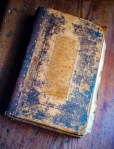
Seeking more, I was led to a tiny corner room that served as library. Musty and damp, opening the door we were greeted with water running down the walls and over the few shelves filled with books. As it’s likely they would not survive much longer, my guide told me to please take any books I believed may pertain to my family. It was her concern, and mine, to get the books to a safe home where they would be loved and cared for. Thinking I had found the holy grail of all Thomas history, I later realized that the one catching my attention was actually an ancient leather bound book titled A Journal of the Life and Times of Thomas Story.” I also was given Clarkson and Sarah Jane Thomas’ Union Bible. My immediate family knows why I would choose this book. That’s all! After learning that I am not blood kin to this family, I’ve tried repeatedly to get the books back to the rightful families.

I spent the next week in the area scouring through books at Earlham School of Religion (a Quaker College) and taking in the sites. I toured the home of Levi Coffin, father of the Underground Railroad. It was there I overheard who I believe to be some of his descendants in deep discussion about a possible movie. Apparently, Levi and wife separated and ultimately divorced due to his work and being away from home. The church ordered a period of separation during which time Levi’s wife became pregnant. At a time when National Geographic’s had just completed an amazing article on Levi Coffin, a believed descendant of this child was apparently preparing to make a movie from the child’s viewpoint.

I’d like to tell more about my trip and of the story of this Thomas family. It’s an amazing place, a vacation for the soul, and trip I’ll always hold dear. After leaving Fountain City I traveled across Indiana to the town of Paoli where John’s brother Lewis settled and died. That story will be next, but for now, I’d like to end with a slideshow of images followed by a few excerpts from a memorial: “Incidents in the Life of JOHN THOMAS in connection with the Underground Railroad, as remembered by his sons.”

quaker6

From the Memorial of John Thomas published in 1913

“When the escaping slaves came to the Thomas farm they would be hidden in the field during the day and their meals furnished them. They traveled mostly in the fall when the weather was warm and sometimes they would live on roasting ears which they cook themselves …father had a rigid rule that no fleeing negro would be permitted to tell his name, or whence he came, or how his master had treated him before his escape. The purpose of this rule was that his own conscience might be clear so that should a slave owner arrive and inquire about the escaped slave, he could truthfully say he did not know ….Luke remembers one morning when he was a boy, he got up in the morning as usual and when he came down stairs to put his boots he discovered that the whole room was full of negroes, the escaping crowd being made up of men, women, and children. It was on a New Year’s morning when the party had arrived in the night from another station.”

This slideshow requires JavaScript.

THAT OTHER THOMAS FAMILY: Part 4

newgardenmtgsmallSitting here on a buggery cold and snow laden Sunday evening listening to Simon and Garfunkel on folkalley.com, I’m sure if the remaining children of the Stephen Thomas from Anson County were up and walking, they’d feel right at home. And to that end, it’s time to share a little of my journey tracing the lives of Stephen’s remaining sons James, and then John and Lewis. All of them were peace lovers by faith, Quaker.
On 13 Oct 1774, James Thomas formally chose to live with his brother John following the death of their father Stephen. James acquired a grant in Anson County (now Richmond) along the west side of the Gum Swamp on the waters of Bear Branch. Located between present day Tatum and McColl SC, James lived not far from and attended Piney Grove, a small preparatory Quaker meeting.

This was a time of war and as sentiment stiffened against Lord Cornwallis’ control of South Carolina, brothers James, John and Lewis sought safety in Guilford County around 1780. Quakers held to a strong peace ethic and many either camped nearby or bought land close to the larger monthly meetings. It really was a difficult time. General Nathaniel Greene, himself born a Quaker, witnessed the many who, living in and amongst New Garden, would not fight for the cause. Correspondence between Greene and the Quaker ministers was to no avail. It was in this time and atmosphere that young James Thomas courted Milly Clark, the sister of his brother John’s wife Molly.

James Thomas and Milly Clark married at the close of the war on 26 Mar 1785 in Guilford County NC. James’ brother Lewis was bondsman. Following the marriage, Milly’s parents Francis and Christian Stone Clark deeded to James Thomas land adjoining John Clark’s mill on the Haw River. Things were going well, but this union would not last as in 1788 James Thomas penned his last will and testament. His brother John and John’s son Isaac along with Milly were named Executors. The will was witnessed by Laban Tharp and Thomas Willcutts. And as you read James’ will below, note several things about this traditional Quaker format:  (1) The date is written “the sixteenth of the ninth month in the year of our Lord 1788,” as Quakers did not believe that months of the year should be named after pagan gods; and (2) James does not evoke the name of God. Being Quaker, who is he to speak for God.tttt

Quaker records indicate James’ widow Milly married second to Thomas Willcutts sometime prior to 1797 when James’ named children were identified in church records as Thomas’ stepsons. The couple returned to Piney Grove in Marlborough County SC where they raised 8 more children.

Times again became difficult for Quakers as numbers of large plantations with slaves grew along the fertile lands east of the Pee Dee River. They voted against slavery and eventually felt the need to remove themselves in order to find a place to live peacefully without the wrongs they saw around them daily. Can you imagine James having to live near his brothers Tristram, Robert, Benjamin, and William who all held slaves? And it’s known that some of this extended Thomas family held hundreds of slaves.

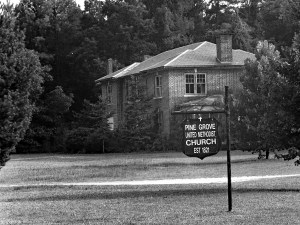
tttttRecorded in 1802, Jonathan Marine and John Mendenhall released “unto the overseers and their successors of Pine Grove Monthly Meeting a certain parcel of land containing four acres including the said Meeting House.” The deed was witnessed by Thomas Morris and James Thomas’ nephew Francis Thomas. The Meeting House closed its doors and its members chose to either stay or to remove themselves to Indiana where slavery was not allowed. Dated 25 Mar 1833, “Piney Grove Meeting House” was deeded to the Methodist Church. Today, south of McColl SC, Pine Grove Methodist stands on this old meeting house site.

In the 1990’s, I made a two-week trip to Indiana to get in touch with my Quaker heritage. This was before learning I was not a part of the family. I spent time at Earlham Quaker College, delved into the underground railroad and walked away with a respect for the Quaker faith that I’ll carry for life. As you’ll see in the following posts, the experience was a life changer for me and one I’ve always wanted to share.


THAT OTHER THOMAS FAMILY: Part 3

18North Carolina was a divided allegiance without the means of enforcing the tax needed to raise a standing army. To fund the Revolutionary War effort, soldiers were offered land beyond the mountains in varying amounts based on rank and length of service. It was in this reserve set aside for soldiers where in 1795, the town of Palmyra was laid off by Dr. Morgan Brown. The acting commissioners for the new town on the banks of the Cumberland River included Benjamin Thomas, son of Stephen. Note that Morgan Brown had earlier surveyed land in Anson County North Carolina including grants in the upper end of the county where my own Benjamin Thomas family were living at that time.tt

As there were no western points of entry into our young nation, in 1796, an act was passed by Congress to establish this new town of Palmyra as the only western port of entry. The only location allowed to receive imported goods, the act provided a federal officer to receive and manage all imported goods. For a brief two years, until Cincinnati came online, this was the northern most and primary point of entry on the Mississippi river chain. And, at the same time, the county of Montgomery was formed from Robertson and Tennessee was introduced as the 16 state in our Union in 1796.

This was the place in Tennessee where many veterans from North Carolina settled. It is where Stephen Thomas’ Benjamin lived for a period of time. It’s also an area of counties where several children of Benjamin’s brother William settled …John, Nathan, and Stephen. Local history and cemeteries are ripe with the stories of this Thomas family. This was a place I wanted to see. It was a place I needed to see to clarify my own Thomas family history as not what I was about to see in Tennessee.

Making my way to Montgomery County, I needed to also visit Stewart County to the west that had formed from Montgomery by 1806. And then to the south, Dickson County was formed and later Hickman was formed from Dickson. So, in the town of Dover in Stewart County, I remember seeing the below photograph of William H Thomas in the county office. Not far away, and from memory in 1997, I also photographed William’s grave monument with background probably of some electrical generation plant along the river.

This slideshow requires JavaScript.

Running through the region was the Natchez Trail, an old Indian path that became the primary route transporting a burgeoning population to points south and west. Benjamin, son of Stephen moved a bit south along the trail to point where he built and operated a gristmill on Garner’s Branch of Piney River. Benjamin would later move again, this time following the trail further south to Pike County Alabama where he likely died. But, as for Benjamin’s mill tract, it was eventually sold and assigned to Jacob Humble whose family cemetery still survives. Seeking to locate evidence of the old mill, I made my way south to the Humble Cemetery in Hickman County.

The land bounced along and was green with hills and trees. It did not take long to find an 84 years old Mr. Yates who lived on the creek just up Hwy 48 from Piney River Road. In order to reach his house, I had to cross an old wooden bridge that spanned Garner Creek. Asking Mr. Yates about a mill, his eyes brightened as he began to tell me the story otherwise hinted at only in court records. While a little boy, Mr Yates’ mother told him she used to play on an old mill dam along the creek. Pointing in the direction of the old bridge, Mr. Yates continued to tell of the 1948 storm that revealed part of the mill remains. “Large white oak beams with pinion holes” were exposed and protruded from the cuts in the creek bank. Working with the tractor, he pulled out parts of a tub like water wheel that his wife later used as flower planters on their long front porch. Pointing across the creek to a distant field, Mr Yates pointed to the resting place of those who had purchased Benjamin’s land, the old Jacob Humble cemetery.

yates

Benjamin Thomas’ mill site on Garner’s Branch near the home of Mr. Yates.

Before leaving this loosely written history, I’d like to point out that Benjamin’s nephew Stephen left a last will and testament in Dickson County. He also applied for Revolutionary War pension in Montgomery County. Benjamin’s family is traced to Pike County, Mississippi where descendants applied for a Revolutionary War pension based on his service. And about Mr. Yates, I asked if he had ever heard of Wake County NC?  He answered “oh yes, that’s supposed to be where my family came from though I don’t know the details.”

THAT OTHER THOMAS FAMILY: Part 2


Some of Stephen’s children remained in the Pee Dee region of North Carolina while others moved to Tennessee or Indiana. In this post, I’d like to share some highlights of this family and of those who did not move far from their upbringing along the river.

ROBERT THOMAS I have no pictures to illustrate Robert Thomas’ life, so let me begin to paint with words. Robert Thomas, likely the oldest son of Stephen is recorded in Maryland records as being involved in the settlement of his grandfather’s estate in that location.   We know Robert grew to be a believer and preacher in the Baptist tradition. Though no records tell it as so, I think Robert Thomas’ walk began at an early age when in the late 1760’s, he purchased land along Hitchcock’s Creek in now Richmond County. From Rev. Morgan Edwards’ notebook, the following 1772 entry about a Baptist meeting house on Hitchcock Creek is gleaned:

In the county of Anson, 200 — from Newburn and — miles from Phila. No meeting house. Const. March 28, 1772, at the house of William Morris. Families 8, Memb. 14, Minister

REV. HENRY EASTERLING Born May 24, 1733, at the mouth of Nuse river. Bred a churchman. Embraced the principles of the Baptists in 1760 in Dobbs County by Rev. George Graham. Called to the ministry in 1762. Ordained March 29, 1772, when he took care of the church. He married Eliz. Bennett by whom he had children Sherdock, Henry, Bennett, John, James, Elizabeth, William, Mary, Martha, Joel. Came here in 1764, and preached in 1770. Baptized the following pursons: Jonathan Lewelin, Wm. Moody, Thomas Summerlin, Wm. Leggate, Wm. Smith, Nathaniel Williams. Mary Smith, Fanny Williams. Constituted March 28, 1772 by Mess. Edwards and Brown.

This is a vital passage as it connects by location the lives of Robert Thomas and Henry Easterling who both moved about the same time into South Carolina. The passage also tells of William Morris whose life traces back through early Wayne, Dobbs, and Bertie Counties where the said Morris or family may have interacted with my newly found Thomas family in northeast North Carolina. If that’s not enough, a likely descendant named William Morris settled just a bit later in Upper Anson County on the waters of Bare Branch. This William, if not the same as in the 1772 entry, had a son who preached at Rocky River and whose name is honored in the children of my own family. Much more will be said on this at a later date, but for now, paths do cross ….get the picture?

Now, back to Robert Thomas. A farmer by trade, Robert Thomas was instrumental in laying down a spiritual foundation for the generations to come. He was a respected Baptist preacher and founder of several churches. Traveling the region during the American Revolution, he preached to the troops and gave moral support to the cause. From Henry Easterling and his wife Elizabeth (446, Mar. Co., S.C.), dated 4 Feb 1794, Robert purchased several tracts totaling 1017 acres. Situated about eight miles south of the present town of Tatum, the land included “the greater part of the plantation whereon the Sd. Robert Thomas now liveth on a pond called the Ocean”.

On 18 Apr 1807, William Beasley deeded one acre “including the meeting house called Daniel’s Meeting house” to “Robert Thomas, minister, and James Bolton and John David, deacons of the Baptist Church of Christ called the Three Creek Church”. Founded on 12 Oct 1793, the name was changed to Salem Baptist church in 1822. Originally located on the Cashway road near the Pee Dee, the church is now located about six miles south of Bennetsville. In a log church with a straw floor, Robert Thomas and William Bennett were the first to preach at Catfish Baptist Church. Located in neighboring Marion County, Catfish Baptist was founded in 1802. While on a preaching tour, Robert Thomas died in 1816 at Britton’s Neck in Marion County.

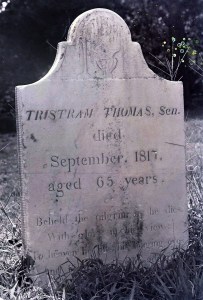
img_20170106_0002_newTRISTRAM THOMAS I’ve not previously written much on Tristram as learning that I was no longer related had already put a stop to such efforts. But, of all in this family, Tristram was a man of leadership. Active in the American Revolution, he was commissioned in 1775 as a sergeant and later served as a captain and major. He commanded a party which captured a British expedition at Hunt’s Bluff on the Pee Dee. Following the War he held the rank of brigadier general of the Ninth South Carolina Brigade.
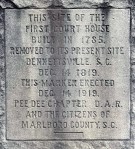
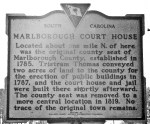
In 1785 Tristram conveyed two acres for the construction of publick buildings in the newly created Marlborough County. He hired his brother Benjamin to build the jail. Known as the town of Carlisle, the county seat was moved away from the mosquito infested banks of the Pee Dee to land in the county center (present day Bennettsville) deeded in 1820 by John S. Thomas. Tristram died in 1817 and is buried at Sawmill Baptist in Bennettsville. Much more on Tristram can be found at a well written Find-a-Grave entry.

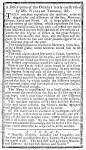
WILLIAM “RAM BILLY” THOMAS Like his brother Tristram, William was a man of leadership. In 1774-5, he represented Anson County in the Continental Congress. He was a whig and soldier in the Revolutionary War whose involvement in the torment of Tory James Cotton is colorfully told in deposition on board His Majesty’s sloop cruiser at the mouth of the Cape Fear river.

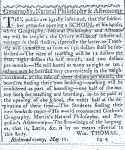
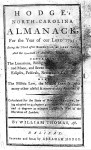
William Thomas was also a learned teacher. He wrote one of North Carolina’s first Almanacs and created a school of “Geography, Natural Philosophy, and Astronomy” at his home in Richmond County. William was involved with the founding of the University of North Carolina where his application to teach astronomy was tabled by the committee. William likely attended Cartledge Creek Baptist Church which hosted a conference founding Wake Forest University. Divided, some of William Thomas’ children remained in North Carolina while some moved to Alabama and to Tennessee where they lived near their uncle Benjamin (more on these in the next post). William Thomas wrote a last will and testament and died in Richmond County.

PHILEMON and STEPHEN JR THOMAS. I’ve researched little on these two as I had already learned that my ancestry to this family was in error. They are two lines I wish to know more about and welcome any guest writer to tell it on this site.

Beyond the family who remained in the Pee Dee Region are JAMES (who died in North Carolina), JOHN, and LEWIS who as Quakers chose to leave the state in the name of peace. Their truly wonderful stories carried me on a journey of discovery that significantly changed my worldly view. More on this story later but first I’d like to pay a visit to BENJAMIN and the children of WILLIAM who removed to the state of Tennessee.


THAT OTHER THOMAS FAMILY: Part 1

img_20170106_0010_tonemapped

There was a time when everyone, I mean EVERYONE, believed that today’s Thomas families of Upper Union and Anson Counties NC descended from Stephen Thomas whose family settled in the Great Pee Dee river region. This was a prominent family, one filled with shakers and movers, and one whose members were wildly diverse in their individual moral compasses. This was an exciting family to follow and to this day, there’s parts of me that wish I were among its folds. It’s not to be.

Removing from Maryland, Stephen Thomas’ estate was settled in 1774 Anson NC. Deeds and court records naming his children introduced us to one of his sons, Benjamin Thomas. The family lived along Jones Creek in today’s Anson County and on Gum Swamp and against the South Carolina border on David’s Creek in today’s Richmond County. The family also rolled over into South Carolina in the areas of Cheraw and present day Marlborough and Darlington.

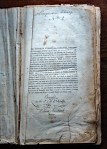
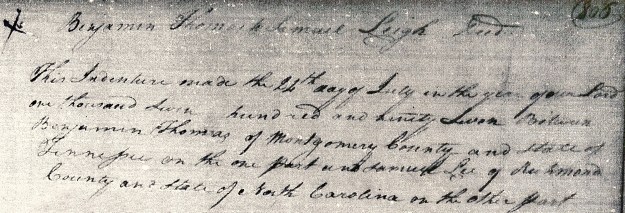
Somehow, and likely by misinterpretation of the writings of those such as D. D. McColl, modern day descendants of Benjamin Thomas of upper Anson County latched on to a belief that they descended from Benjamin, the son of Stephen Thomas. The problem with that idea is that Stephen’s Benjamin lived against the South Carolina border near the lands of his older brother Robert. After the war, he moved a bit further south into Marlborough County where he worked with brother Tristram to build the first county courthouse. Stephen’s Benjamin sort of disappears and as there’s no record saying otherwise, it was always assumed that he moved away from family to be ours in Upper Anson. That is, until one day the story line was challenged by way of writing in the deed pictured at the top of this page.

By 1797, Benjamin Thomas, the son of Stephen, had moved to Montgomery County Tennessee. He moved with some of the children of his older brother William. In making the move, and as is clearly written at the top of this page, Benjamin of Tennessee sold his original land in Anson, now Richmond County. He was prominent in Tennessee helping to create the first inland port along the Cumberland River known as Palmyra. It’s impossible for him to be in Tennessee and yet raising a family along Richardson Creek in upper Anson County? It simply did not happen. And in further proof, the naming patterns of the two families are different as well as the DNA. We’re in no way related by blood to the Stephen Thomas lineage.

__________________________________

I had absolutely a wonderful time chasing this other Thomas family until it all came crashing down with the discovery of the above deed. I’ve traveled, learned a lot, and met some good people. I’m sort of sad that so much time was spent collecting memories and keepsakes that no longer have family value. A clean break was needed and for a while I even refused to discuss this other family. But ….that too has now changed as ancient events in Chatham County NC are now serving to reignite a peculiar reconnection that I simply find cool. So, before delving into something new, I’d like to dedicate the next few posts to the times I had searching out the family of Stephen Thomas.   Just remember, they’re not my family.

A PEEK AT 2017

14509223820_15ac8d055c_zGenealogy is much like fishing, it’s ultimately a skilled game of tricking history out of its lost and treasured past. Family history doesn’t just happen, winners in this sport know what records to pull and how best to increase the odds of extending their family circle. And like fishing, we plan, execute and ponder the situation always hungry and hopeful for the next big strike.

backlash-1024x1024With a goal of shaking the tree, records are worked slowly and methodically. Sometimes the results roll out nicely and simply walk you further down a path you’ve been traveling. Sometimes new discoveries are cataclysmic, crashing everything in the past you’ve believed to be true. Much like when a big fish hits, sometimes all goes well while on other days the reel backlashes and throws all expectation to the wind. Driven by discoveries made through DNA, this year has thrown information at us too fast to digest. It’s given us much to consider and as with a fishing backlash, we need to stop and take care of what’s happening now. It’s easy. We simply need to loosen it all up, pick away …pick away some more, and  be willing to tug a little at the line in search of clues and key bits of information that surely must be there.

So, let’s look to the future. In no special order, here’s a list of personal goals for 2017:

  • this past year, my Thomas family of Anson NC connected by DNA to Joseph Thomas who is believed to have relocated to the area of Wake/Chatham/Moore County from a large and well documented family living earlier in Bertie County. DNA testing of other known lines out of Bertie is very much needed to verify the broader tree.
  • the lives of the Joseph Thomas family in Wake County and neighboring Chatham/Moore Counties will be explored. A major part of this effort lies in the platting of family lands.
  • due to finds in Wake and Chatham, a past effort to plat family lands along Richardson Creek in Anson County has stalled for now and hopefully will be worked on in the upcoming year.
  • are we kin? ….I’d like to reach out and connect with descendants of other Thomas families living close to Joseph Thomas in Wake/Chatham/Moore Counties NC.
  • in places like Hancock County GA and Coosa/Elmore Counties Alabama, I’ll continue to explore early Thomas families and seek out living descendants for DNA testing.
  • new discoveries require the updating and rebuilding of my website geothos.com.
  • realizing much of this year will be spent with the new Thomas family discoveries, I remain committed to writing about my Love, Pless and the many other families and of other stories of folks who lived along the Rocky River.
  • and, with the discovery of new family, we need to get to know each other. We need to visit, befriend, and share time. We need to establish opportunities to visit the home lands along with the people and places the family holds important.

So, ‘Happy New Year’ to us all and here’s to the hopes that 2017 will be a year for the record books! With a little organization and added work, I think we can continue to break down the wall leading to our past. There’s light at the end of this tunnel as we’ve witnessed the power of DNA. For now we simply need to chip away at the new crack in our wall. More importantly, we now have new family and will muddle our way forward in hopes of making the discoveries meaningful.

Descendants of Asa Thomas?

d

The Jones-Johnson Farm features the renovated 1790’s log-built Etheldred Jones House that stands just behind this grand Greek-Revival-turned-Neo-Classical William Wesley Johnson House.

As has been covered in earlier posts, Asa Thomas is recorded as receivig a grant for land.

Living nearby to Etheldred Jones were the families of Joseph, Nathan and Jonathan Thomas. Etheldred Jones is connected to each of these men per various county records. And like Asa Thomas, Jonathan Thomas never received a grant for land in Wake County. Asa was, however, a chain carrier for grants to Nathan Thomas. And later, in 1793, both Asa and Nathan were buyers in the estate of Jonathan Thomas. Per 1800 census we know Asa was at that time living in Anson County NC. His whereabouts are uncertain after that point. And in 1804, the division of Jonathan Thomas’ land names sons Elijah, Elisha, Merrill, and Richard. It’s my belief all these Thomas are kin and that Asa, Nathan, and Jonathan just may be brothers or close cousins. I also believe they relate to Elisha Thomas from Bertie to Johnston County NC. And somehow yet unknown, they relate to Joseph Thomas who eventually died in neighboring Chatham County. We need to find a sampling of descendants from Nathan and Jonathan to see if a connection o Joseph can be verified through DNA.

Jonathan’s son Merrill Thomas can be found living in 1820 Clark County GA near Samuel Braswell who just after 1800 donated land in that county to Freeman’s Creek Baptist Church. There’s a marker at this church for famous Baptist missionary Lottie Moon who died of starvation on a flight back from China. Today the Lottie Moon Christmas offering is celebrated in Baptist churches throughout the south. And I wonder, even though family history indicates she was born in Virginia to a prominent family, could Lottie have ancestry back to Moon’s Chapel Baptist Church in Chatham County?

record-image_s3hy-6fsv-s6

1850 census – Clarke County GA

Back to the story, …there’s a clear path for the above Samuel Braswell from Chatham County NC through Hancock County GA and on to Clarke County GA. Also of interest, William and James Hales of North Carolina lived near Merrill Thomas in Clarke County. What makes this interesting you ask? …Cynthia, the daughter of Elisha and Lucy Massey Thomas of Johnston County NC married John Hales. Cynthia lived out her life in Johnston County.

_________________________________

It seems to go quiet for the Thomas family in Wake County until when in 1854 a 67 year old David Thomas applied for a Revolutionary War petition based on his father’s, Asa Thomas’ service. David doesn’t name his children in the request and in 1850 he and wife Penny (born South Carolina) are enumerated with no children. Per Wake County marriage records, David Thomas married Penny Jones on 17 Nov 1815.

At this point a huge gratitude goes out to Frances Cullom Morgan whose vast knowledge on the Jones family has been of great help. In 1830, David Thomas is enumerated as having two sons 15-19 years of age. Frances pointed out that in Richard Jones’ 1834 last will and testament, Richard of southern Wake County bequeathed To my son Richard Jones the tract of land where on David Thomas now lives.” And according to Frances, the only line of this Jones family in South Carolina at the time of Penny Jones’ birth was Richard’s brother Nathaniel who had removed from Wake to Kershaw County SC. It is likely that Penny was born to Nathaniel’s first wife and after her death, returned with a sister to live with family in Wake County.

The story takes on new meaning as we identify likely sons of David and Penny Jones Thomas. We know the couple was aging and without children in 1850 and they do not appear in the 1840 census. Instead, in 1840, the only two Thomas families listed in southern Wake county are Etheldred and Kinchen Thomas. Let’s take a closer look.

Etheldred Thomas

Born ca. 1815, and as listed in the Raleigh Register, Etheldred Thomas married 14 Nov 1839 Martha King. In 1840, Etheldred is listed in census while his father and mother were not. From the ages, it appears David and Penny were living at that time in the home of their son Etheldred Thomas. On 28 Jul 1852, “Etheldred Thomas otherwise known as Etheldred Jones” sold 124 acres on the little creek, a tributary of White Oak Creek. Adjoining Utley, Turner, Seagraves and Hunter; the land on Fish Dam road was sold to Archilbald Leslie (deed 19-415, Wake NC). This deed is huge! It indicates Etheldred was changing his surname to Jones possibly due to being illegitimate  or maybe in honor of the man who housed and trained his grandfather Asa. Further linking the stories of Etheldred and David Thomas, in 1812, James Jones was appointed overseer of the road leading from Fish Dam Ford to Fayetteville from Richard Jones to the county line. David Thomas was listed among others ordered to work on the road.

This next bit of information I’d like not to tell. Though being hurtful, it happened and is true. Of all that’s good with this country, slavery is unforgivable and an abomination of God’s loving plan:

SAM T STEWART, EX-SLAVE.
“The speculators bought up Negroes as a drover would buy up mules. They would get them together by ‘Negro drivers’, as the white men employed by the speculators were called. Their names were Jim Harris of Raleigh, and yes, Dred Thomas, who lived near Holly Springs in Wake County. Wagon trains carried the rations on the trip to Mississippi. The drivers would not start until they had a large drove. Then the slaves were fastened together with chains. The chain was run between them, when they had been lined up like soldiers in double file. A small chain was attached to a Negro on the left and one to the Negro on the right and fastened to the main chain in the center.”

Sam T. Young’s complete story can be found in the slave narratives. I’ll not go much further on Etheldred other than to say he served in the civil war and was enumerated in 1900 as living in the Wake County soldier’s home.
Henderson Thomas

Born ca. 1815,  Henderson Thomas married Martha Norris on 17 May 1847. Martha is the daughter of Needham Norris and Patience Pearson. In the 1850 census, Henderson Thomas (millwright) and family are enumerated next to Needham Norris. On the same page is a person named Kinchen Thomas (more on Kinchen later). In April of 1851, two tracts purchased by Henderson Thomas were recorded in court. First tract (deed 19-11, Wake NC) from Gaston Jones was situated on Carries Creek adjoining S. P. Harris. The second tract from John Watson was for 44 acres on the north side of Buckhorn Creek. In 1852, Henderson Thomas sold 33 ½ acres on Fish Dam Road “near the Holly Spring Meeting House” Henderson sold the land to Andrew K. Clements, James Rogers and Andrew W. Betts; Masters and Wardens of Holly Spring Lodge # 115. The land was likely purchased as a site to build an academy for the town of Holly Springs.

This slideshow requires JavaScript.

At the close of the civil war, in 1865, Henderson sold to Richard Jones, land on the Avent Ferry road adjoining lands of Penny, Burt, A. leslie, T.C and the crossroad at Joseph Norris’ (deed 28-635, Wake NC). This is the same Richard Jones upon whose  land Henderson Thomas’ possible father David Thomas once lived! Note that on the present day map of Holly Springs, the Avent Ferry Road runs two blocks over from the masonic lodge.

In 1870 Henderson Thomas and family are enumerated as follows in the Buck Horn Township of Wake County: record-image_s3ht-xxdq-4j2

An 1871 map of Wake County shows Thomas Mill just south of Holly Springs on waters of Buckhorn Creek:mill

In the 1870’s, Henderson Thomas and wife Martha (now of Moore County) sold their lands to several African American men named Norris and to William Ballentine and William Johnson.  Henderson apparently moved to Moore County where we know Martha died 5 Apr 1882. According to the book Buffalo Creek Chronicles by Kathy Brooks Jones, Martha Norris Thomas is interred at Poplar Branch Methodist Church cemetery in old  Jonesboro.

Kinchen Henry Thomas

Born ca. 1823, Kinchen Thomas married 15 Nov 1847 Sarah Weeks in Cumberland County NC.   The bondsman was Kimbrel Jones, a grandson of Jesse Jones of southern Wake County. Note that Kimbrel married Rebecca Matthews who I believe ties back into the family of Asa Thomas’s wife, Pleasant Matthews. In 1850, Kinchen, wife Sarah, and a newly born daughter are enumerated in Wake County on the same page as Henderson Thomas. Dated 19 Mar 1851, Kinchen Thomas sold 52 acres (deed 19-399, Wake NC) to Archibald Leslie. The land was situated on Rocky Branch, a tributary of Middle Creek near present day Sunset Lake. It joined the lands of Shadrack Barker and B. Holland and the deed was witnessed by Hill Richardson and Young Booker. Note that Young Booker witnessed David Thomas’ Revolutionary War pension request on behalf of Asa Thomas’ service. Also, note that Kinchen, Henderson and Etheldred all had land dealings with Archibald Leslie. Archibald was a store owner and leader in the growing community of Holly Springs.

43888239_129205908237_tonemappedKinchen Thomas and family removed to Campbell County GA in the mid-1850’s. Buried at Powder Springs Methodist Church Cemetery in Cobb County, the story of Kinchen Henry Thomas is further told through a well written Find-a-Grave site. Noting that Henderson Thomas sold his land to the Holly Spring Masonic Lodge, I find it interesting to see the emblem atop Kinchen’s burial monument.