Category Archives: Uncategorized

STAY FOR A WHILE


hyams

While browsing David McCorkle’s North Carolina Land Grants for holdings along Gourdvine Creek, I came across a person who didn’t seem to fit the neighborhood. Being the day after the New Year, it was a good and quiet time to explore this person at my favorite place …North Carolina State Archives.

____________________________

My Great-Great Grandfather is David Thomas who married Alice Newsome, the daughter of Christian Barnes and Joseph Newsome originally from Wayne County NC. David and Joseph lived near the mouth of Gourdvine Creek in present day Union County. I remember well the day I found William Barnes also living on Gourdvine Creek. Joseph’s brother-in-law William is Alice Newsome Thomas’ uncle. This was one of those discoveries that reminded me that people have the same needs, they’re bound by family and they’re forever building community.

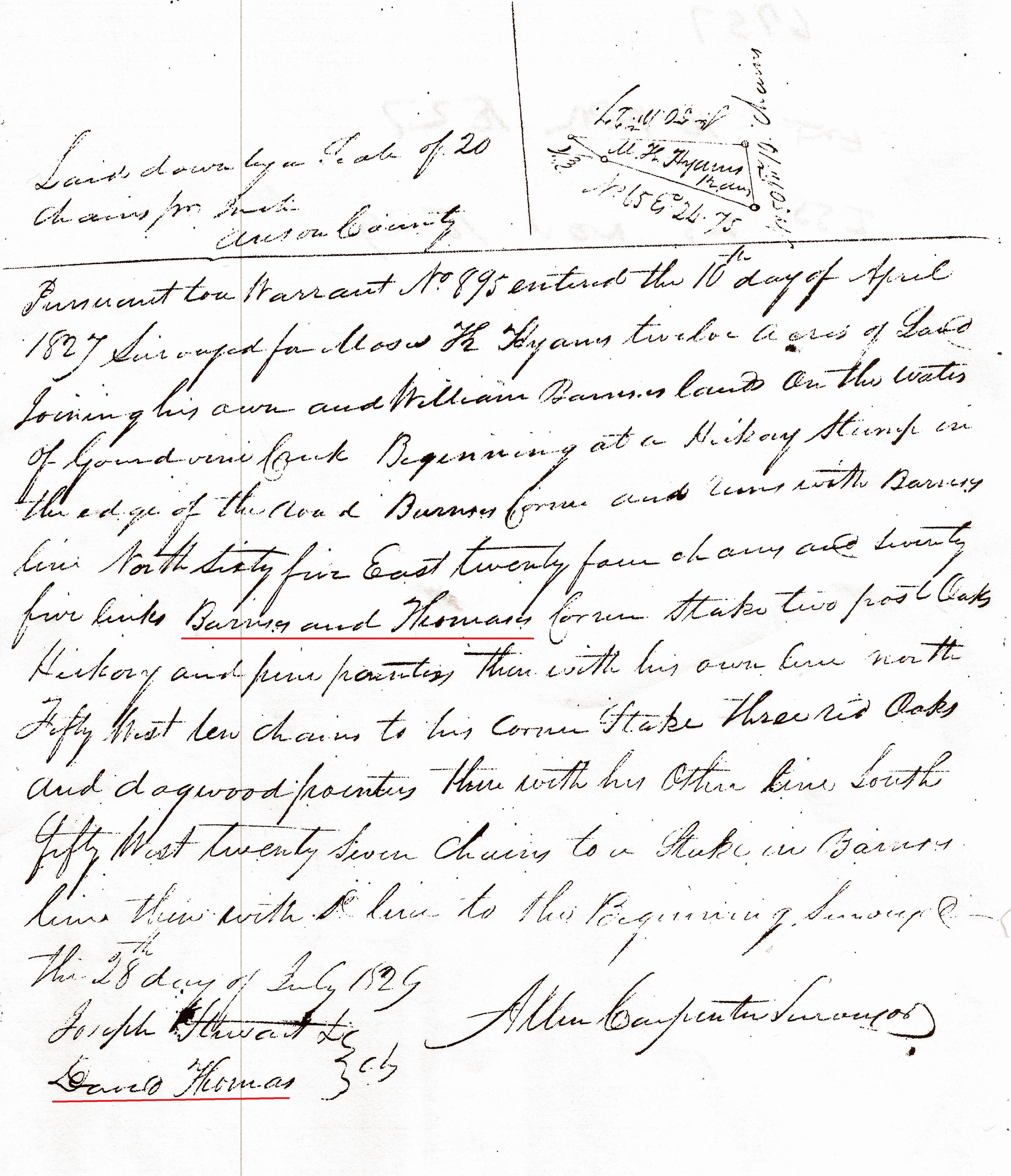
My ancestor, David Thomas served as chain carrier in the 1829 survey (see above) for 12 acres issued to Moses K. Hyams. The survey indicates the land adjoined that of Thomas and Barnes. Looking for more on Moses, I found nothing. So who was Moses? Where did he come from?

Born in Charleston SC, Moses Kosciusko Hyams is the son of Samuel Myers Sr and Meriam Levy Hyams. In 1823, Moses K. is listed as Justice of Peace in Charleston. Being a well-documented Jewish family, information on Samuel can be found in Malcolm H. Stern’s First American Jewish Families. From that source we learn that Samuel was the son of Moses and Judith Isaacks Hyams. This Moses was born in Gdansk Poland and had removed to Dublin Ireland and then on to London where he died. The family came to America around 1765. Arriving in Charleston, Samuel is later honored as being the first Jew to settle in Natchitoches Louisiana. It’s there, on 18 Aug 1836, the Thomas’ brief neighbor died in Pointe Coupee Parish.

The Jewish Cemetery MarkerOne of Moses K. Hyams’ brothers studied engineering and during his life is credited as surveying much land in Louisiana. The family was involved in building community and as leaders of government. Moses’ brother Henry Michael Hyams also served the State of Louisiana as Lieutenant Governor during the American Civil War. This family established the historic Jewish Cemetery of Rapides Parish and is prominent in the Natchitoches American Cemetery.

How cool is all this! My ancestor walked the rudes of Carolina with this family. They must have shared times, beliefs, and their thoughts on life. We’re all connected much more than by birth and death alone. Never knowing where tomorrow will lead, it’s important that we acknowledge each moment. Moments like this remind me of my father’s favorite poem:

Let me live in a house by the side of the road, Where the race of men go by-
The men who are good and the men who are bad, As good and as bad as I.
I would not sit in the scorner’s seat, Or hurl the cynic’s ban;-
Let me live in a house by the side of the road And be a friend to man.
Sam Walter Foss (1858-1911)

IT’S A NEW YEAR

mapthomas2015 has arrived and it’s time to take on challenges for the New Year. In this journey of mine, you’re invited to join in and share as you wish. Please take me up on this as the sharing of ideas gives purpose to the business of discovery.

And for this year, it’s time to review NC records possibly linking to our Thomas family in Alabama.  We need to get the back home! Most importantly will be a close look given to the lives of Joseph, Micajah and Andrew Thomas whose records span Edgecombe and Wake Counties and on through Chatham and Moore Counties. And who was Jacob Thomas who appeared with my Benjamin in 1779 Anson County NC?

I’d also like to complete some unfinished business. The above is an image of hand drawn land plats that have been in storage for the last ten years. They represent most of the Anson County grants issued in the area of Olive Branch between Richardson Creek and Rocky River. This is where my Thomas ancestors walked and lived. More than knowing where they lived, I hope to gain a better sense of the neighborhood and how it drove us to where we are today.

I’ll continue to look at Cabarrus and Stanly Counties and of family ties to Wilkes and Stokes Counties NC. It’s also time to kayak the rivers to study old fords and mill seats. I’d love to locate the “Old Conrad Place along the Yadkin River” where, according to a Moravian minister’s diary, Elizabeth Love Shore is buried. I want to take lots of pictures and video. I want to see what my ancestors saw.  It’s easier to share if we can touch it or at least see it.

And, as always, there’s unexpected doors to be opened. Though sometimes offering a mere glimpse or temporary detour, opening doors is what this is all about.

HELLO OUT THERE

The phone call was received while in a parking lot as my wife and I headed to our favorite Italian restaurant. Henry Thomas was calling to let me know that he was really busy on a job; it would probably be a month before we would be able to talk. Henry’s DNA matched mine and this curiously short call was his first response to my effort to reach him. Henry did call back as promised and we spoke in depth about Thomas history. You see, Henry is an actor and being on location, he was away from his research and unable to provide much information.

MTIwNjA4NjM0MTQzMTQ3NTMyHenry Jackson Thomas Jr was born in San Antonio TX to hardworking parents who supported his childhood ambition of becoming an actor. At age 8, Henry’s first audition led to a role playing Sissy Spacek’s son in the movie “Raggedy Man.” He is also known for giving a coke to a football player in “The Steeler and the Pittsburg Kid.” And in 1982, Henry became every kid’s champion playing Elliott in Stephen Spielberg’s blockbuster “ET: The Extra Terrestrial.” In this role, Henry Thomas reached out to the stars only to remain with family and those he loved here on earth. Henry remains in the business of acting while chasing an equally strong love of music. He recently stared as Hank Williams in “The Last Ride” and performs in the band Farspeaker.
_______________________________

Now grown and seeking to learn about the fabric of his own existence, Henry’s searching has carried him to Montgomery County Alabama where his namesake ancestor Henry Jackson Thomas was born in 1854 to Andrew and Jane Thomas. Jane was born in 1823 and married first Thomas P. Dailey on 21 Feb 1838 in Lowndes County Alabama. From her mother’s last will and testament, we know Jane is the daughter of James and Mary Wood:

Will of Mary Wood dated 8 June 1841, probated 2 Dec 1844.
Heirs of James Wood deceased, daughter Nancy D Wood and George W. Wood.
Allen Davis be allowed exclusive of his portion or his wife’s portion.
daughters Jane V Dailey and Nancy D. Wood and son George W. Wood .
…and grandchildren Mary Jane Blake, Martha Ann Blake, and Elizabeth Jackson Blake.
Executor: son-in-law Allen Davis.
Witnesses: B. W. Mangum, Joseph Cobb, A. D. Chapman, David Davenport.

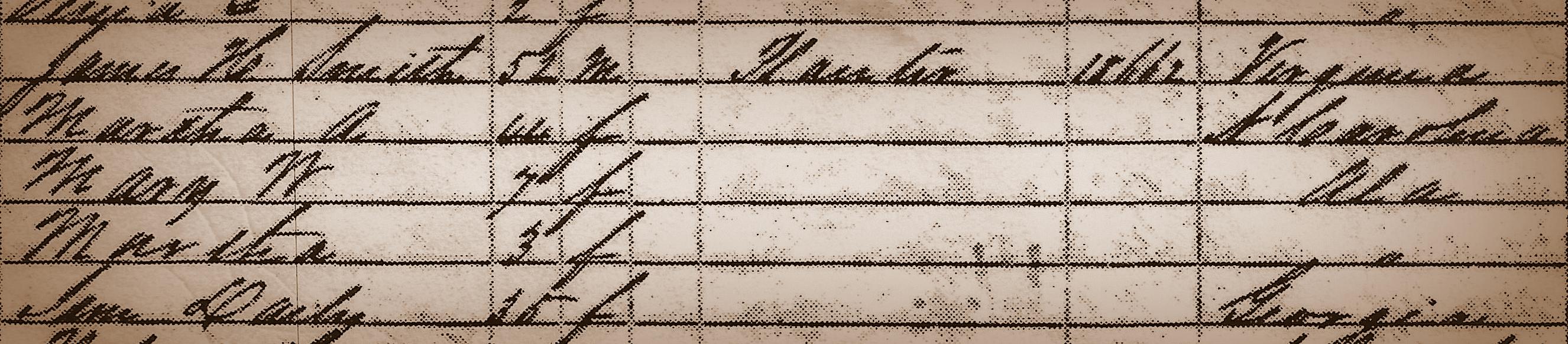
Thomas P Dailey died prior to 1850 as Jane was listed at that time as living at the home of James Henry Smith:
andrew2

Andrew Thomas eludes the 1850 census and may or may not be in the area at that time. However, shortly afterward, on 29 Jan 1852, Andrew Thomas married Jane Dailey in Lowndes County Al. The marriage was performed by Rev Peyton S. Alexander, a Methodist preacher who later moved to Autauga County.

At the writing of this post, Andrew Thomas is Henry’s earliest known paternal ancestor; he is Henry’s brick wall. The only other clues come later in the 1860 Montgomery County census where Andrew is enumerated between Dr. Geo. Pollard and Sterling Harrison, a one-time Montgomery county sheriff. Note that Andrew identifies himself as being from North Carolina and that his wife Jane had given birth to their first child two years after recently being married:

andrew1

This is all we know about Andrew and Jane Thomas as other valuable clues were likely destroyed during and immediately after the American Civil War. Landscapes were ravaged, courthouses were destroyed and county lines forever changed. Times were so bad that neighbor Col. Charles Gunter along with William Norris of Dallas County led groups of Confederados to safe haven in Brazil. Note that Charles was born in Chatham County NC while William’s family lived nearby in Wake. These families interacted with a Joseph and Micajah Thomas whose families moved to Georgia where they just may connect with ours (hopefully more later). And as for Andrew Thomas, did he serve and was he lost in war? Did he remove west? Did Jane die young or could she have remarried? Family lore has it her son George removed to Texas or Arkansas with family around Dallas. Was he possibly named for Dr. George Pollard who lived next door? There’s also mention of a stepbrother. Who might he be? And as for son Henry Thomas, born in 1854, he later surfaces in Elmore County just to the north of Montgomery Alabama.

No beans about it; this was hard times and a hard environment for families to prosper. People were on the move and we can only speculate as to the goings-on. Young Henry and the rest of the family elude the 1870 and 1880 census. However, an Andrew Thomas aged 2 is listed as living in the home of Hiram Norris in the 1880. Lore has it that Henry had a step brother. Who is this baby Andrew!

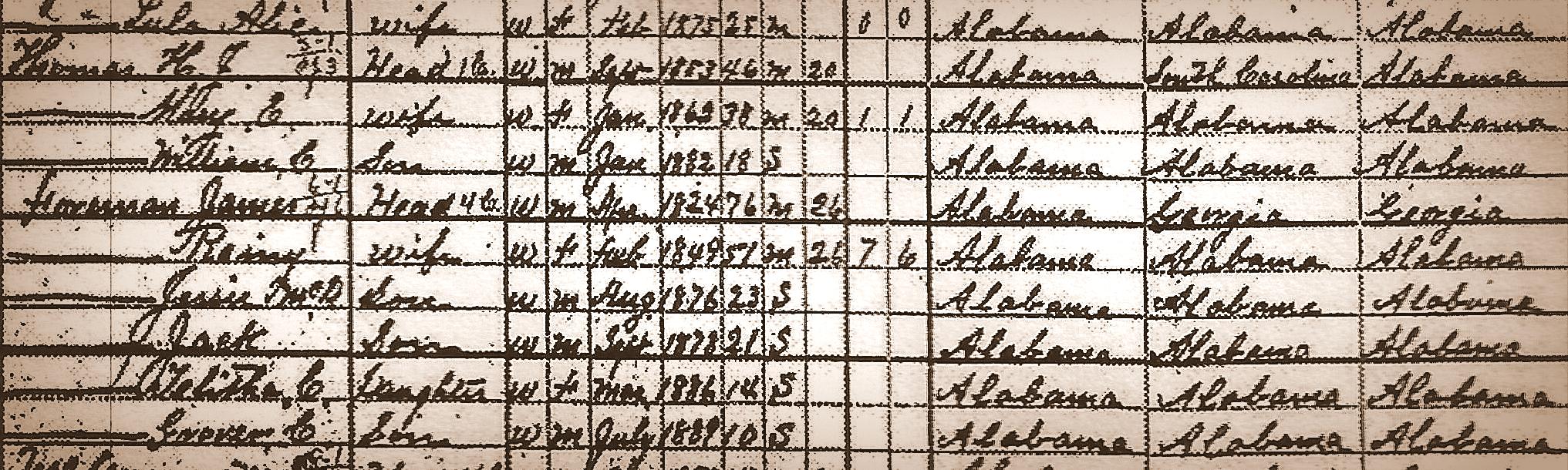
Henry Thomas married Mary Foreman, the daughter of James Monroe and Jane Booth Foreman in Elmore County Alabama where they lived out the remainder of their lives. The 1910 census show the Thomas and Foreman families living side-by-side in the community of Cold Springs Alabama:

andrew3
Note that Henry identifies his father’s birthplace as South Carolina! Is this correct, or did Andrew get it right when he claimed North Carolina in the 1860 census?

Henry and Mary Thomas are buried at Coosa River (Shoal Creek) Primitive Baptist Church in Deatsville Alabama near graves of the Foreman family. There are many graves of babies and of those who suffered and died from disease. Older folk in Henry’s family speak of the disease and of bad air. Did Henry’s family move west to escape an unhealthy environment? And why was the family missing in the 1870 and 1880 census? Though our Henry’s line removed from the area, the family of his grandfather’ brother James Eugene Thomas remained where they own and have farmed land on nearby Thomas road through 2000.

Somehow Henry’s family relates to my Thomas family of Anson County NC as his DNA matches mine perfectly. And not far to the north of where his family lived in Deatsville, he also relates to John Pelham Thomas’s family who once resided in Coosa County AL. The paths nearly cross, but how! mmmm…hello, is there anyone out there whose lineage crosses Henry’s??? Anyone with an ancestor named George Thomas whose family lived around Dallas TX 1880-1910? We’re also looking for other THOMAS who’re trying to get their family back through NC.

Help us to knock down our family wall. There’s no magical touching of finger tips. No ouch, blood nor painful forms of testing required. All you need to do is provide a simple swab coated with a little of your very own saliva …help us and help yourself …get DNA tested!!!

WHO I AM

It’s hard to undo errors in history when, as the living, we’re out there unknowingly perpetuating untruths. Most people don’t have the understanding needed to sort the facts or don’t care and are simply happy just to be able to tell a story. Others, having gone long down the wrong path, are unwilling to make changes, even knowing that change is right and needed. We’re all a little guilty of this. Like Forest Gump, we run our race and when tired, we are ready to just end it where we stand. It seems the larger the family circle gets, the harder it is to keep the story intact.

For my ancestor Benjamin Thomas, it has been very easy for generations to believe that he was the son of Stephen Thomas whose family settled in Anson County after removing from Maryland. Blatantly wrong, this belief ignores deeds in which Stephen’s son Benjamin sold land in Richmond County NC prior to moving to Tennessee and on to Mississippi. It also ignores differences in naming traditions and hints of other possible beginnings.  And truth be known, we are just now learning about the ancestry of my Benjamin Thomas beyond his beginnings in Anson County NC. We do however know well of his male descendants and also of others who share our DNA.

 _____________________________

The following two tables show the earliest known ancestor of two DIFFERENT families along with DNA markers attached to their corresponding haplogroup. By definition, a haplogroup is:

“a group of similar haplotypes that share a common ancestor having the same single nucleotide polymorphism (SNP) mutation in all haplotypes”

…whew, that’s a lot of definition!! In other words, these folk can be traced back through time, location, and migration collectively through their shared Y-DNA.

Y-DNA from descendants of Stephen Thomas indicates that he belongs to the I-M223 Haplogroup with early roots in northwest Europe. From results (family pedigree 187) found on the THOMAS FAMILY PROJECT at FamilytreeDNA, numerous members of the family descendants spanning well beyond the immediate descendants of Stephen share the same markers. The results validate family histories as well as much of their supporting written documentation.
Edmund Thomas 1549 Kent England
I M223-15/23/15/10/15/16/11/13/12/14/12/32

However, Benjamin Thomas, who first appeared in the late 1770’s Anson County, is also represented by numerous descendants who share a common Y-DNA. From results (family pedigree 100) found on the THOMAS FAMILY PROJECT at FamilytreeDNA, our Benjamin belongs to Haplogroup R-M269. With roots in sub-Saharan Africa, this group spread north and west through Spain and UK.
Benjamin Thomas 1778 Anson County NC
R M269-13/24/14/11/11/14/12/12/13/13/12/28

From the very different DNA, it’s clear and undeniable that Benjamin Thomas of Anson County is not a member of the Stephen Thomas family. Equally exciting are the results and implications from participants whose DNA match mine and who are not believed to be descendants of Benjamin Thomas of Anson NC. More on their stories later.

Keep on running!

Our State has a New Road(s)

On the collaborative album “Will the Circle be Unbroken,” legendary singer Roy Acuff can be heard telling the younger Gritty Dirt Band:

“Once you decide you’re going to record a number, don’t say ‘Oh, we’ll take it over and do it again’ . . .because every time you go through it, you”ll lose a little something.”

I can’t help but think that these words of wisdom also find truth in the nature of historic documentation, its impact on the future, and how we perceive the past. I’d like to share my thoughts on the construction of a major highway and how its change over time impacted our ancestors’ decisions and life story. This post will set the stage for a follow-up discussion on implications.

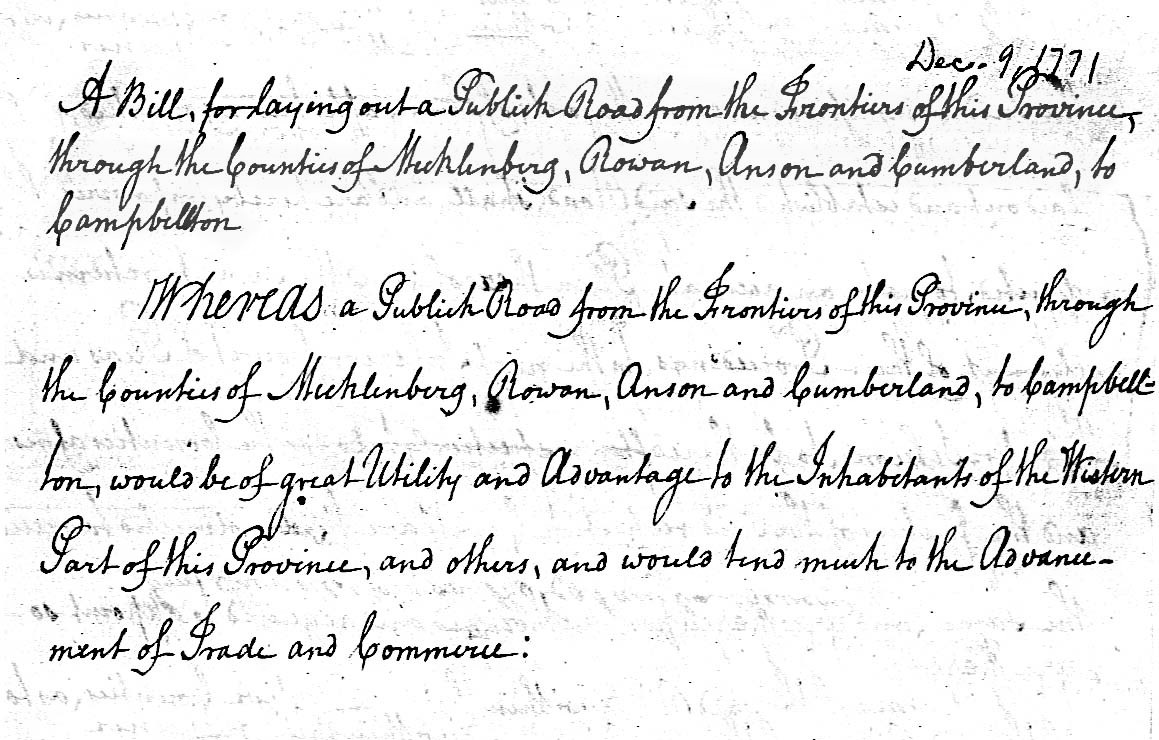
1On Dec 9, 1771, the North Carolina General Assembly ordered a road to be built through Mecklenburg County leading to Campbellton, now Fayetteville. The road likely followed the present path of Brief Road (at least east of present day Mint Hill). Ancient Presbyterian cemeteries dotting the landscape are all that’s left to remind us of the prominent families who settled along the road west of the Rocky River.

Mentioning Rocky River, just where did this first road cross the river? And more importantly, what iterations in its routing over the years led us to today’s crossing between Midland and Locust? …be assured the original crossing was nowhere near the present day crossing of Hwy 24-27!

2A 1789 plan of Mecklenburg County (left) shows a road running through present day Cabarrus County and crossing the river at the mouth of Clear Creek before continuing east into Montgomery (present day Stanly County).

3A year later, in 1790, another Mecklenburg County Map (right) identifies the road “Charlotte Lincoln Co. to Fayetteville” still crossing Rocky River at Clear creek near the corner of Anson County. Note the mentioning of “Barron’s” in identification of the great track once owned by Governor Arthur Dobbs. Following the 1765 death and ensuing settlement of claims by the heirs of Arthur Dobbs, a 1778 petition by the residents of Mecklenburg County led to an act of General Assembly that transferred unsold Dobbs land to the Secretary of State for issuance as grants.

4

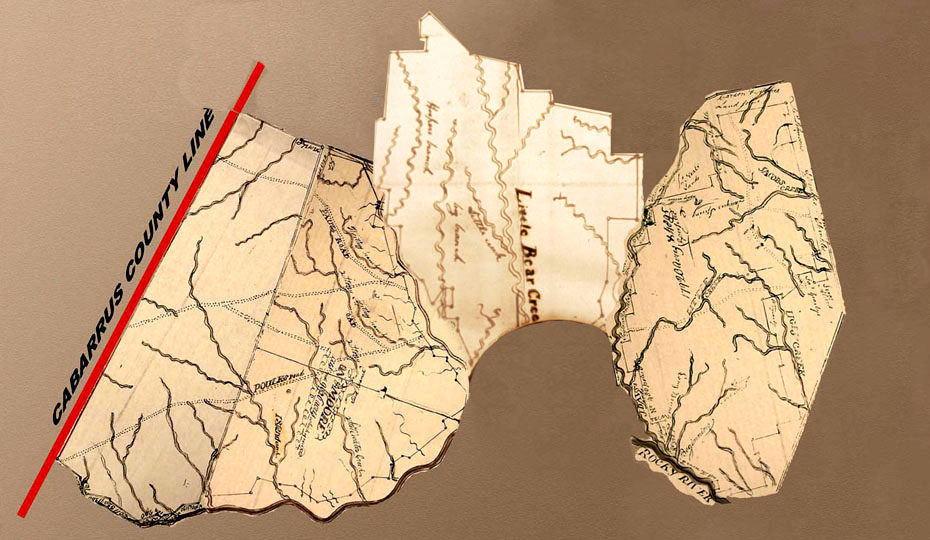
In 1795, a small group of land speculators were issued over 60,000 acres of this land in Montgomery County taking up much of present day Stanly County. A compilation of plats (left) shows the Charlotte-Fayetteville road as “Poulk’s Road.” Known today as Polk Ford Road, It enters the county near the mouth of Clear Creek, apparently crossing at Polk Ford.

 
5From these records, it’s safe to conclude that the Charlotte to Fayetteville road followed a path as has been described in maps.Looking further east, it likely  passed between Locust and Stanfield in present day Stanly County. By 1875, the road continues to take a more sourthern route near Brief Road before bending north to cross Rocky River likely in the area around Michael Garmon’s mill (right).

6Per 1910 soil map of Cabarrus County (left), the road veers to the northeast passing SOUTH of Bethel UMC and merging with today’s 24-27 near the present crossing of 24-27 and 601. It appears that by 1910 the road crossed the river near where it does today.

Not old enough to know any better, the idea of this sort of road migration has opened my eyes!  This is but one road that must have changed many times. How would such changes impact value and incentive for my ancestor to buy or sell? Did such movement corrupt maps and land records? Did they change the understanding of verbal histories passed down to myself as well as others?

Maps on this page are courtesy of North Carolina Maps.

Who was the Most Important Land Owner in Stanly County, North Carolina?

When contemplating this question, we might think of the King of England or possibly some local Stanly County family who made it big. But Stanly was not formed until well after Revolutionary War and there’s nobody to my knowledge whose station in life rises to the level of a person I have in mind.

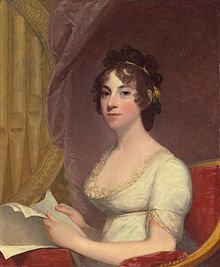
thorntonIn 1790, at the age of 16, Anna Marie Brodeau married William Thornton, aged 31. Dr. William Thornton designed the United States Capitol Building and is considered the father of the United States Patent Office. Following the discovery of gold in Cabarrus County, North Carolina, William purchased over 50,000 acres of speculation land encompassing much of what is present day Stanly County. The following map I put together from original Secretary of State land grant survey plats show just how far Thornton’s lands reached. It was his intention to start a lucrative business known as the North Carolina Gold Mining Company.

stanlyland

After his death in 1828, William Thornton’s land passed to his wife Anna Marie by way of last will and testament. Though the gold mining venture failed, Anna continued selling off parcels of the land well beyond the 1842 formation of Stanly County. By rights, Anna was clearly the largest land owner in Stanly County. But, this fact alone is not why I believe her to be the most important land owner.

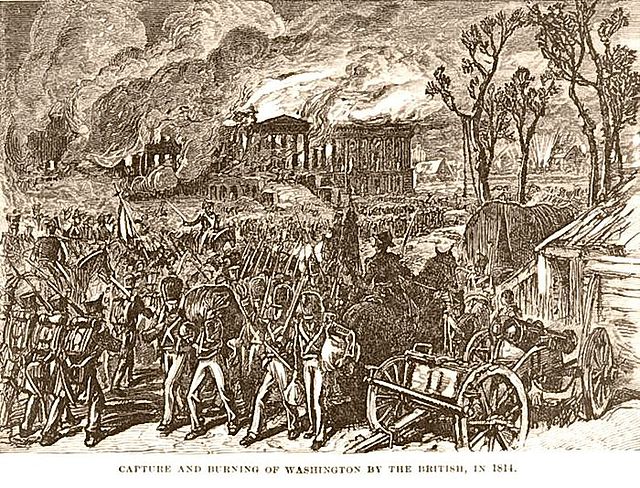
Celebrating something good within America’s most tragic moment, a well-done segment on CBS Sunday Morning portrayed the August 1814 burning and fall of Washington, DC. Two hundred years ago this very month, the British burned our capitol during the War of 1812. The TV story celebrated Dolly Madison by highlighting her saving of a famous portrait of George Washington.

640px-BurningofWashington1814Anna and William Thornton were friends of Dolly Madison and lived close to the White House. On that fateful day, Anna retreated to a friend’s mansion on the Georgetown Heights, overlooking the Potomac. From their location, Anna and her host wrote of the unfolding situation while recording the movements of Dolly Madison. And seeing that the Patent Office was about to be burned, William Thornton himself made it to town where he persuaded the British to spare the building. Today, what was first a hotel, and later the first patent office, now houses the United States National Portrait Museum.

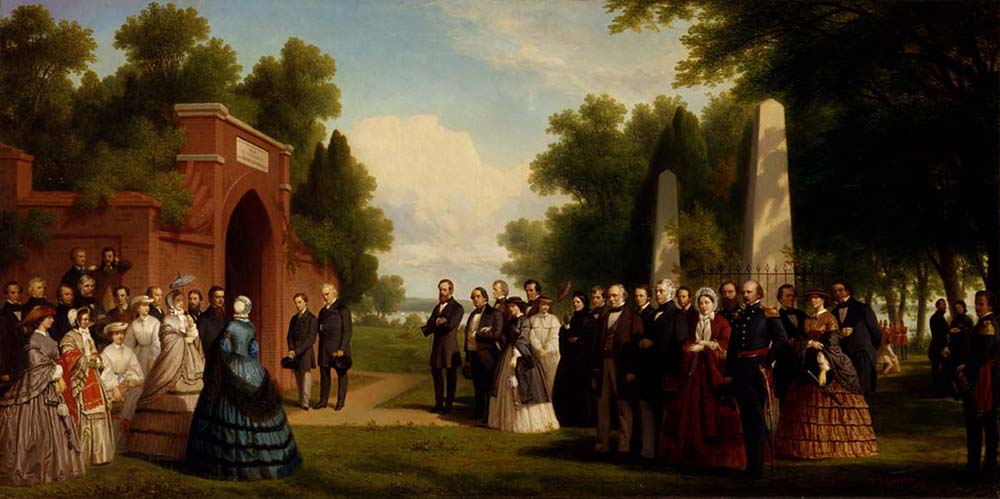
Years later, following the death of our first president, Anna Marie Thornton lobbied Congress on behalf of her friend Martha Washington. Though it was Martha’s wish for her husband to be buried on the family estate, the prevailing powers were adamant that he should be interred at the newly constructed monument bearing his name. Anna’s effort must have been of help as George Washington was laid to rest at Mount Vernon.

George Washington's Tomb at Mount Vernon

George Washington’s Tomb at Mount Vernon

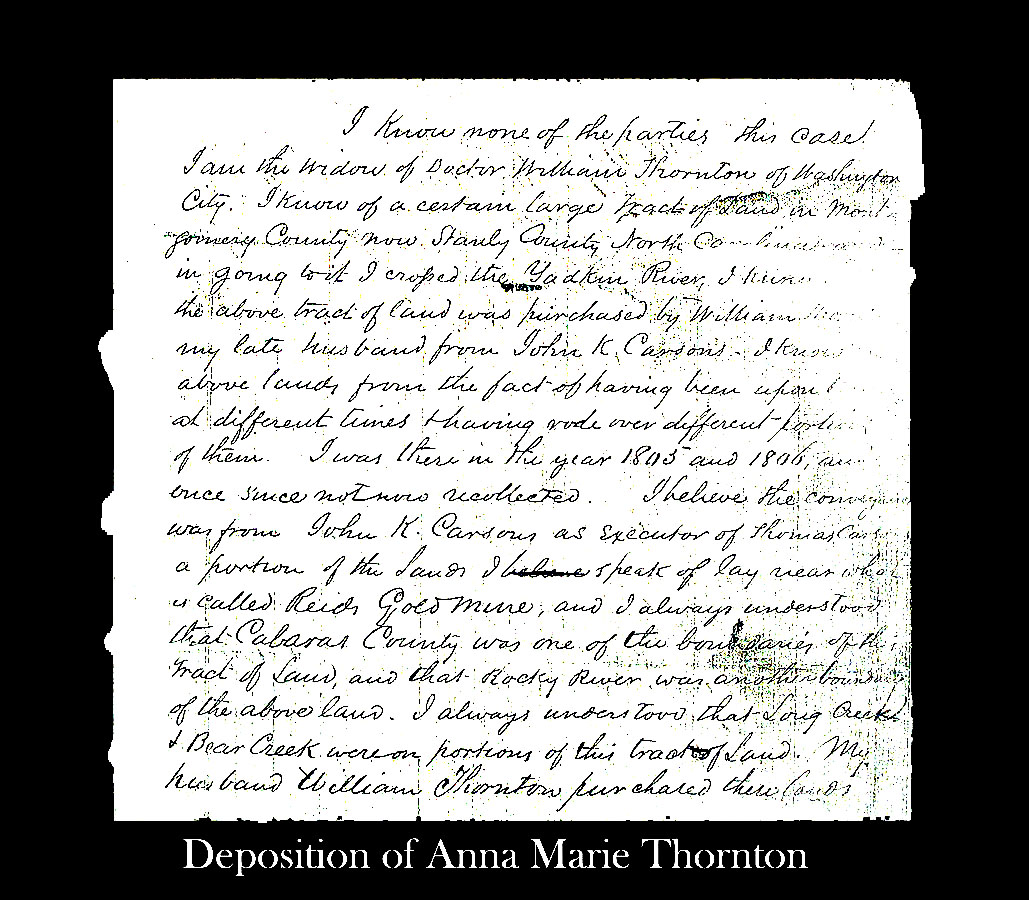
Later in life, a Supreme Court Case arising from Stanly County, North Carolina names Anna Marie Thornton in connection with the title history of her land holdings. The case includes her deposition along with a copy of the deed of sale for the large tract of land. Recently, I was contacted by the editor of the William Thornton Papers as it had been previously believed that there was no existing copy of Thornton’s land deed in North Carolina. You see, besides the copy found in the court case, the original had been destroyed when the Montgomery County, North Carolina court house was burned in 1843 by Elijah Spencer, an arsonist. And, the only other known copy was recorded in Washington DC only to be destroyed by the very same fire that Anna witnessed in 1814.
deposition
Along with being Stanly County’s largest land owner, Anna Marie Brodeau Thornton’s time and place in history helped to make our country what it is today. Anna’s diary can be found in the Library of Congress and there’s much information available on the  events of 1814.  One particularly good blog can be found at Washington Burning: Ladies of the Capitol

New Clues and a Thank You!

platDavid McCorkle lives in the Raleigh area; a distant cousin, he descends from Headley Thomas, a son of Ananias from Anson County NC. Our earliest known ancestor is Benjamin Thomas, father of Ananias. Maybe a year ago, David told me of his project to digitally record land grants from the area of Mecklenburg County NC. Knowing how much time and effort it has taken me to work a few small areas of Anson and Cabarrus counties, all I could think was uh huh ….have fun. Well, within the year, David has fulfilled his challenge and is now taking aim on records for the entire state of North Carolina …I can’t fathom the idea!

Years ago I had my own project. I sought to plat lands where Benjamin Thomas settled along the waters of Richardson creek in now Union County NC. Knowing Benjamin was NOT a child of the Stephen Thomas family in Richmond County to the east, I wanted to learn more about the people my ancestor called neighbors. Believing birds of feather flocked together, I hoped something in the land records would scream out and lead me to a more distant past.

It was a pretty slow process, drawing the old surveys to scale and connecting them to others using clues rising from the written descriptions. I was able to expand my own plat map only as long as the grants listed adjoining neighbors. Eventually, reaching tracts that did not identify adjoining lands, I was faced with what seemed to be an insurmountable wall. I would either have to stop the quest or reverse strategy by wading through ALL the grants in the county hoping to find OTHER pieces of land that mentioned adjoining Thomas lands. The haystack was too big; my project was put to rest.

This very day, whilst looking at the index on David’s site, I saw he offered a new choice. I could look at only Mecklenburg County land grants, or …..click and look at land grants from Mecklenburg and surrounding counties. Since David has somehow cross referenced ALL the grants, I was able to quickly find the much needed adjoining land owners. My project has new legs and I very much thank David for his diligence and good work.

Now, for those who have no clue about what I’ve just written, please take a look at David’s site: http://nclandgrants.com/home.htm. If your ancestor lived near Mecklenburg NC, type them into the index, see the land they claimed, and learn a little about who they called “neighbor.”

JJ: Finding Lost Love

In August 1877, Jno. C. Love of the City of Philadelphia Pa purchased the following tracts adjoining Reed gold mine and Rocky River:

• 30 acres of land from Aaron Linker and wife adjoining lands of “Moses Linker, Jackson Linker, Reed Mine Company & Rocky River.”
• An undisclosed amount of acreage from Aaron Linker and wife being “the tract of land on which they now live adjoining the Furr Garman Mining Company.” The land also adjoined that owned by Wm. Linker, and Jackson Linker.
• 60 acres (28-32, Cabarrus County NC) “on which I now live” … and joining Aaron Linker, and “the river at the mouth of the branch.”
• 154 acres from Geo. Barba & wife, being lands where Geo. Barba & wife now lives, adjoining the river, “a corner of the church,” “Reed & Hartsell’s corner,” and A. Hartsell’s corner.

These deeds found years ago stir deep thought as the lands must have been very near to that once owned by our own Grandsire James Love. Who was John C. Love of Philadelphia and did he relate to our NC family? Prior to opening the Charlotte mint, how was gold accounted in what must have been an arduous trip from Reed’s mine to the federal mint in Philadelphia? Was selling gold anything like selling hay; did we simply carry it in bulk, weigh it, and receive payment in money? Or, were there family or other agents in Philly who managed our interests? Of all places, why was John C. Love of Philadelphia buying land around Reed’s gold mine?!! The story of John C. Love is nowhere complete, though what we have reads like a classic southern tale. It even cracks the door open allowing us glimpses into the possible lives of other lost LOVE.

We know old Grandsire James Love had a nephew John C. Love who died much earlier in Stokes County NC. There’s no known descendants of our James by the name John C. Love; however, there was a John C. Love who enlisted and served along-side John E. Love, John J. Love, Jonah Askew Love, Michael Garman Love, James Wade Love and Postill P. Love in CSA Co. H, 42nd Reg NC.

On 30 Apr 1864, John C. Love enlisted as Private in Petersburg VA. He served under Capt. J. M. Hartsell and “joined from desertion Oct 18 1864 & deserted to the enemy Oct 29 1864.” A register of arrivals and dispositions of federal and rebel soldiers indicates J. C. Love was received Oct 30 1864 as a “Deserter from the Enemy” at Bermuda 100. From the register of rebel deserters taking oath, Headquarters, the Provost Marshall, Bermuda Hundred VA makes the following report. John C. Love was captured at Dept. Headquarters, Nov 4 186_ and confined at that time. On Nov 4 186_ he was turned over to Pro. Maj. Gen. at City Point VA with final remarks “To go to Philadelphia PA.” Looking at another paper, and on Nov 6 1864, charged as “Rebel Deserter,” Maj. Gen. U.S. Grant ordered that John C. Love be confined. He was sent on Nov 12 1864 to City Point where he was to be released. This by order of P. M. Gen Patrick. And again, the remark: “Went to Phila Pa.” Could it be? Is there a chance that this confederate soldier is the same John C. Love who purchased land in Cabarrus in 1877?

Poring through records from Stanly, Anson, Cabarrus and Union Counties, I found only one telling entry. The Jan 1867 minutes of the Court of Pleas and Quarter Session reads:

State vs. John C. Love
Suspended upon payment of costs.
E C. Griffin, Judgement of $50.

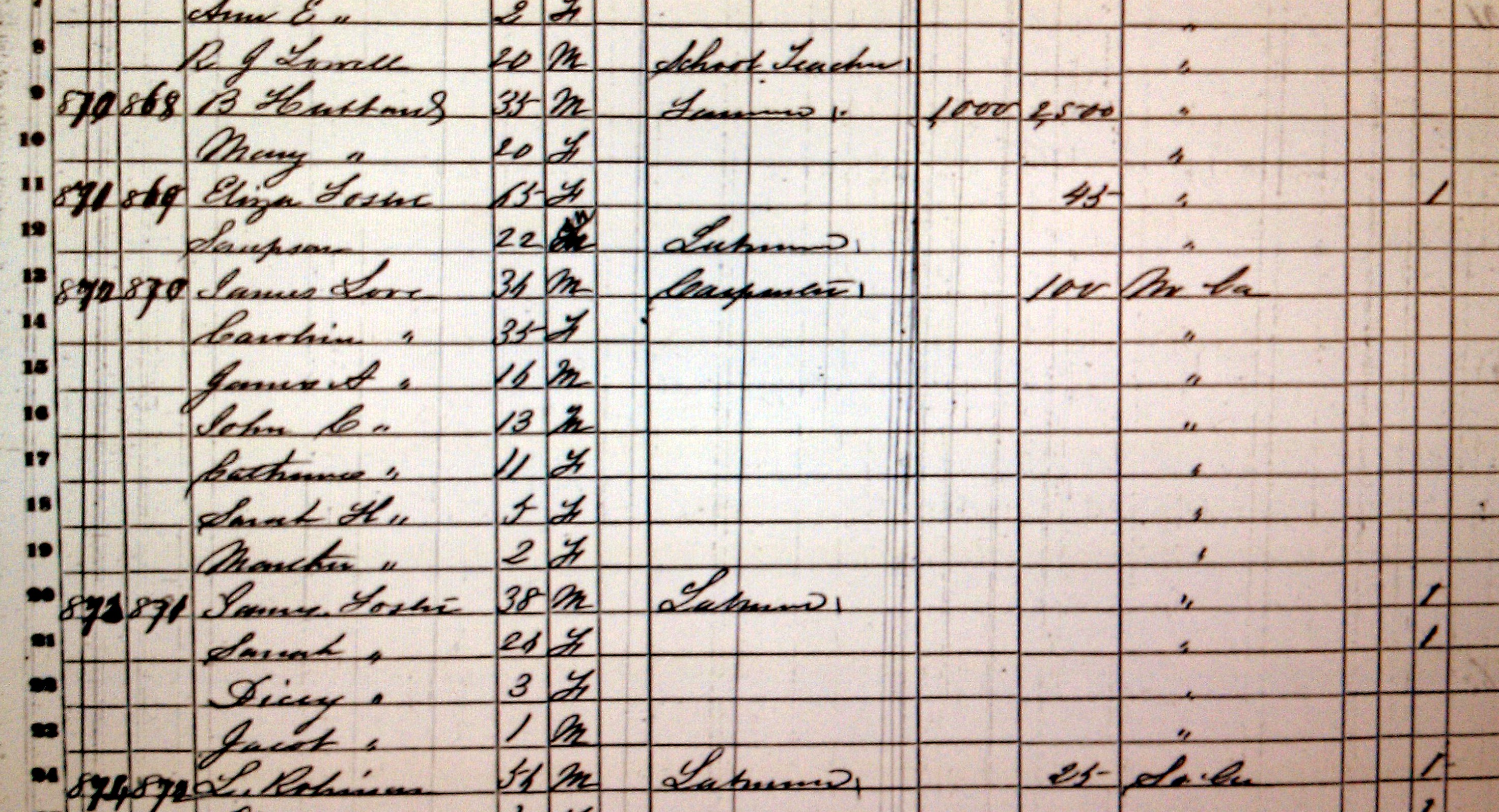
There was no mention of John C. Love in North Carolina census records, prior to or after the war. And though believing all LOVE in South Carolina descended from the likes of an early settler known as James the Weaver, the following census record from 1860 Jefferson Township in Chesterfield SC opens a door.

1860 Chesterfield SC

1860 Chesterfield SC

Born in North Carolina, James Love is listed as a carpenter living near the Brewer gold mine. The family does not appear in the county prior or after 1860. Note John C. Love, aged 13, would have sadly been of age to enlist in 1864. And also note that John C. Love’s father, (John) James Love is the same John J. Love enlisted beside John C. Love in the 42nd Regiment. More on the life story of John C. Love will have to wait for another day as the rest of this writing will be dedicated to the story of John James Love and other possible implications raised.

During and following the Civil War, J. J. Love and family first purchased land in Union County NC before moving to the Crab Orchard area of Mecklenburg. To my knowledge, there’s no further listing of son John C. Love in North Carolina. The family of J.J. Love:

Wife Mary Caroline Honeycutt Love, born 1823.
1. James Adam Love – born 1844, married Sarah Jane Griffin in 1866 Union NC.
2. John C. Love – born 1847 and is lost or possibly removed to Philadelphia.
3. Vicey Catherine Love – born 1851, married Churchwell G. Braswell 1867 Union NC.
4. Joseph Henry Love – born 1854, married Nancy Jane Harrington in 1874 Union NC.
5. Gustavus Beauregard “General” Love – born 1865, married 1882 Malinda Hinson.

Dated 28 May 1901, J. J. Love applied for a civil war pension claim. At age 78 and residing at Cluster branch post-office, he declared his service in “Co. B, 42nd Reg. NC. And in 1863, while in service at Seven Pines VA, he “received wound in left arm below elbow also on right leg.” Marking the death of John J. Love, dated 22 Jul 1904, 79 year-old Mary C. Love applied for widow’s pension while living in Rt. 2 Charlotte NC. She properly identifies her husband’s unit as Co. H, 42nd. Reg. NC. E. M. and Minnie Spoon witnessed on behalf of Mary’s claim. The following obituary marks the death of Mary just a few years later:

Obituary
Mrs. Caroline Love, widow of the late J. J. Love, died yesterday morning at 8 o’clock at the home of her son, Mr. J. B. Love, four miles from the city on the Mneville road. The deceased was one of the oldest women in, the county, being 83 years of age at the time of her death. She was a good Christian woman and had been for many years a member of the Hickory Grove Church. The interment took place at that church today. Mrs. Love is survived, by two children, Mr. J. B. Love and Mrs. Braswell, of Mint Hill.
23 Aug 1906 Charlotte News

Note that the death certificate for Gustavus B. Love indicates his mother’s maiden name was Honneycutt. Related or maybe not, there is a lost Love found in a bible record named Mary Fairly Love who married into the Honeycutt family. As with our J. J. Love, there are few to no records for Mary Fairly Love. However, there is also a person named John Fairly Honeycutt. In the tangle of Love, Honeycutt and Fairly is it possible there a possible family tie?
bible

Jesse Lee’s Preaching at Love’s Church

Please understand who I am and what drives me. I enjoy history, am a painfully slow writer and will only occasionally post on my blog site as I live with a work schedule that demands much of my time.

With that out of the way, let’s revisit an earlier post where, in October 1799, Rev. Jesse Lee and Francis Asbury spoke to a gathering held at Love’s Church in now Stokes County, North Carolina:

Monday 7. We rode through Stokes County, and attended meeting at Love’s church, which has glass windows, and a yard fenced in. After Jesse Lee, I added a few words on Hebr. ii. 1. We then came up to William Jean’s, near the Moravian Old-town. We have rode nearly twenty miles this day. Sitting in meeting so many hours among such a multitude of people, and frequently with a blister on my breast, with the difficulties of driving along broken paths, cause me to be variously tried and comforted.

It’s interesting that Asbury concluded the meeting with words on Hebrews 2:1

Therefore we ought to give the more earnest heed to the things which we have heard, lest at any time we should let them slip.

Beyond the assumed biblical interpretation, for us who study families and our history, it’s vital to listen well and engage in conversation that brings life to stories being told. Don’t merely seek to understand the prevailing thought, but make it real by taking time to learn more about the cast of players and how their mentioning adds to the story. From such perspective, I can only guess about Asbury’s sermon and how it related to the congregation of Love’s Church in the times that were. We can glean much from the Journals of Francis Asbury, but who was the above named Jesse Lee?

Jesse Lee

Jesse Lee

Born 12 March 1758 in Prince George’s County, Virginia, Jesse Lee experienced a state of grace in 1777 after which time he helped to bring Methodism to northeast North Carolina. Following the formal organization of the Methodist Episcopal Church at the celebrated Christmas Conference on 12 Dec 1784, Lee was requested by Francis Asbury to travel on a southern tour. In the piedmont of NC, while assigned to the Salisbury area, Jesse Lee preached to the Methodist community at the home of John Randle (known as Dumb John as he was deaf and could not speak). Located in present day Stanly County, Randall Methodist Church was formed. Jesse Lee is considered to be its fist “Circuit Riding Preacher.”

In 1789, Jesse Lee was sent north where he formed the first Methodist class in New England. He’s responsible for planting the seed of Methodism from Connecticut north to Maine. Remaining friends with Francis Asbury, Jesse Lee served as his assistant from 1797 through 1800. It was during this time that Lee spoke at Love’s Church in North Carolina.

Jesse Lee was appointed Chaplain of the United States Representatives in 1809 and then again in 1812. On 24 Aug 1814, Washington DC was tragically burned during the War of 1812. Following what must have been a horrific site, Jesse Lee was appointed Chaplain of the United States Senate a month later on September 27, 1814. He died in 1816 and is buried in Baltimore, Maryland.

In the short paragraph from Asbury’s Journal, there is mention of another person. Who is William Jean and how does he expand the story? More later…

Tried and Comforted

Sunrise Service at God's Acre, Winston Salem NC

Sunrise Service at God’s Acre, Winston Salem NC

“At five o’clock the congregation gathered in the Saal, and after the usual greeting went into procession to God’s Acre. The weather was fine.”

I can hear the proclamation by horns, the singing of “Christ the Lord has Risen Today” and the quietness of believers solemnly making way to the burial ground. And though the resurrection of Christ is celebrated similarly across our country, this was not your normal Easter. On 12 April 1788, the above quote was entered into diary by a Moravian minister in North Carolina’s settlement known as Wachovia. The minister continues his entry with the following:

Twenty-three Methodist preachers passed through on Good Friday on their way to Mr. McKnight’s to hold a Church Meeting as they call their conference, and stopped today on their return trip. The meeting had been called by Mr. Coke, who recently came from England to make a visitation among the Methodists in North Carolina. During the meeting seven deacons were ordained. They say that in addition to this church order, which is the lowest, they have elders (presbyters) and bishops. Mr. Coke claims to be a bishop, and this is confirmed by Mr. Astley [Asbury], the leading preacher and superintendent among the Methodists here. From here Mr. Coke goes to Virginia, where he has called a meeting and will make a visitation; and he will continue his work through all the states as far as New England. The Methodists make such visitations here and there each year.

wachoviaBelieving they were about to be expelled from Germany, in 1754, the Moravian Sect under leadership of Von Zinnzenburg purchased 99,000 acres in western NC. Known as Wachau [Wachovia] in honor of the Wachua Valley of Austria, the land was subdivided amongst their own by way of church agent. Situated along the Indian Path that later became known as the Great Wagon Road from Pennsylvania, others, including Methodists, soon sought settlement on their tract. The Moravians were great keepers of diaries and other forms of social accounting. Much more about the growth of Methodism in our state can be gleaned by reading the volumes of Adelaide Fries’ Records of Moravians in North Carolina.

francis-asburyAnother wonderful source for understanding our past can be found in the Journal of Francis Asbury. We Methodists know well of the founding leadership of John Wesley, but it really was Francis Asbury whose journeys across the back country solidified our ways of worship. In October of 1799, while passing through the western wilds of North Carolina, Asbury writes:


Friday 4. We rode twelve miles to Mrs. Campbell’s, upon the south fork of Haw River. We had to work our way through the woods. Saturday and Sunday, I attended quarterly meeting at Bethel, upon Belew’s Creek, where I ordained five deacons, and preached from 1 Tim. vi. 11, 12.: we had a gracious time. We have rode only twenty miles in two days. I lodged at M’Daniel’s.

Monday 7. We rode through Stokes County, and attended meeting at Love’s church, which has glass windows, and a yard fenced in. After Jesse Lee, I added a few words on Hebr. ii. 1. We then came up to William Jean’s, near the Moravian Old-town. We have rode nearly twenty miles this day. Sitting in meeting so many hours among such a multitude of people, and frequently with a blister on my breast, with the difficulties of driving along broken paths, cause me to be variously tried and comforted.

The study of history and genealogy is much akin the journeys of Francis Asbury. We push forward on a broken path of records alternatively encountering  times of delight and torment. The Moravian records, along with this entry by Asbury, provide a wonderful wellspring of information from which new posts will flow.

Though the church of James Love has been identified, his life on earth will soon after end. His closing chapter will lead us in new directions. Future writings  will explore family, friends, church, and even an incredible walk by a man named Moses.