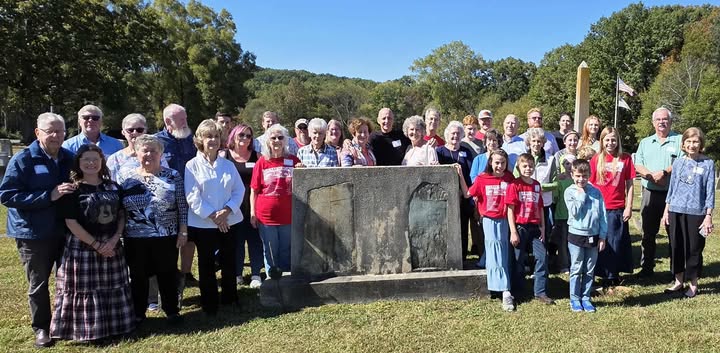
Including fellowship, good food, and gospel and patriotic tunes performed by the youthful Four Walls Bluegrass band, I believe the 2025 Annual Solomon and Judith Burris Reunion made for the perfect family gathering.
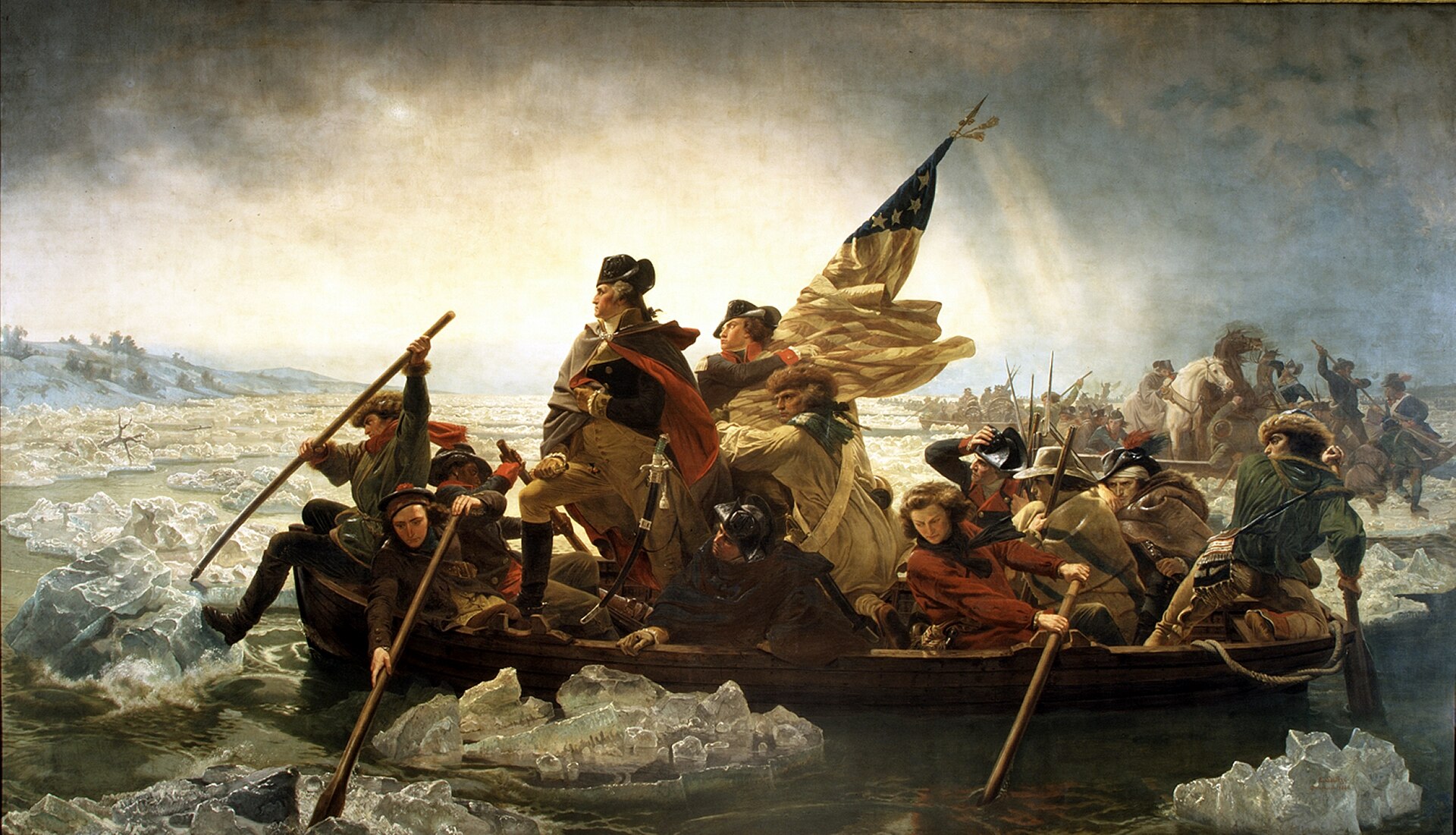
Also significant to the day, especially since it is now 2026 and we are celebrating America’s 250th Anniversary, last year’s program marked the beginning of our American family’s coming-of-age. Much can be learned through reenactment, in this case concerning the formal pension requests submitted on behalf of Solomon’s military service.
Developing the script for the reenactment taught me a bit about military tours of duty, as shared by family acquaintances and in Solomon’s own words log ago. In documenting Solomon’s services during the American Revolutionary War, his witnessing of Gen. Griffith Rutherford’s 1781 campaign in Wilmington, North Carolina, proved especially significant. That’s because under British Maj. James H. Craig’s command, Wilmington had become a haven for Cornwallis’s wounded troops after the Battle of Guilford Courthouse in Greensboro. Most importantly, Rutherford aimed to end British support for loyalist movements throughout the Piedmont and Cape Fear Valley, led largely by firebrand David Fanning. Solomon was there, in November of 1781, as Maj. Craig and the British abandoned Wilmington following Cornwallis’s surrender at Yorktown, VA, in October. Can you imagine everything our ancestors saw and the pride and sense of national awakening they felt during those momentous times? Almost overlooked in my take on Solomon’s pension request, I believe the following recollection may be meaningful to most people.
Developing the script for the reenactment taught me a bit about military tours of duty, as declared by family acquaintances and in Solomon’s own words. In documenting Solomon’s services during the southern campaign, his witnessing of Gen. Griffith Rutherford’s 1781 campaign in Wilmington, North Carolina, proved especially significant. Under British Maj. James H. Craig’s command, Wilmington had turned into a haven for Cornwallis’s wounded troops after the Battle of Guilford Courthouse in Greensboro. Most importantly, Rutherford aimed to end British support for loyalist movements throughout the Piedmont and Cape Fear Valley, led in large part by firebrand David Fanning. Solomon was there, in November of 1781, as Maj. Craig and the British abandoned Wilmington following the October surrender of Cornwallis at Yorktown, VA. Can you imagine everything our ancestors saw and the pride and sense of national awakening they felt during those momentous times? Almost glossed over in my own take of Solomon’s pension request, I believe the following recollection may be meaningful beyond the understanding of most people:
“Rutherford’s Army remained in the neighborhood of Wilmington marching backwards & forwards in order to keep the Tories from joining the British who were then laying in Wilmington. The British left a considerable number of American prisoners in Wilmington after they evacuated the place, and a great many of them were confined with the smallpox.”
Governor Richard Caswell commissioned John Ashe, Sr., in 1778 as the state’s first Maj. Gen. who was charged with commanding all of North Carolina’s militia. Like our private Solomon Burris, John Ashe made it to the battlefield in Purrysburg, SC, where he met Gen. William Lincoln, who redirected him to Georgia. Solomon Burris, on the other hand, followed another lead and ended up along the banks of the Stono River, involved in skirmishes leading to a battle in which the Americans did not fare well. Burris became ill and was sent to the hospital in Charleston, where his required tour of duty had expired, bringing him face-to-face with Gen. Lincoln, who formally granted his requested leave from service.
John Ashe resigned his commission as Maj. Gen. and returned to civilian life. Solomon returned home, where he was eventually conscripted for the tour that carried him to Wilmington. As for John Ashe, he was captured and held prisoner when the British seized Wilmington. Reflecting Solomon Burris’ memory, John Ashe contracted smallpox in prison and was paroled, although he died in Duplin County, while en route to be with his family. John Ashe is buried in an unmarked grave.
The life of Solomon Burris could easily have ended in ways similar to John Ashe’s. However, to call it luck, he returned home to Anson County before crossing the Rocky River, where he and his wife, Judith Taylor, raised a sizeable family. Time passed, and later in life, Solomon Burris applied for a pension, and a friend and neighbor, Nathan Almond provided an affidavit in support of Solomon’s claim. As with Solomon, Nathan also served in Wilmington, where he was imprisoned after being captured. And from Nathan Almond’s application for military pension:
“Nathan Almond volunteered as a militia Man a few weeks before Governor Burke [Thomas Burke] of North Carolina was taken a prisoner [September 12, 1781] at Hillsboro – he entered the service at Hillsboro, Orange County and remained there with the militia until he was taken a prisoner with the Governor by the Tories under Colonel Fanning [David Fanning] and was carried a prisoner with the Governor and the other militia to Wilmington N. C. and remained there on Board a vessel several weeks during which time he took the small pox and as soon as he recovered from the small pox – he was sent on Board a vessel to Charleston S. C. and remained there a prisoner nearly twelve months which made the whole of the time that he was a prisoner something more than one year when he was exchanged and went home.”
Even though Nathan Almond and Solomon Burris became neighbors in today’s Stanly County, Nathan had entered service earlier from his birthplace in Orange County, NC.
We all grew up learning about the spread of disease from television shows like Little House on the Prairie. However, it’s not widely realized that British military troops were already inoculated with the cowpox vaccine before coming to America, long before they participated in the savagery of war. At times, the disease spread fear after being introduced into towns like Boston and Philadelphia prior. Going back to the Indian Wars, Indigenous people were gifted with blankets laced with the disease, and incoming ships were filled with enslaved people who had been infected. In 1777, British Maj. Robert Donkin ran advertisements in the New-York Gazette promoting his upcoming book Military Collections and Remarks. At one point in the book, Robert Donkin proposed the following concerning Indigenous people:
“that they should “dip arrows in matter of smallpox, and twang them at the American rebels, in order to inoculate them; this would sooner disband these stubborn, ignorant, enthusiastic savages, than any other compulsive measures.”
militarily may never have fully matured; however, as is always the case, the greatest social impact came from unstoppable mixing and the movement of people during the heightened period of settlement and war. But militarily, it is said that George Washington warned his wife not to send him letters because the enemy might try to get to him through the mail. And to Gen. William Lincoln, who granted Solomon Burris leave from military service, Gen. William Moultrie bemoaned, “New discoveries are made every day of the small-pox; the persons are immediately removed to the pest house.” Far more complicated than our simply coming to America in search of freedom, we faced what Maj. Donkin referred to as “this unnatural rebellion.”
I’ve not seen much historical documentation about the spread of smallpox in the Rocky River region; typhoid, yes. The lack of surviving records provides glimpses of arrivals from places whose many origins can only be guessed. But hidden in it all, such spread of disease must have played not only a role in the growing population, but also in the ways we lived and how we became Americans.
In closing, regarding my family members who chose to put down roots before settling in today’s Stanly County, I remember reading the following words from a Moravian Minister’s journal. From 1824, concerning Elizabeth Love, who married John Henry Shore in Stokes County, NC,
“I kept the funeral of the wife of Mr. Henry Schor who lives eight miles from Bethania on Jacob Conrad’s place on the river. She had been sick for seven months. The sermon, in the English language, was preached at the home; the interment was five miles from there, toward Bethania, at Schor’s former farm. She was buried near the grave of one of her little sons (he was three years old). The deceased was a Love from Virginia; her husband is a brother of our Sister Lehman.”
Additionally, the previous page in the journal mentions that smallpox had reached Bethania, but not yet Bethabara. Elizabeth Shore is the daughter of James Love, Junior, who migrated from Brunswick County, VA, through Stokes and Wilkes counties into what is now Cabarrus County, NC. Most of the family spread into the west end of present-day Stanly County, where they were instrumental in establishing the Methodist church. And of Elizabeth, who remained in Stokes County with her Moravian-born husband, I can only wonder about her yet-to-be-discovered resting place and of her little ones who must surely lie quietly by her side. What role, if any, did smallpox play in this family, and how did it impact the many generations since? Similarly, how was your family affected, especially those who lived along the banks of our Rocky River?
 They Lived Along a Rocky River